
Free on-site gate assessment - hinges, posts, and your LiftMaster or Nice gate operator checked before anything is quoted
The assessment is free and the quote is the invoice.

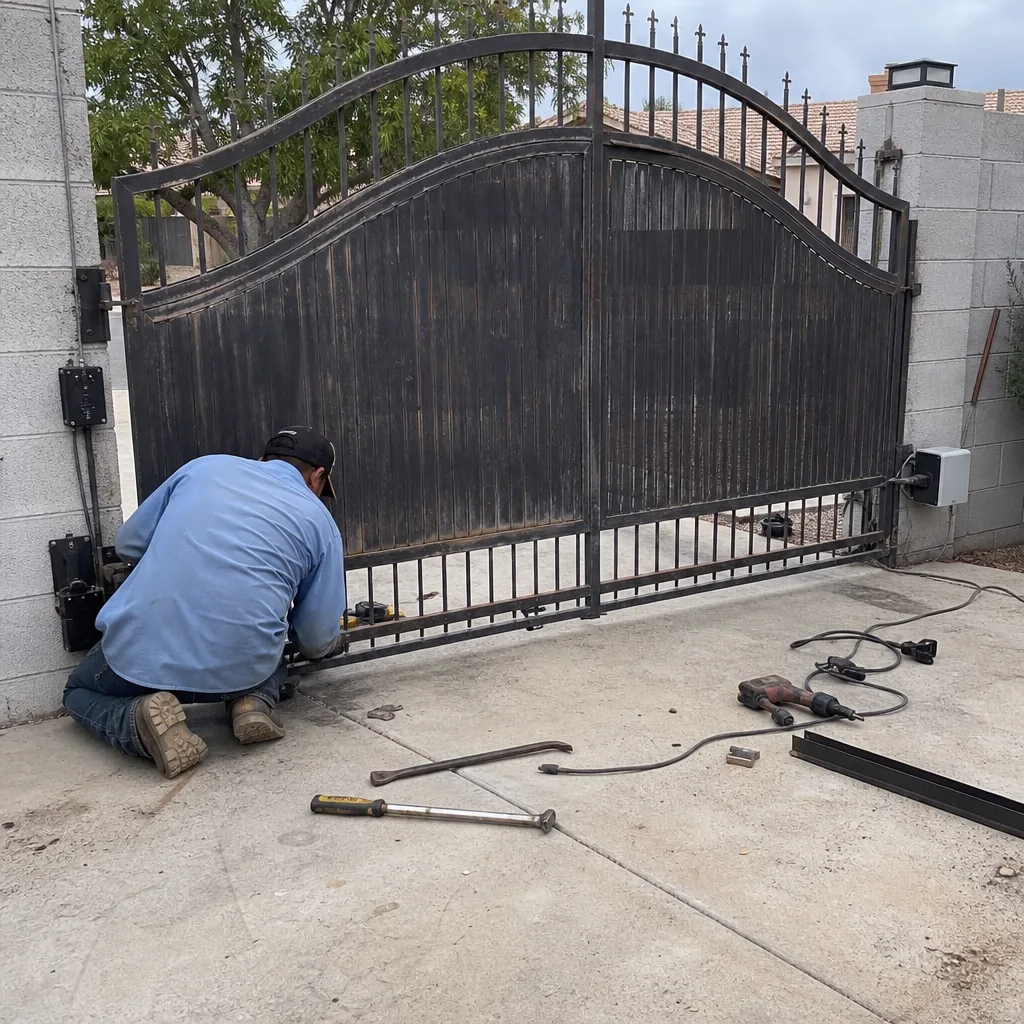 Before
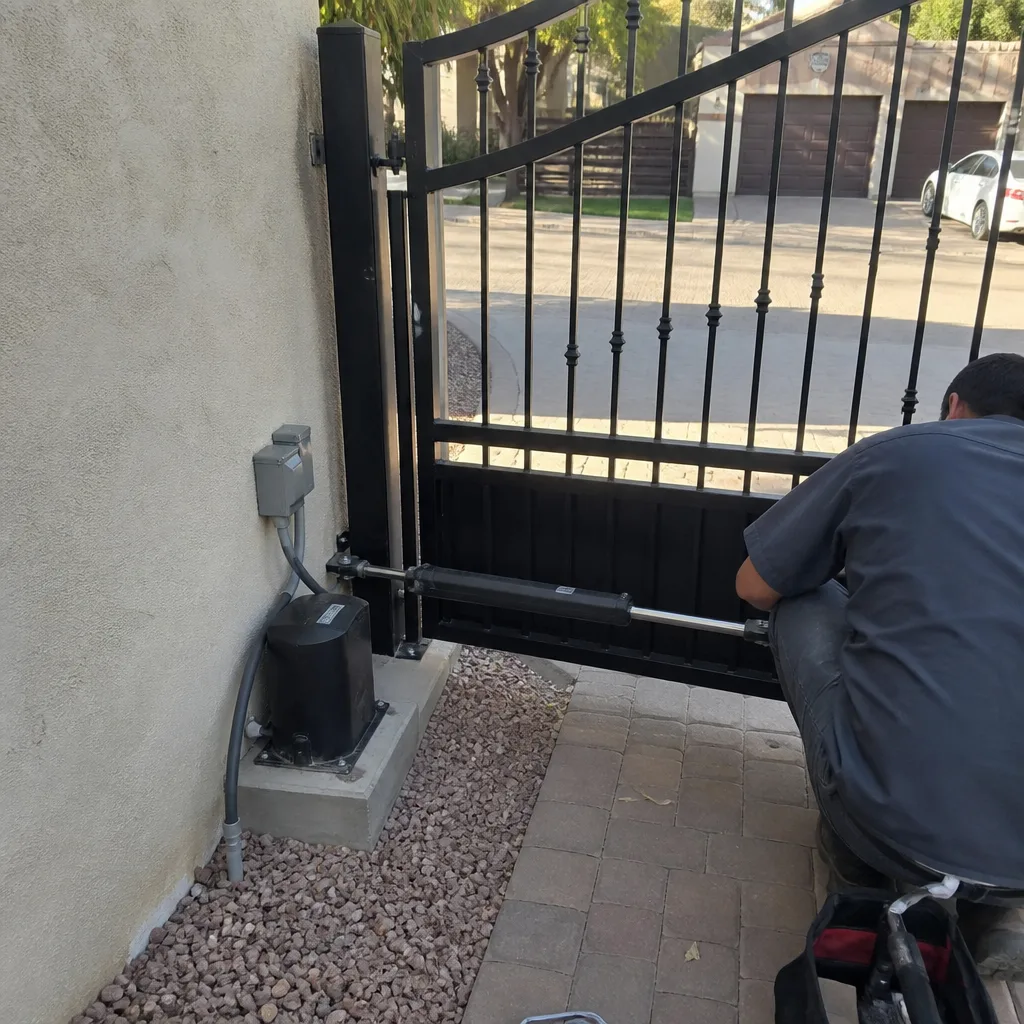 After
After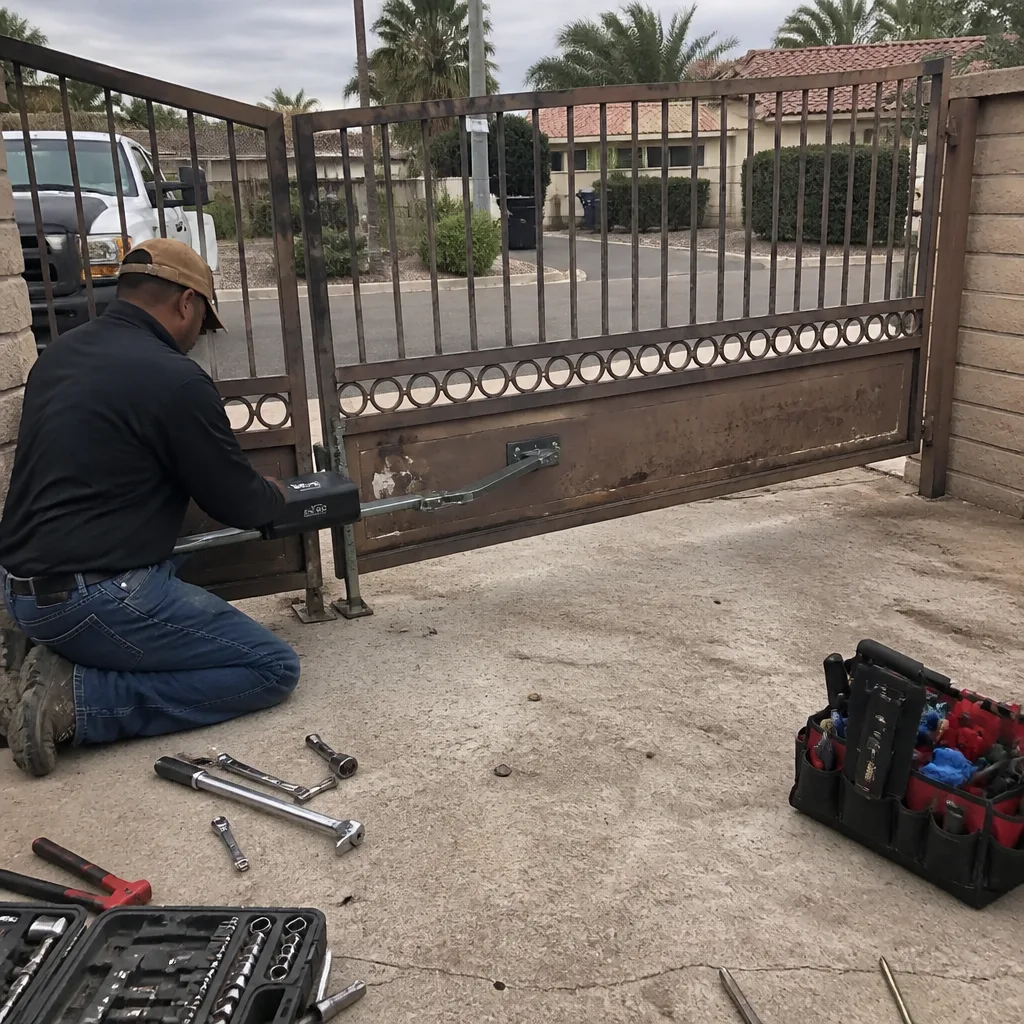 Before
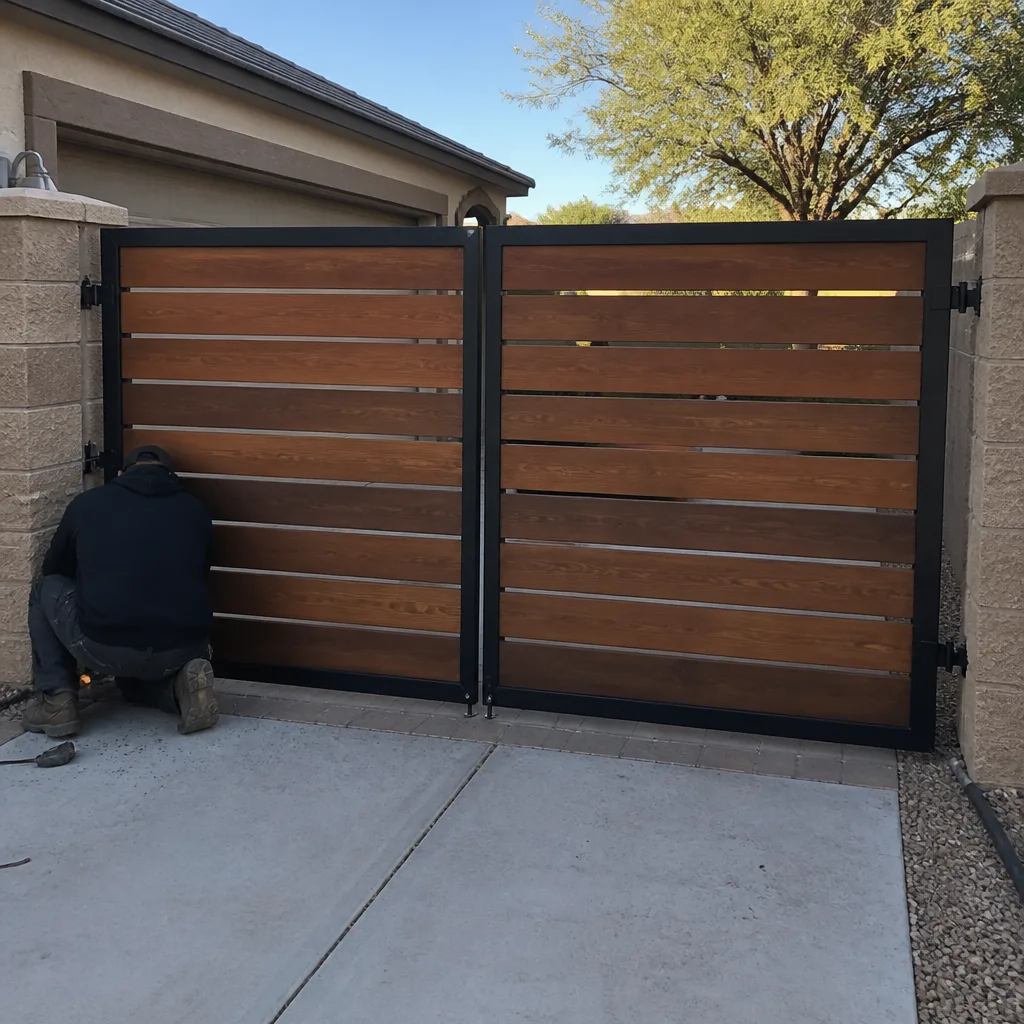 After
After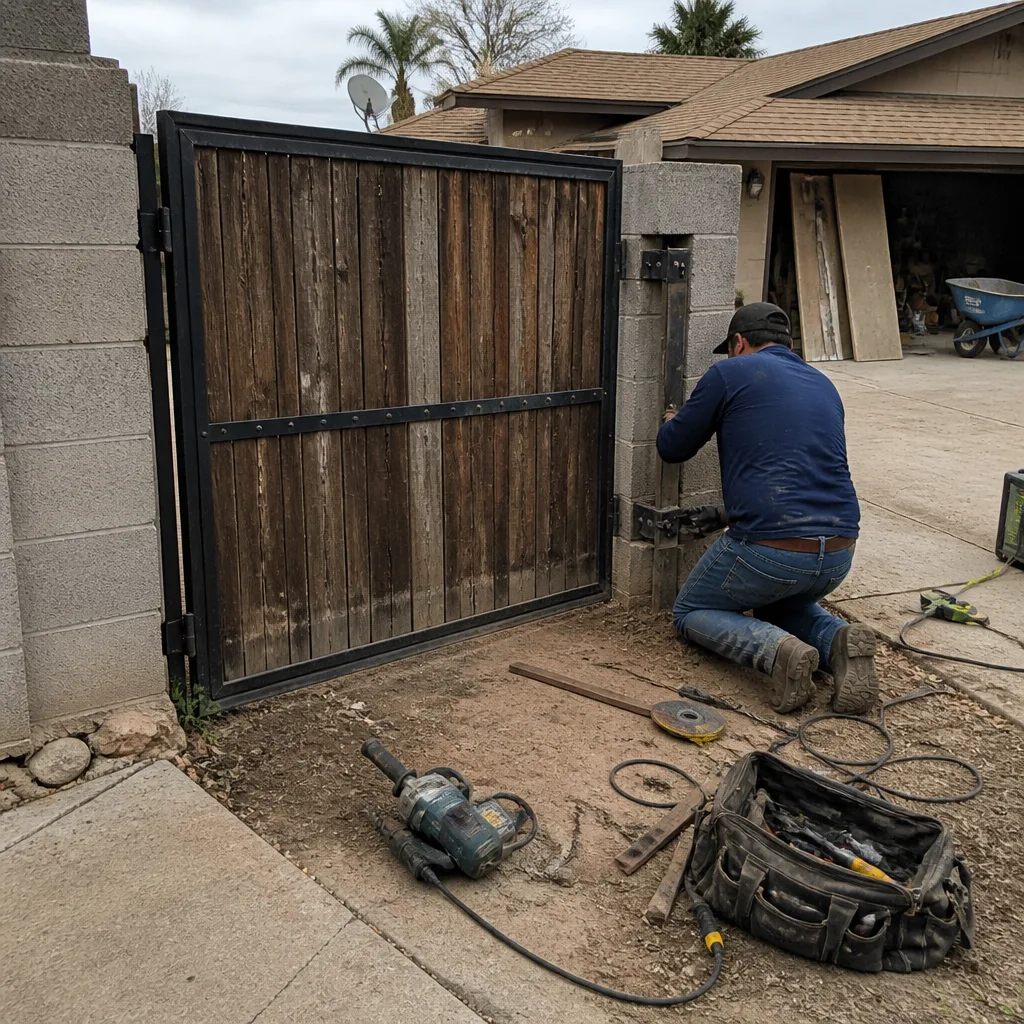 Before
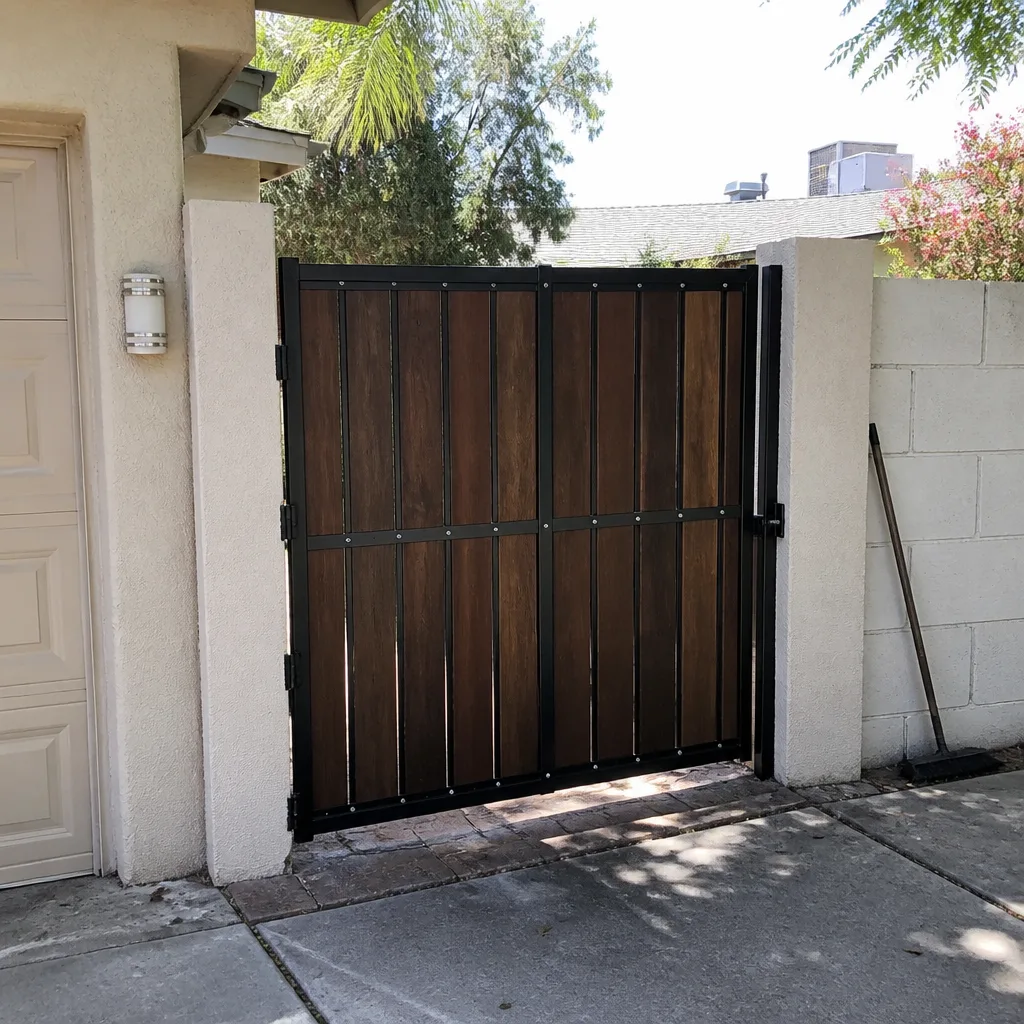 After
AfterBFT Access Control Installation: The Phoenix Owner’s Guide
We stock and install BFT-compatible access control hardware for Phoenix residential and light commercial gates, with most installations running $680 to $1,850 depending on reader type, wiring run length, and whether we’re integrating with an existing BFT motor or starting fresh. Same-day installation is available when the hardware is in our van stock, which it usually is for the BFT models we see most in Arcadia, Paradise Valley, and the North Central corridor. Most owners figure out something’s wrong when their keypad stops accepting codes, the fob range shrinks to six feet, or the gate simply stops responding to any credential - and the motor itself is humming along fine.
Which BFT Models This Applies To
BFT access control breaks into a few product families, and the part you need depends on which system is already mounted. The THALIA and CLONIX series are the radio receivers we see most on Phoenix residential swing and slide gates - THALIA handles rolling-code remotes, CLONIX handles the older fixed-code fobs. The MITTO remote line pairs with THALIA; if your fob has a silver BFT logo and three buttons, it’s probably a MITTO 2 or MITTO 4. For keypads and credential readers, the Q.BO and EXTERNA lines are the current generation, with the Q.BO TOUCH being the capacitive model that replaced the older membrane-button units around 2019.
Here’s the compatibility gotcha: BFT changed its radio frequency from 433 MHz to 433.92 MHz in the THALIA P line, and a THALIA A receiver won’t pair with a THALIA P remote even though the housings look identical. We check the FCC ID sticker on the receiver housing before quoting - it’s a two-minute step that saves a return trip. For readers with existing BFT motors, the Q.BO keypad can tie directly into the E1 control board on ARES, DEIMOS, and PHOBOS operators without a separate receiver, but the EXTERNA line needs its own relay output if the motor is pre-2016. We carry both OEM BFT hardware and quality aftermarket equivalents from Linear and DoorKing where the integration is cleaner; on a ten-year-old PHOBOS, an aftermarket reader sometimes outlasts an OEM unit because the voltage regulation is more forgiving.
Identification is straightforward: the receiver or keypad housing has a white label with a part number starting with “BFT” or “D” followed by digits. If the label’s sun-faded - common on south-facing gate posts in Phoenix - we measure the mounting footprint and test the output voltage before ordering. That label photo is the first thing we ask for when you call.
Signs Your BFT Access Control Installation Is Failing
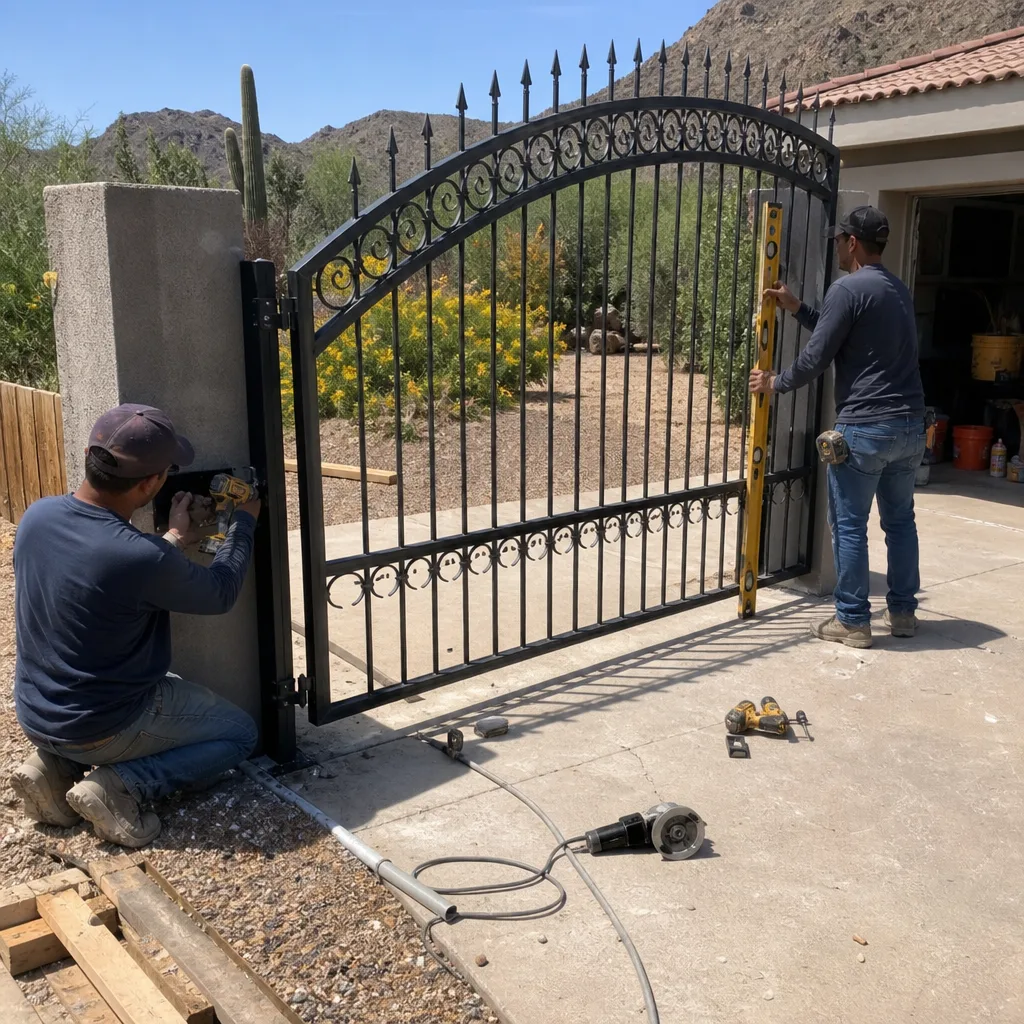
- Remote works only within arm’s reach. The THALIA receiver’s antenna or coax pigtail has degraded, or the receiver itself is drifting off frequency. In Phoenix, UV exposure hardens the antenna jacket until the shielding cracks; we see this most on gates with no shade cover over the receiver box.
- Keypad accepts the code but the gate doesn’t move. The credential reader is fine - the relay output to the motor control board has failed, or the wiring run between reader and board has broken underground. On properties north of Camelback Road with older PVC conduit, ground shift from our clay-expansion cycles shears the low-voltage pair.
- Intermittent response: works Tuesday, dead Wednesday. This is usually a power-supply issue, not the access hardware itself. The BFT Q.BO wants 24 VAC stable; if the transformer is underrated or the run is too long, voltage sag at peak afternoon heat causes the reader to drop out. We log voltage under load before replacing anything.
- MITTO remote flashes but gate never receives. Rolling-code desynchronization after power loss, or the THALIA receiver’s memory is full from too many programming attempts. The receiver can hold 63 remotes; when a homeowner adds and deletes repeatedly without clearing memory, the index corrupts.
- Keypad buttons require hard presses or don’t register. On the pre-2019 membrane Q.BO units, Phoenix dust and monsoon humidity degrade the contact layer. The Q.BO TOUCH fixed this with capacitive sensing, but the older units fail predictably after four to six years of direct exposure.
 Before
 After
AfterReplacement Cost & What’s Included
| Component | Typical Range (Installed) | What Drives the Price |
|---|---|---|
| BFT THALIA P receiver (with 2 MITTO 4 remotes) | $340 - $520 | Existing antenna condition, number of remotes programmed, wall vs. post mounting |
| BFT Q.BO TOUCH keypad (standalone) | $480 - $720 | Wiring run length from keypad to motor, conduit condition, backlit vs. non-backlit model |
| EXTERNA reader with standalone relay box | $620 - $940 | Credential format (prox, keypad, or multi-tech), weather hood needed, integration complexity |
| Full access control swap (reader + receiver + remotes) | $1,100 - $1,850 | Existing wire reuse vs. new trench, number of credentials, motor control board compatibility |
The range exists because we don’t know what we’ll find until we’re on site. A THALIA swap where the antenna cable and mounting bracket are intact takes forty minutes; a Q.BO install where we have to pull new wire through a sixty-foot conduit run takes half a day. We quote the full installed price in writing before starting - that’s Haven Standard Clause 1 - and the price includes programming, testing all credentials, and a photo log of the wiring connections left with you. Every access control installation carries our 365-Day Done Right Promise: if the reader drops out, the range shrinks, or a button fails, we fix it at no charge within that window. No expiration date inside the year, no argument.
DIY or Call Us?
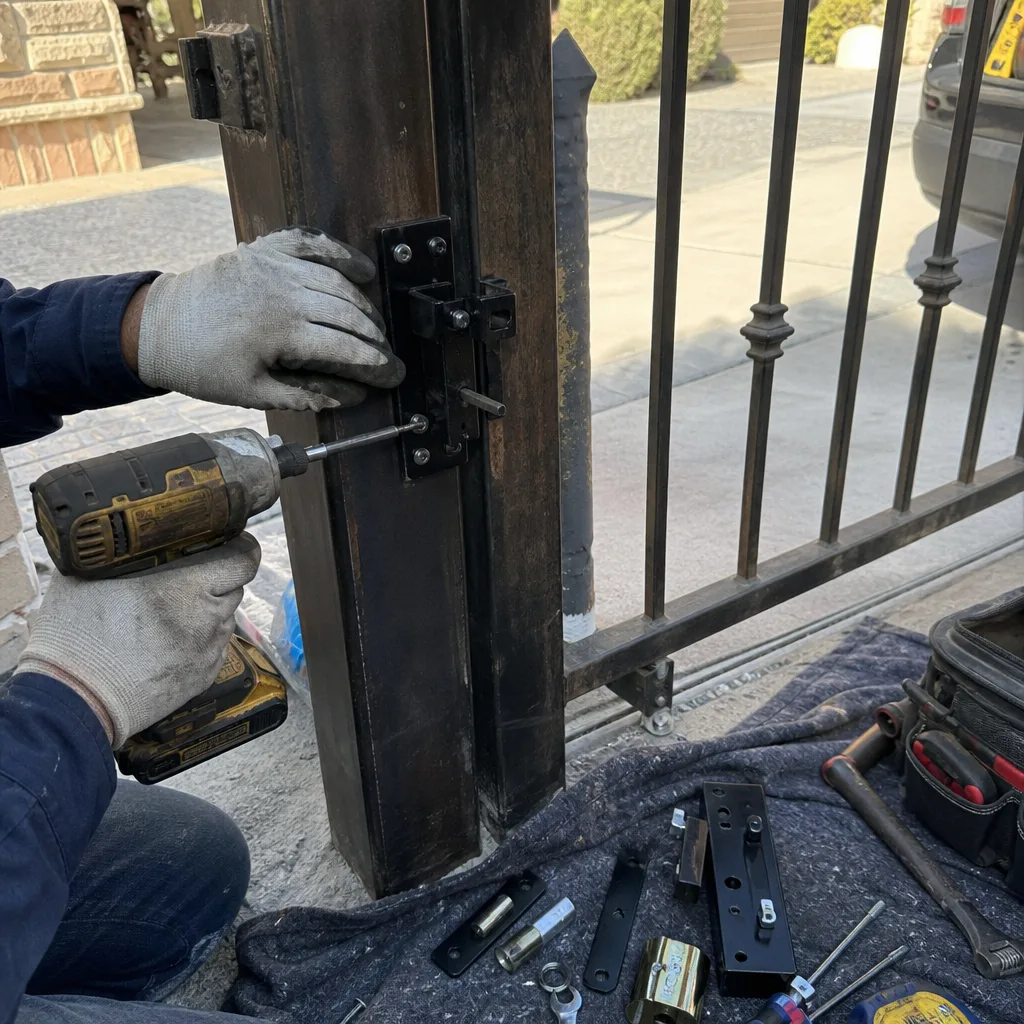
There’s a safe middle ground here. If you’re comfortable with a screwdriver and a multimeter, you can check three things: whether the transformer is outputting 24 VAC under load, whether the antenna coax is physically intact, and whether the receiver’s LED flashes when you press the remote. If the LED flashes but the gate doesn’t move, the problem is likely downstream - relay, wiring, or motor board - and that’s where DIY gets expensive fast.
What we don’t recommend: programming a THALIA receiver without understanding the master-remote hierarchy, or attempting to splice low-voltage access control wiring with wire nuts and electrical tape. The THALIA’s rolling-code enrollment requires a specific button sequence and timing; get it wrong and you lock out all existing remotes, not just the new one. Underground splices in access control wiring fail within two Phoenix monsoon seasons from capillary moisture ingress, and when they do, the intermittent fault is maddening to trace. We use gel-filled direct-bury splices or pull new cable - no exceptions.
The other factor: BFT’s warranty on OEM hardware is void if the unit is damaged during owner installation. We’ve had customers bring us a THALIA with stripped mounting ears or a Q.BO with a cracked housing from over-torqued screws, and at that point it’s a parts purchase, not a warranty claim. If you want to handle the physical mounting and call us for programming and testing, we’ll do that - but the price doesn’t change much, and the documentation isn’t complete under our standard.
Call (602) 483-6270 and we’ll talk through what you’re seeing. If it sounds like a five-minute fix, we’ll say so. If it sounds like a three-hour troubleshooting job, we’ll say that too, and we’ll still put the price in writing before we start.
FAQs
Most receiver swaps or keypad replacements take 45 minutes to two hours, including programming and testing all credentials. A full system with new wiring runs, trenching, and integration with an older motor can take four to six hours. We schedule enough time to finish in one visit and photograph every connection before we leave - under Clause 4, that’s standard on every job.
Sometimes. A desynchronized MITTO remote can be reprogrammed; a loose antenna connection can be reseated; a failing transformer can be swapped without touching the receiver. But if the THALIA receiver board has voltage damage from a nearby lightning strike - common in Phoenix during summer storms - repair isn’t cost-effective and we recommend replacement. We diagnose before quoting replacement; call (602) 483-6270 for a free estimate.
Five to eight years for a keypad or reader in direct sun, eight to twelve for a receiver in a shaded enclosure. The killer is heat plus UV: a Q.BO TOUCH mounted on an unshaded post in Arcadia will outlast a membrane keypad but still see capacitive drift after six or seven years. We recommend a weather hood for any reader facing south or west; it’s a $40 part that often doubles lifespan.
We carry THALIA P receivers, Q.BO TOUCH keypads, MITTO 4 remotes, and common antennas and transformers on every Phoenix-area van. Less common items - EXTERNA multi-tech readers, long-range receivers, or legacy CLONIX hardware - we can source same-day from our supplier or install a compatible aftermarket unit from our stock. When you call, we’ll confirm what’s on the van for your specific model.
Vance Gate Repair Phoenix is an independent service provider and is not affiliated with or authorized by BFT S.p.A. We service BFT equipment using OEM and quality aftermarket parts.
We’ve also got hardware in stock for LiftMaster, Mighty Mule, and Ghost Controls systems if your property has mixed automation brands.
Written by Adrian Vance, Owner, Vance Gate Repair Phoenix at Vance Gate Repair Phoenix, serving Phoenix and nearby areas.