
Free on-site gate assessment - hinges, posts, and your LiftMaster or Nice gate operator checked before anything is quoted
The assessment is free and the quote is the invoice.

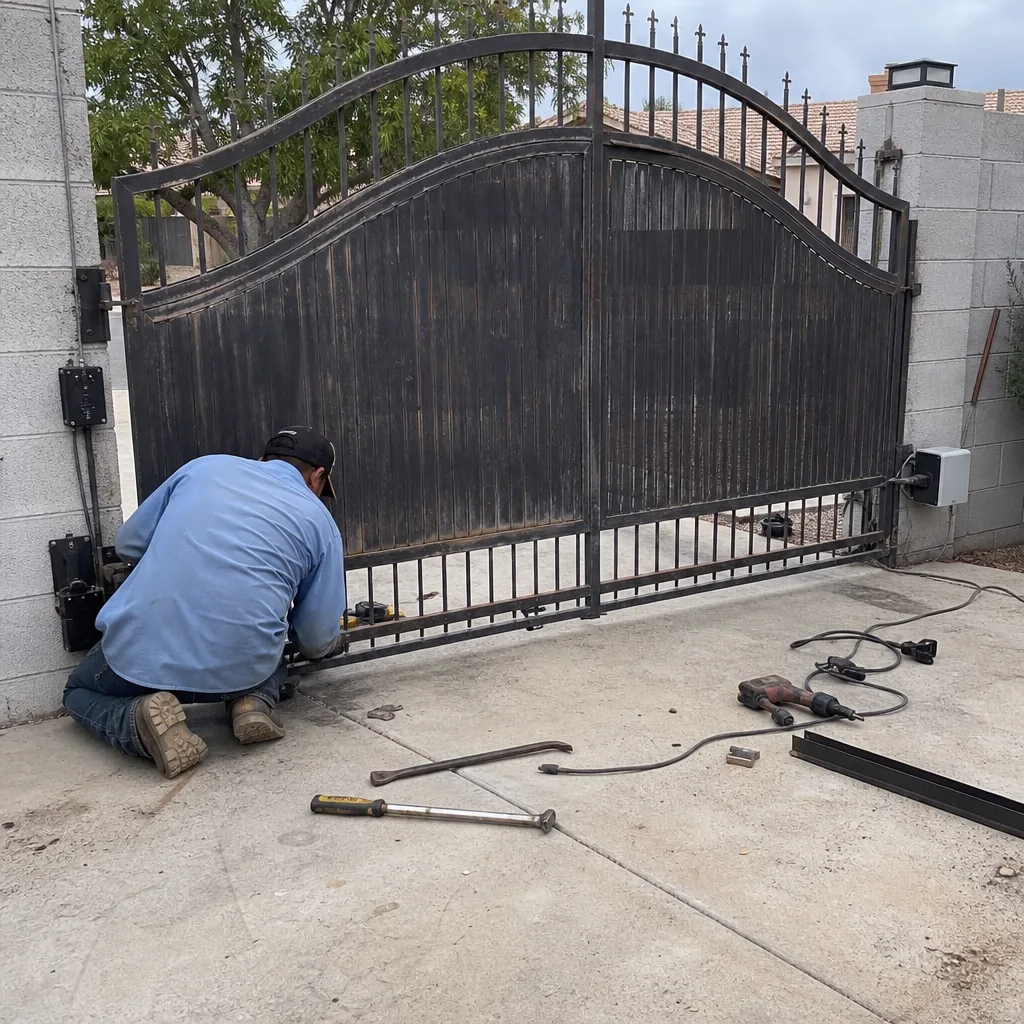 Before
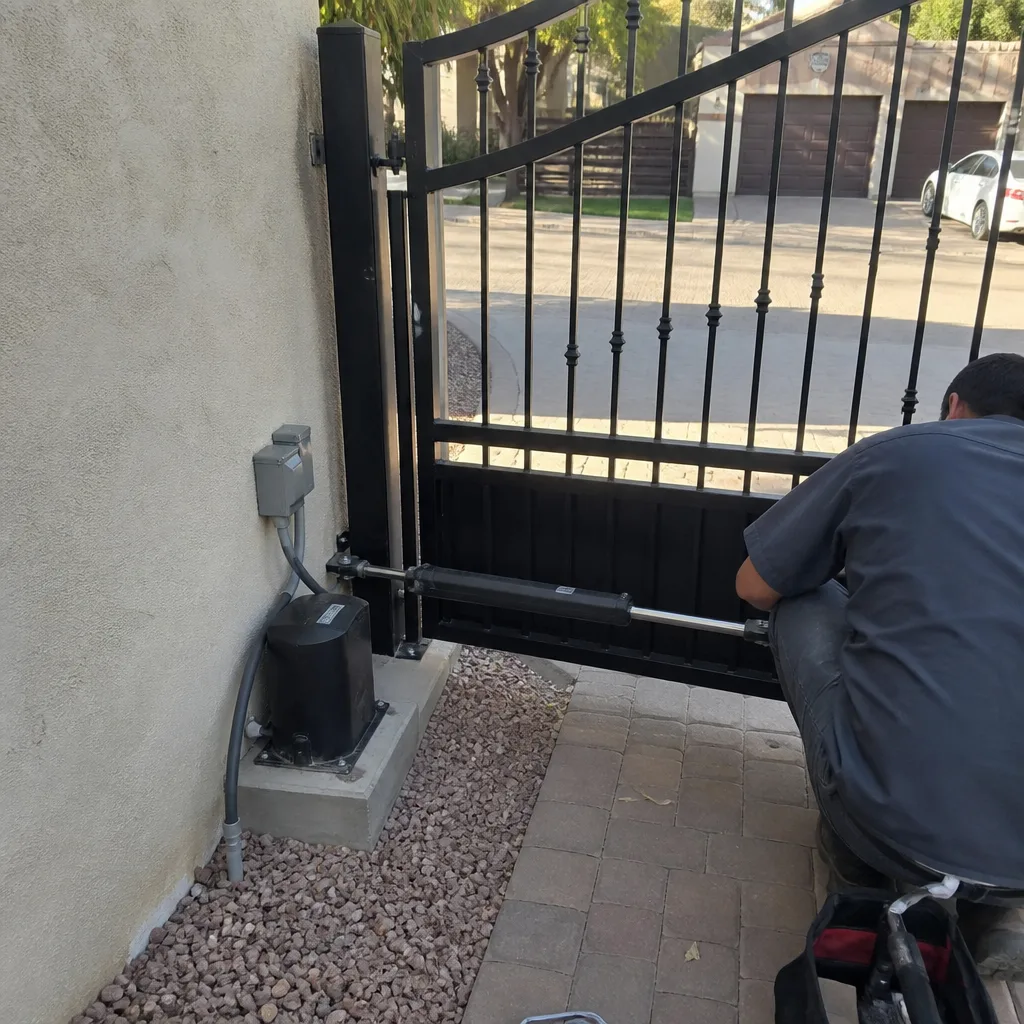 After
After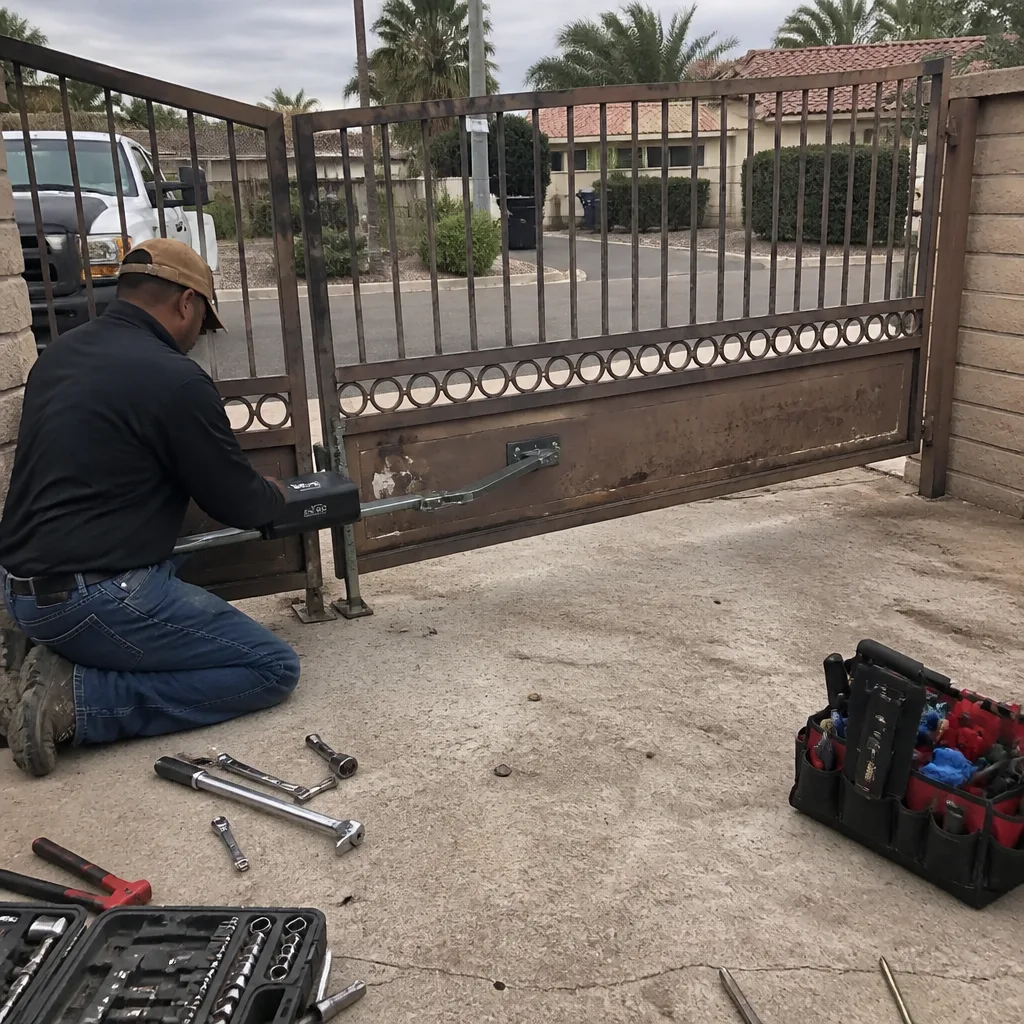 Before
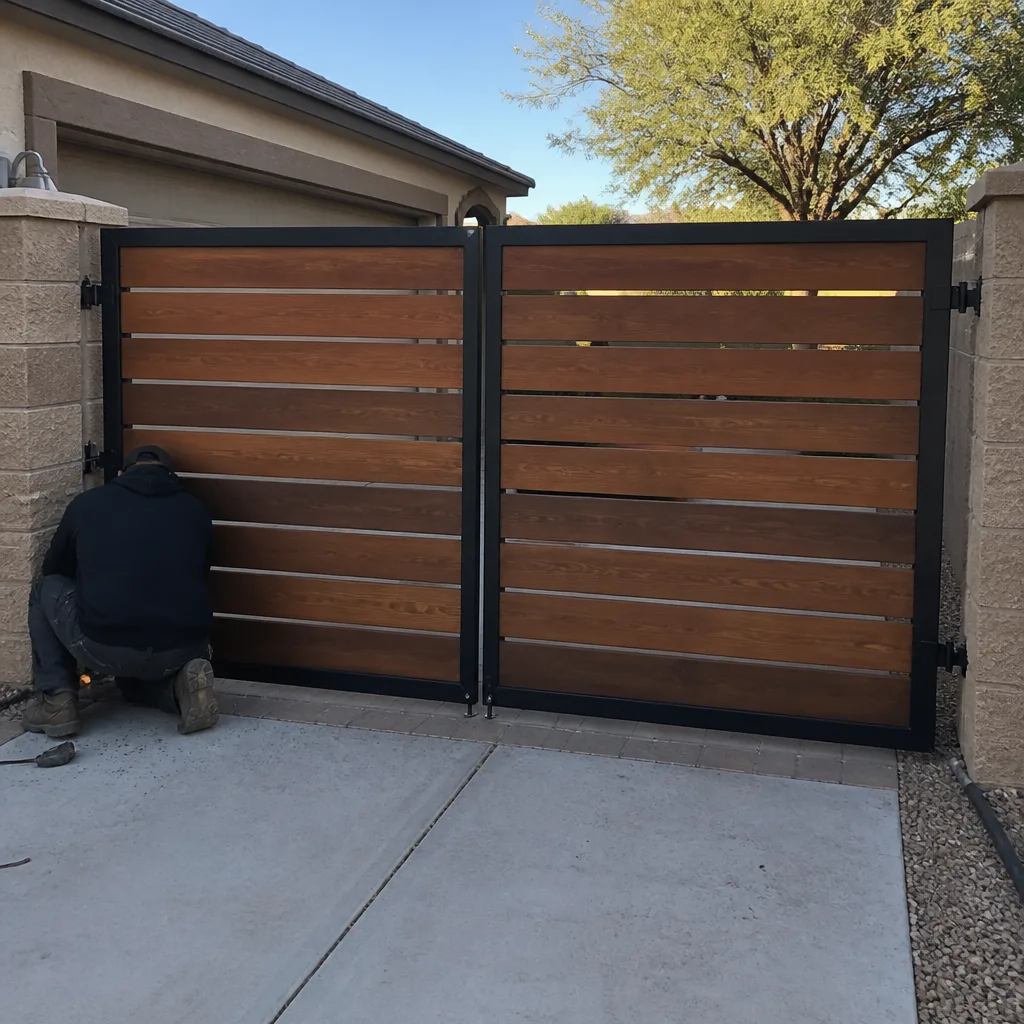 After
After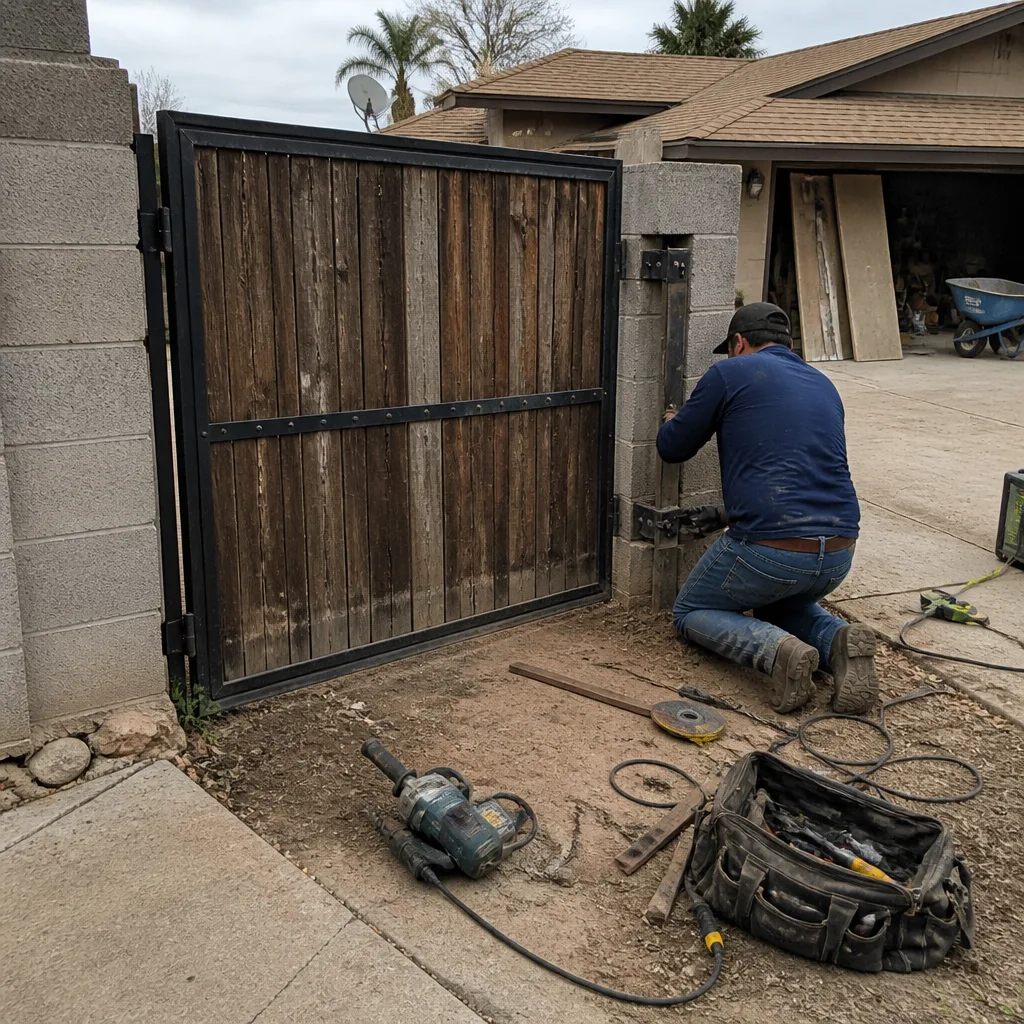 Before
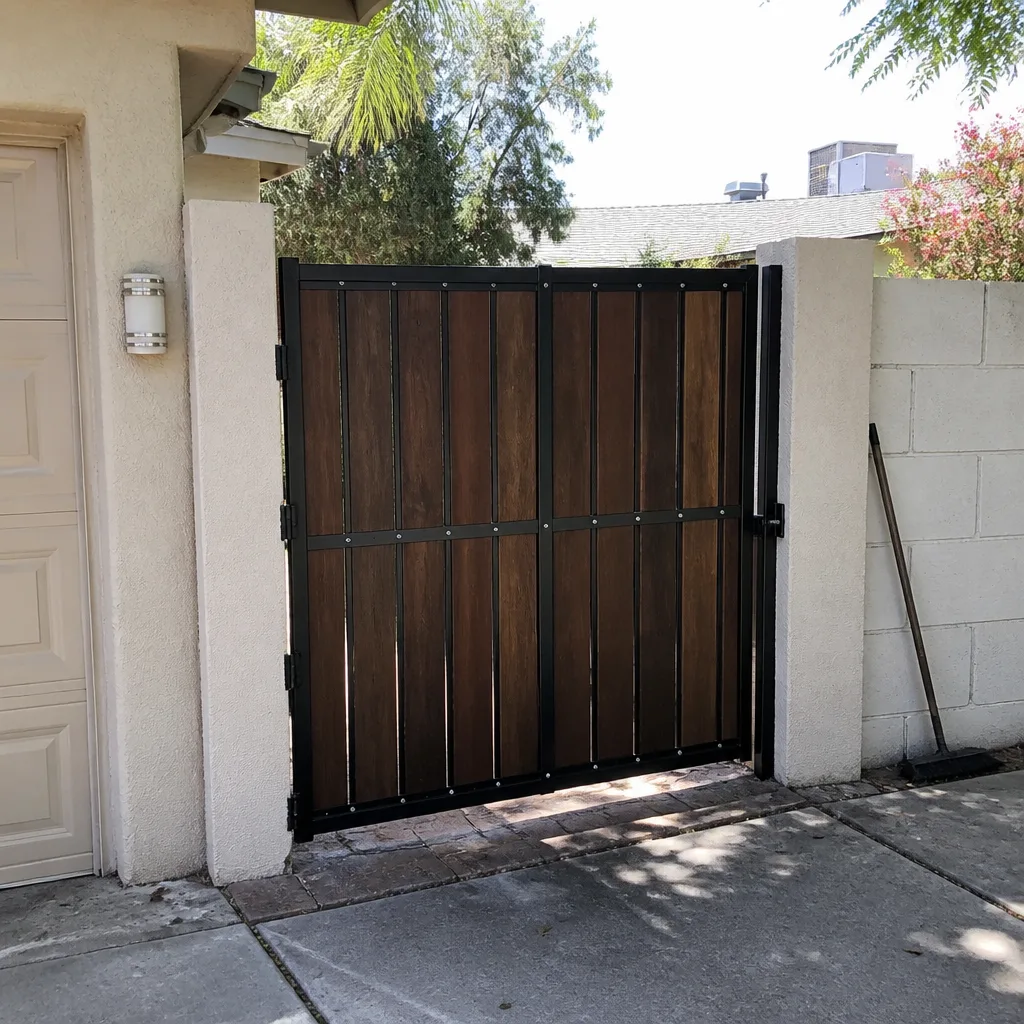 After
AfterGhost Controls Gate Motor Replacement: The Phoenix Owner’s Guide
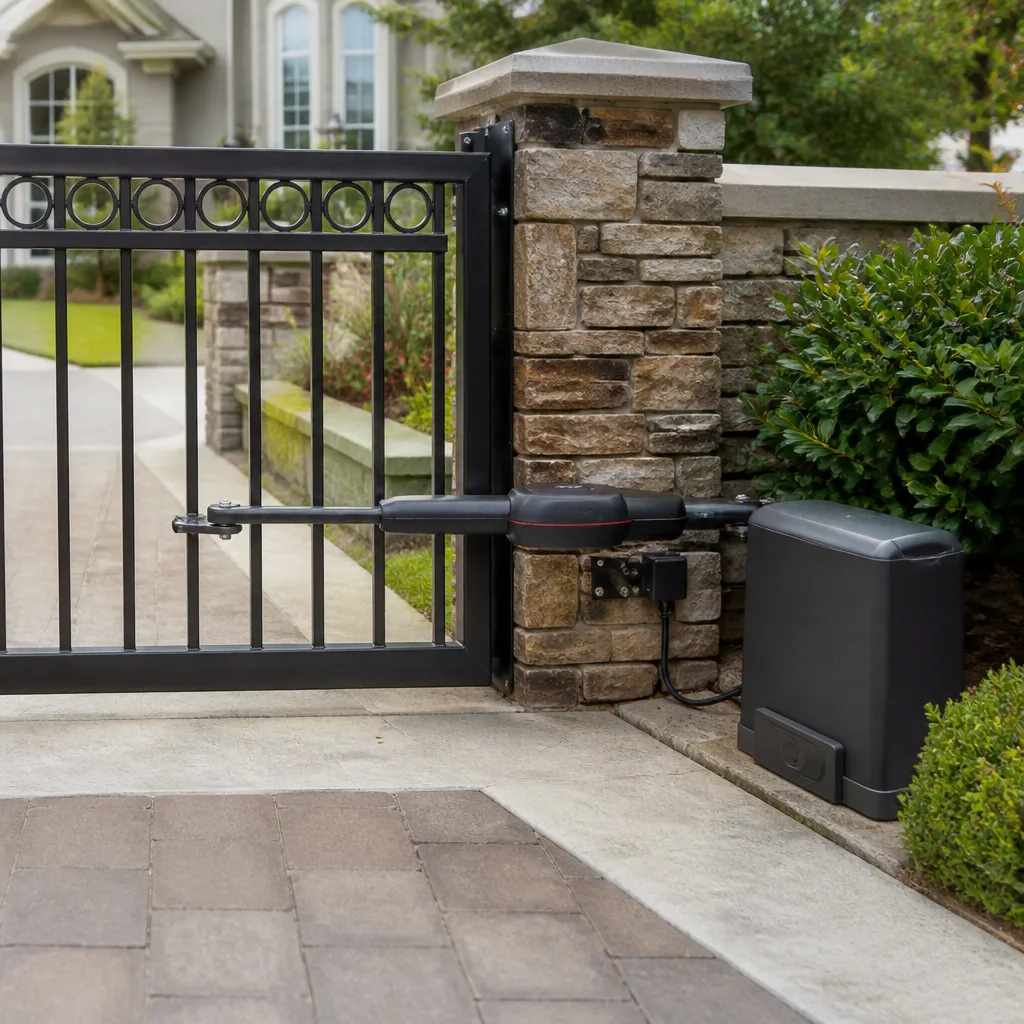
A Ghost Controls gate motor replacement in Phoenix typically runs $680-$1,240 installed, depending on whether you need the TSS1, TDS2, or APTX series actuator and whether the mounting bracket and control board are still sound. We stock Ghost Controls-compatible motors on our service trucks and can usually complete the swap same-day if you call before noon. Most Phoenix homeowners realize the motor has failed when the gate starts moving slower in afternoon heat, stops halfway up the driveway slope, or clicks at the control box without turning the arm.
Which Ghost Controls Models This Applies To
Ghost Controls organizes its gate automation into three product families, and the motor replacement part differs for each. The Decorative Series (TSS1, TSS1XP) uses a compact tube-style linear actuator rated for gates up to 20 feet and 900 pounds. The Heavy-Duty Series (TDS2, TDS2XP) carries a larger-diameter actuator with higher torque output for dual-swing setups and solid-core gates. The Architect Series (APTX, APTX2) uses a different mounting footprint and a sealed motor housing designed for high-end installations.
To identify your motor, check the silver specification label on the actuator body near the hinge end. You’ll see a model prefix and a date code. The date code matters in Phoenix because motors manufactured before 2019 used a different sealing gasket that hardens faster in dry heat. We match that detail when we quote, because dropping a new motor onto a pre-2019 bracket without checking gasket compatibility is how you get dust infiltration inside six months.
We source OEM Ghost Controls actuators and also carry a quality aftermarket equivalent from US Automatic that fits the TDS2 mounting pattern and carries the same torque spec. The aftermarket unit runs roughly $90 less. We don’t steer toward either one; we show you both, explain the warranty difference, and let the number and your preference decide. Vance Gate Repair Phoenix is an independent service provider with no affiliation to Ghost Controls.
Signs Your Ghost Controls Gate Motor Replacement Is Failing
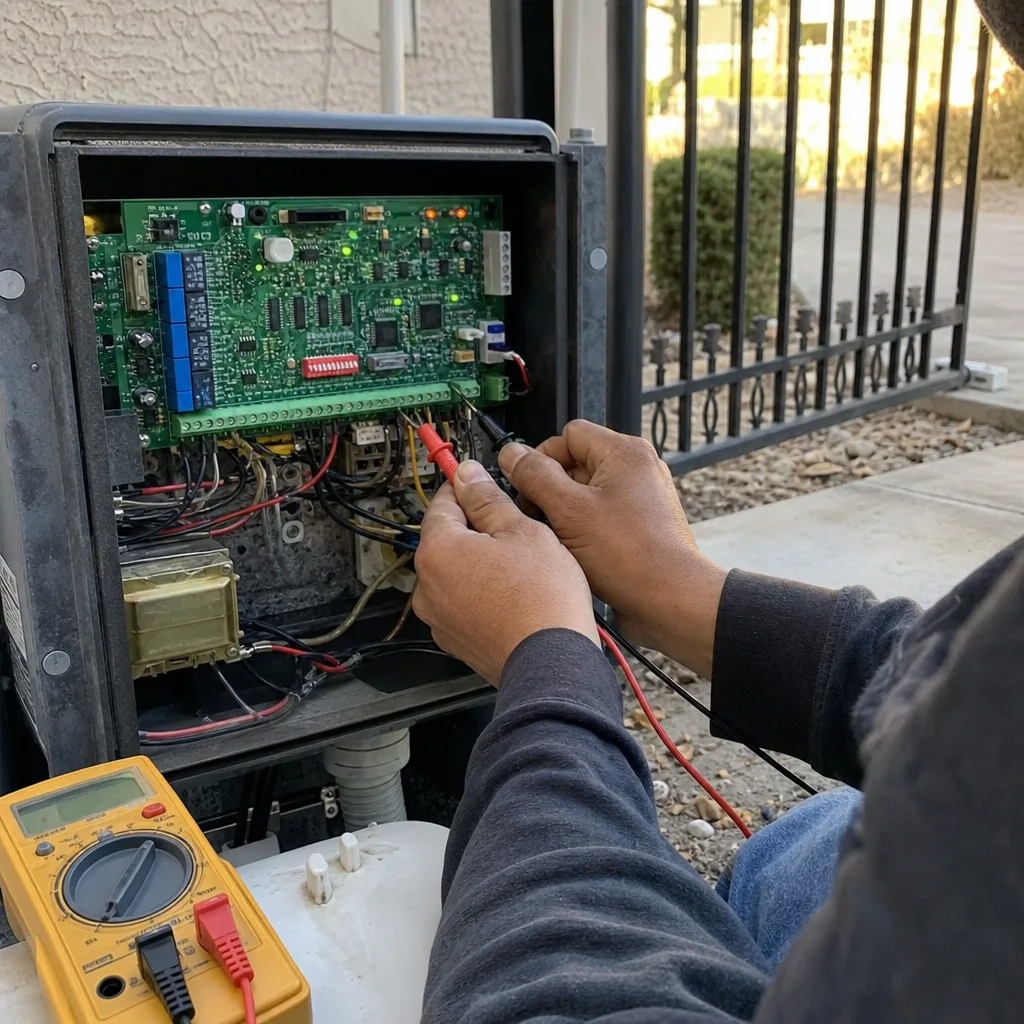
- The gate moves slower after 2 p.m. in July and August. The motor windings are overheating. Phoenix ambient temperatures above 110°F push the internal thermal cutout closer to its limit, and a motor with degraded insulation can’t shed heat fast enough. What feels like a heat wave is actually the motor telling you its winding resistance has climbed past specification.
- The gate stops on the uphill leg of your driveway and reverses. The motor still runs but can’t produce enough starting torque to overcome the load. In the Ahwatukee Foothills and hillside homes near North Mountain, we’ve seen this misdiagnosed as a track problem when it’s actually armature wear inside the actuator.
- You hear a click from the control box, but the arm doesn’t move. The control board is sending voltage, but the motor won’t pull current. Usually the start capacitor has failed, but on Ghost Controls units built 2016-2018, we’ve also found a batch of motors with solder joint fatigue at the brush lead. The capacitor is a $40 part; the motor is not. Testing takes two minutes with a clamp meter, and we photograph the reading so you see the difference.
- The gate opens fine but won’t close, or closes at half speed. Ghost Controls motors use an internal Hall sensor to report position back to the board. When the sensor drifts, the board thinks the motor has reached its limit early. In Arcadia and the older Paradise Valley estates where gates are heavier, this sensor failure often follows a few months of the motor straining against sticky hinges.
- There’s a grinding noise from the actuator tube that grease won’t fix. The worm gear inside the actuator has lost tooth engagement. Ghost Controls uses a nylon worm wheel that wears predictably; once the backlash exceeds about 3 millimeters, the motor runs but the gate doesn’t move in proportion. We measure this with a dial indicator before we quote, because if the worm is gone, the whole actuator body gets replaced.
 Before
 After
AfterReplacement Cost & What’s Included
| Component | Price Range (Phoenix) |
|---|---|
| Ghost Controls TSS1 actuator (OEM), installed | $680-$820 |
| Ghost Controls TDS2 actuator (OEM), installed | $840-$1,040 |
| Ghost Controls APTX actuator (OEM), installed | $980-$1,240 |
| US Automatic aftermarket equivalent (TDS2 fit) | $750-$940 |
| Mounting bracket replacement (if corroded) | $120-$180 |
| Control board diagnostic & test | Included |
The range depends on three things: which series you have, whether the existing bracket and hardware are reusable, and whether the control board needs recalibration after the motor swap. Every quote we write in Phoenix includes the part number, the labor line, and a flat total. Under Haven Standard Clause 1, that written price is what you pay. If we find a surprise, like a cracked mounting foot hidden behind the operator cover, we stop, photograph it, and write a revised scope before we touch a wrench. No invoice has ever exceeded its written quote at our company without the homeowner seeing the change in writing first.
The 365-Day Done Right Promise covers the motor replacement and our installation workmanship. If the gate drifts, stalls, or makes noise we didn’t catch, we come back and make it right at no charge. Adrian Vance started that policy in 2014 after watching a commercial client pay three different companies to fix the same limit-switch problem because nobody documented what they’d done.
DIY or Call Us?
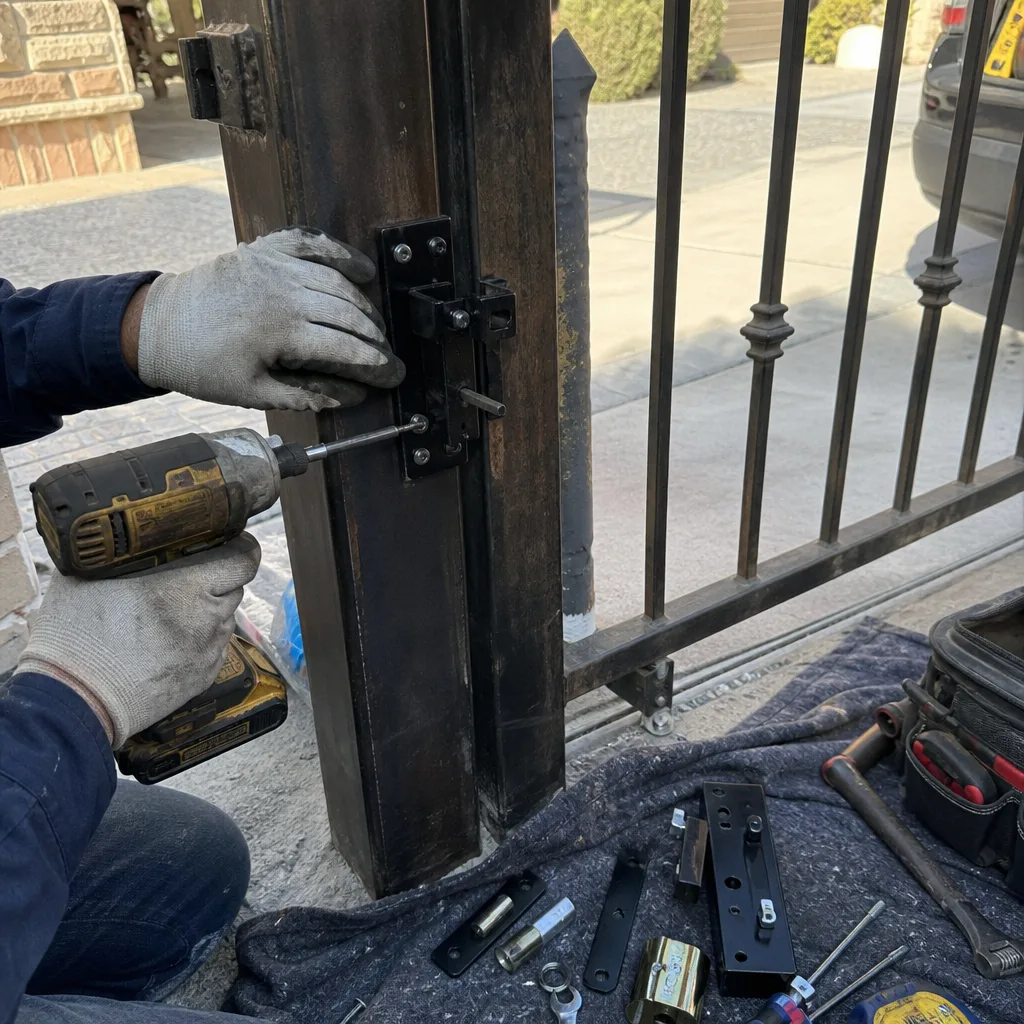
There’s a safe middle ground here, and then there’s the part where a mistake gets expensive.
What you can check safely: Verify that the gate moves freely by hand with the motor disconnected. If it binds, the motor isn’t the problem. Check the 12V or 120V supply at the control box with a multimeter. Look for ant nests in the operator housing; we’ve found them in Sunnyslope and the Foothills, and they cause more failures than people expect.
Where DIY goes wrong: The actuator arm is under spring tension even when the gate is open. Releasing the clevis pin without supporting the arm can let it retract suddenly, and the pinching force is enough to break a finger. The control board stores limit positions in memory; if you swap the motor without recalibrating, the gate will over-travel and stress the new unit immediately. And if the motor is a 2017-2018 unit with the solder joint issue, the replacement needs a different brush lead routing that Ghost Controls specified in a technical bulletin most homeowners never see.
We carry Ghost Controls actuators, mounting kits, and the calibration cable on every Phoenix service truck. Call (602) 483-6270 and we’ll name what we found, name what it costs, and name what we left behind.
FAQs
In Phoenix’s dry heat and intense UV, a Ghost Controls actuator typically lasts 7 to 12 years if the gate is properly balanced and the operator housing isn’t baking in direct afternoon sun. We’ve replaced units as young as 4 years old in south-facing installations with no shade, and we’ve seen 14-year-old motors still running in covered carports near Encanto. The biggest killer is thermal cycling: the motor heats up opening the gate at 5 p.m., cools overnight, and repeats. That expansion and contraction fatigues the winding insulation faster than continuous operation would. Call (602) 483-6270 for a free estimate on replacement.
Sometimes. If the failure is the start capacitor, the Hall sensor, or the wiring harness, we repair those components and bill only for the part and the diagnostic time. If the armature windings, worm gear, or actuator tube is damaged, replacement is the only practical option. Ghost Controls doesn’t sell internal actuator parts separately, and the labor to rebuild one in a shop exceeds the cost of a new unit. We test first and tell you which category you’re in before we quote. Call (602) 483-6270 for an exact diagnosis.
Most Ghost Controls motor swaps take 90 to 150 minutes from arrival to final test. That includes removing the old actuator, inspecting the bracket and hinge geometry, installing the new motor, running the calibration sequence, and cycling the gate 10 times to confirm limit positions and safety reverse. If we find a corroded bracket or a control board that won’t hold calibration, we add that to the written scope and the time extends accordingly. We don’t guess at completion times; we tell you what we’ve found so far and what remains. Call (602) 483-6270 to schedule.
We stock TSS1, TDS2, and APTX actuators on our Phoenix service trucks, along with the US Automatic aftermarket equivalent. For the Decorative Series XP and Heavy-Duty Series XP models with the faster cycle time, we sometimes need to pull from our local parts depot, which adds same-day availability rather than next-day. If you have the model number from your actuator label when you call, we confirm stock before we dispatch. Call (602) 483-6270 and we’ll verify fit and availability in the same conversation.
Written by Adrian Vance, Owner, Vance Gate Repair Phoenix at Vance Gate Repair Phoenix, serving Phoenix and nearby areas.