
Free on-site gate assessment - hinges, posts, and your LiftMaster or Nice gate operator checked before anything is quoted
The assessment is free and the quote is the invoice.

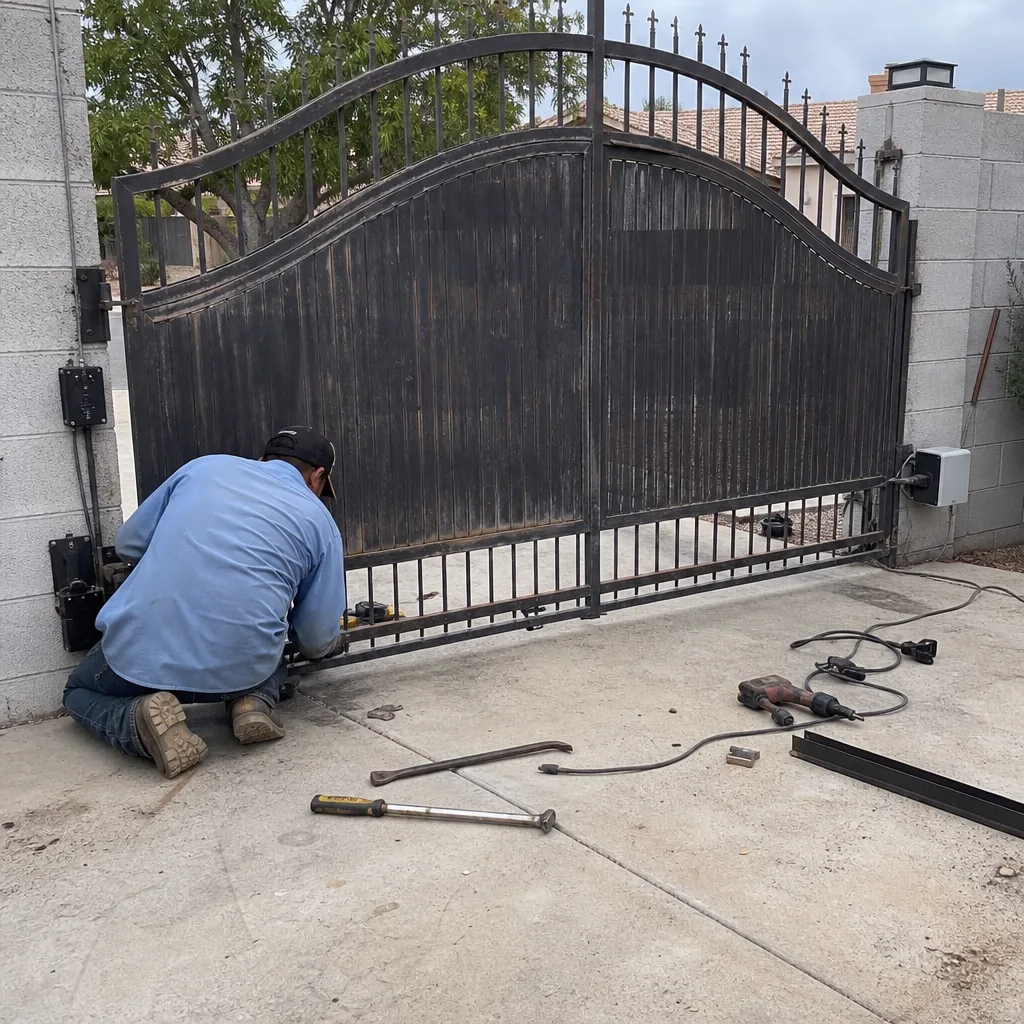 Before
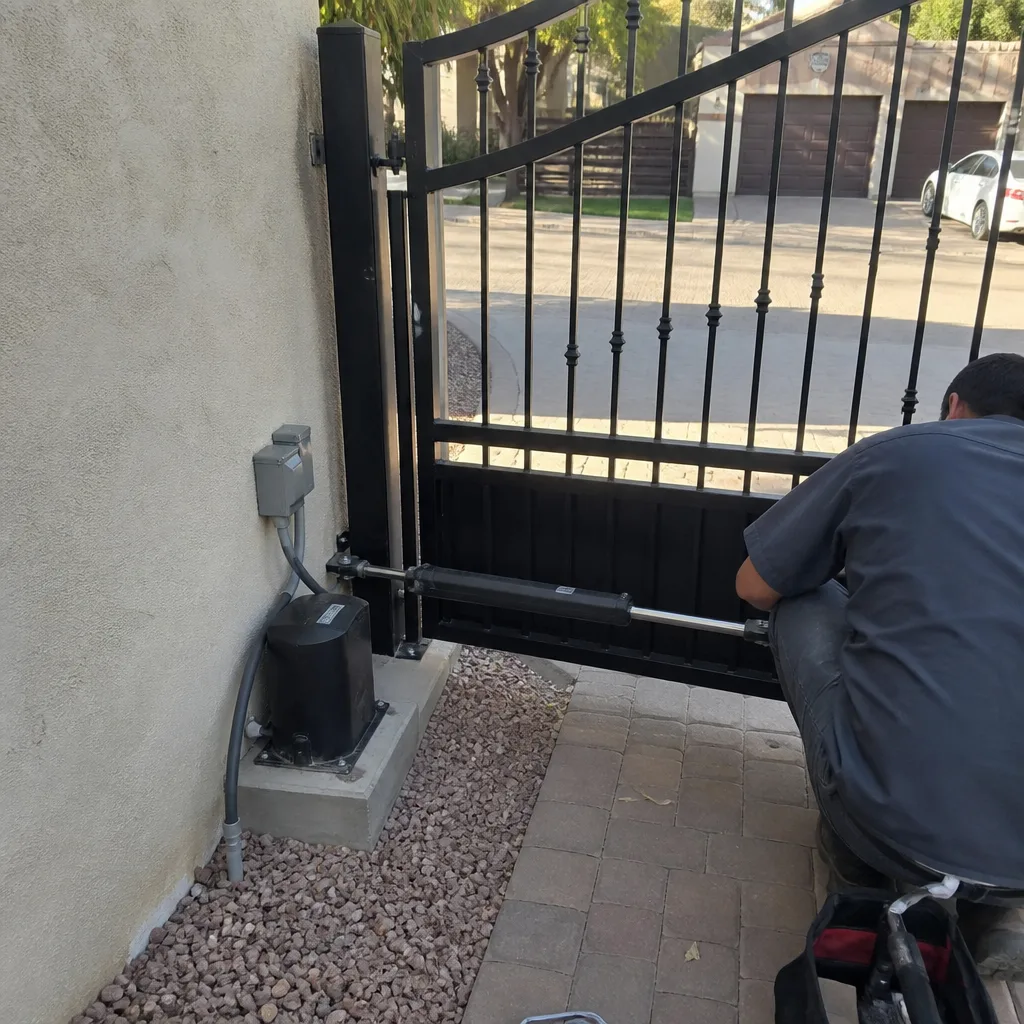 After
After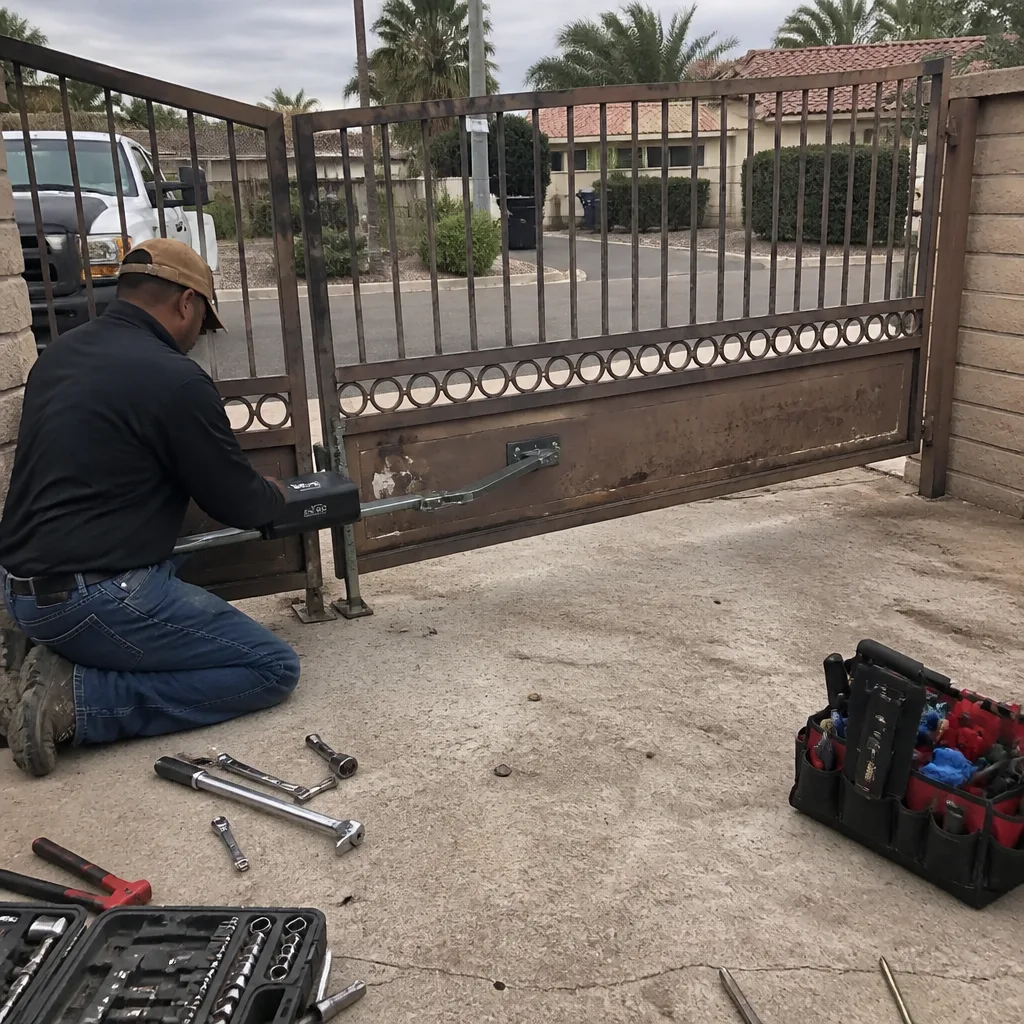 Before
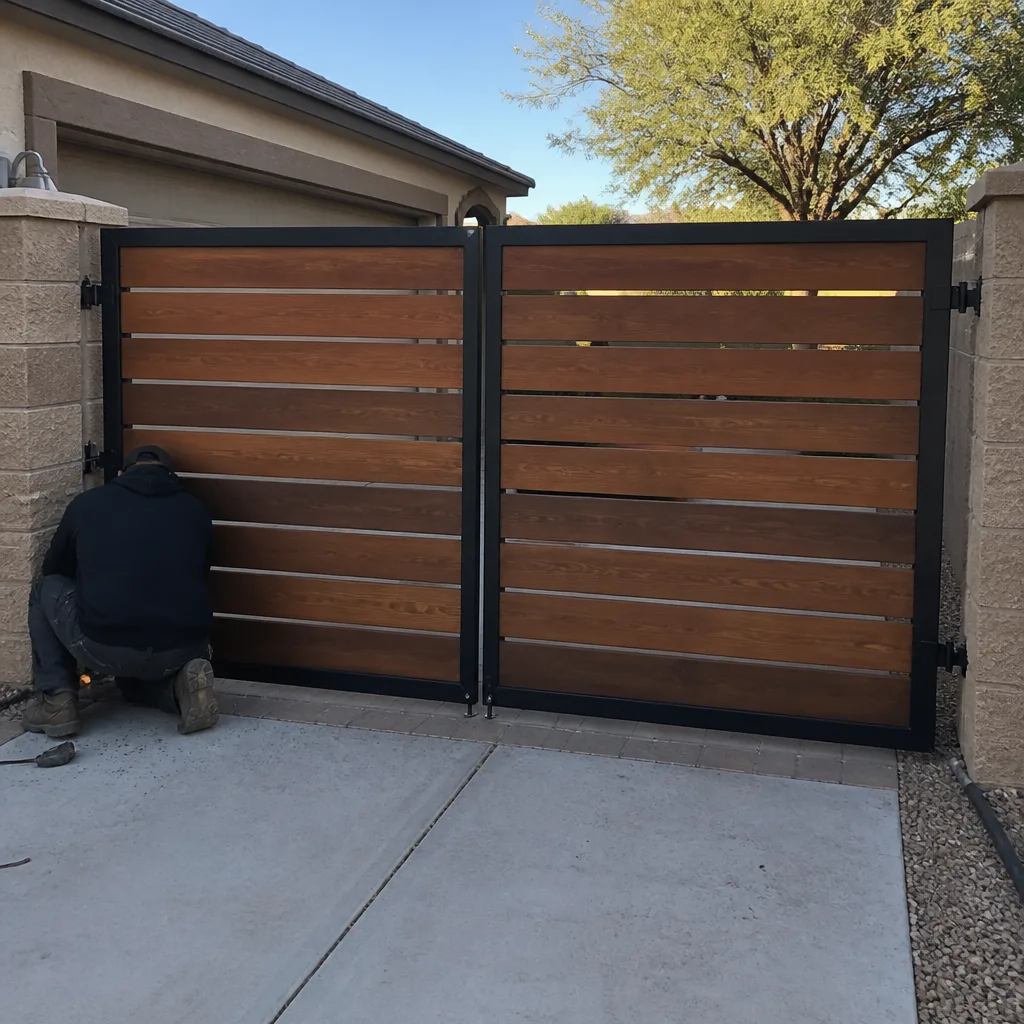 After
After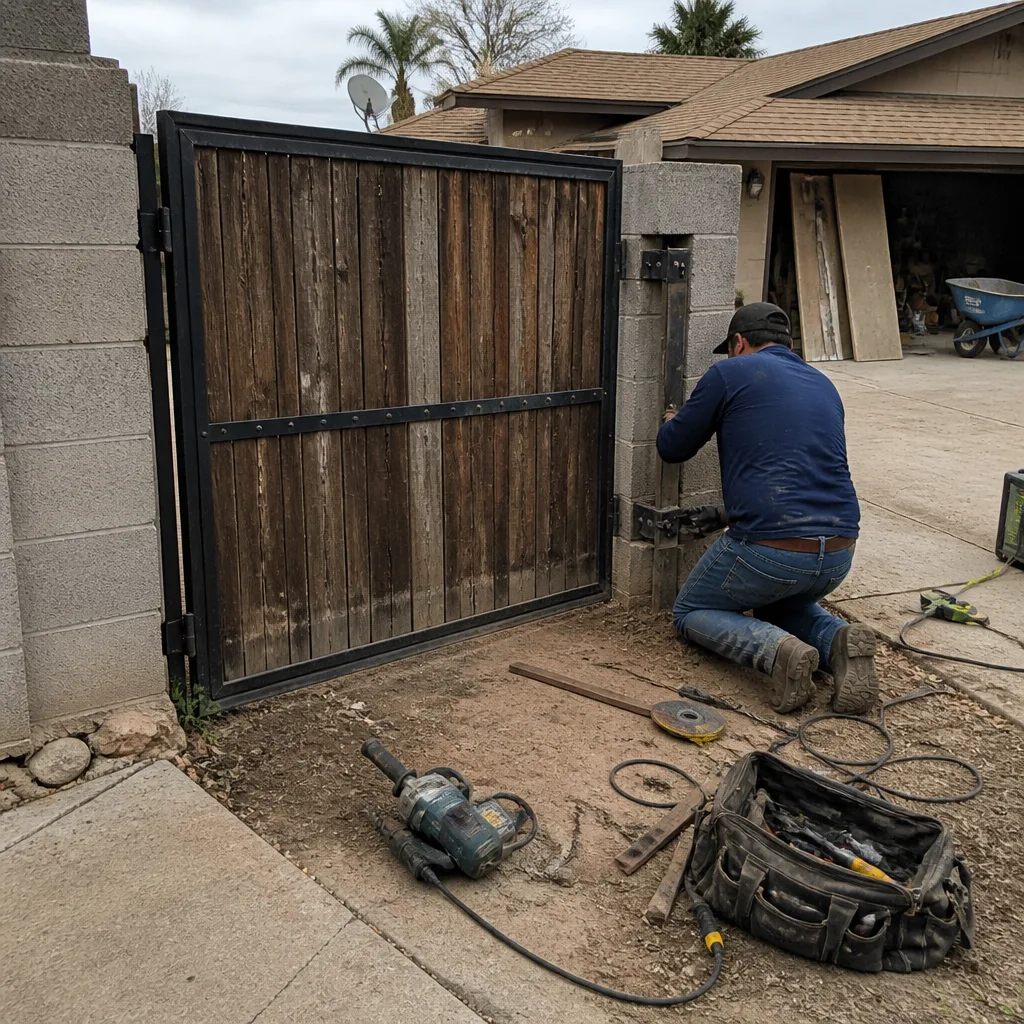 Before
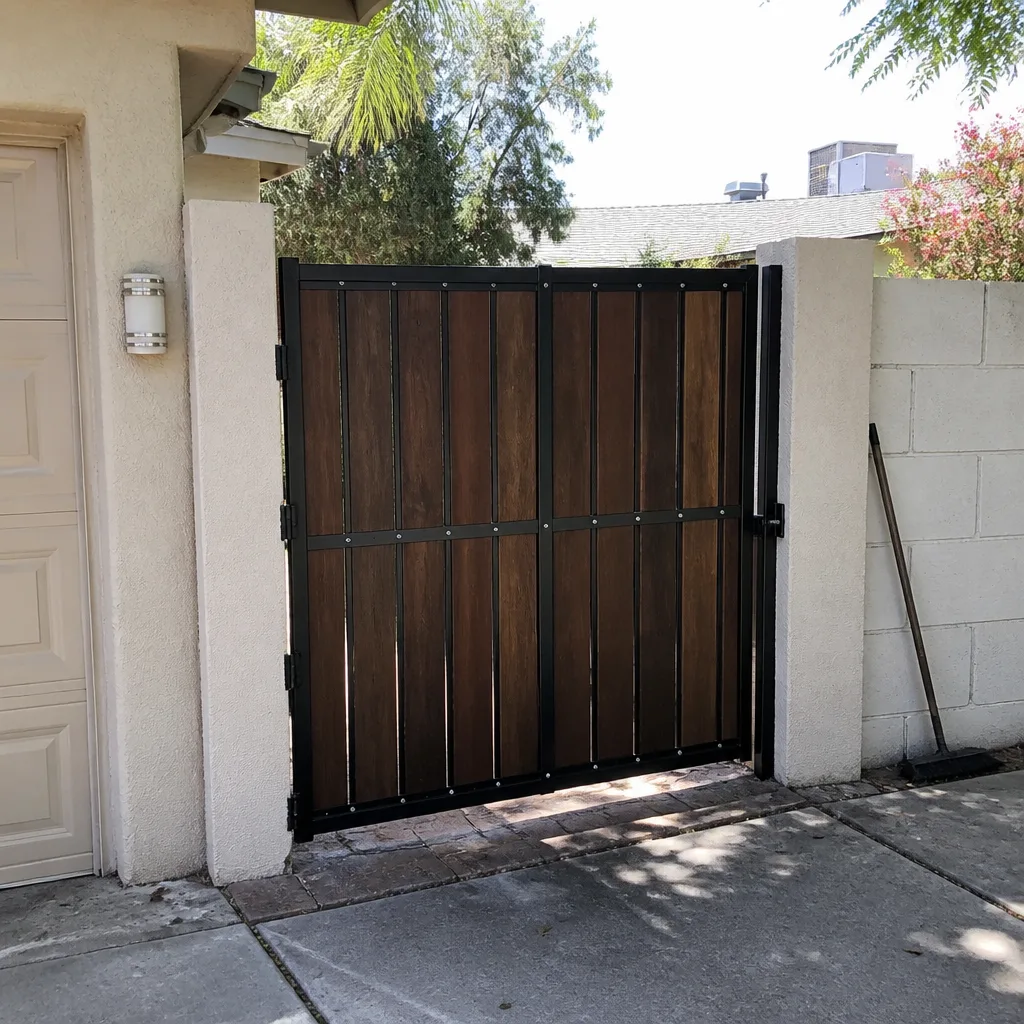 After
AfterFAAC Access Control Installation: The Phoenix Owner’s Guide
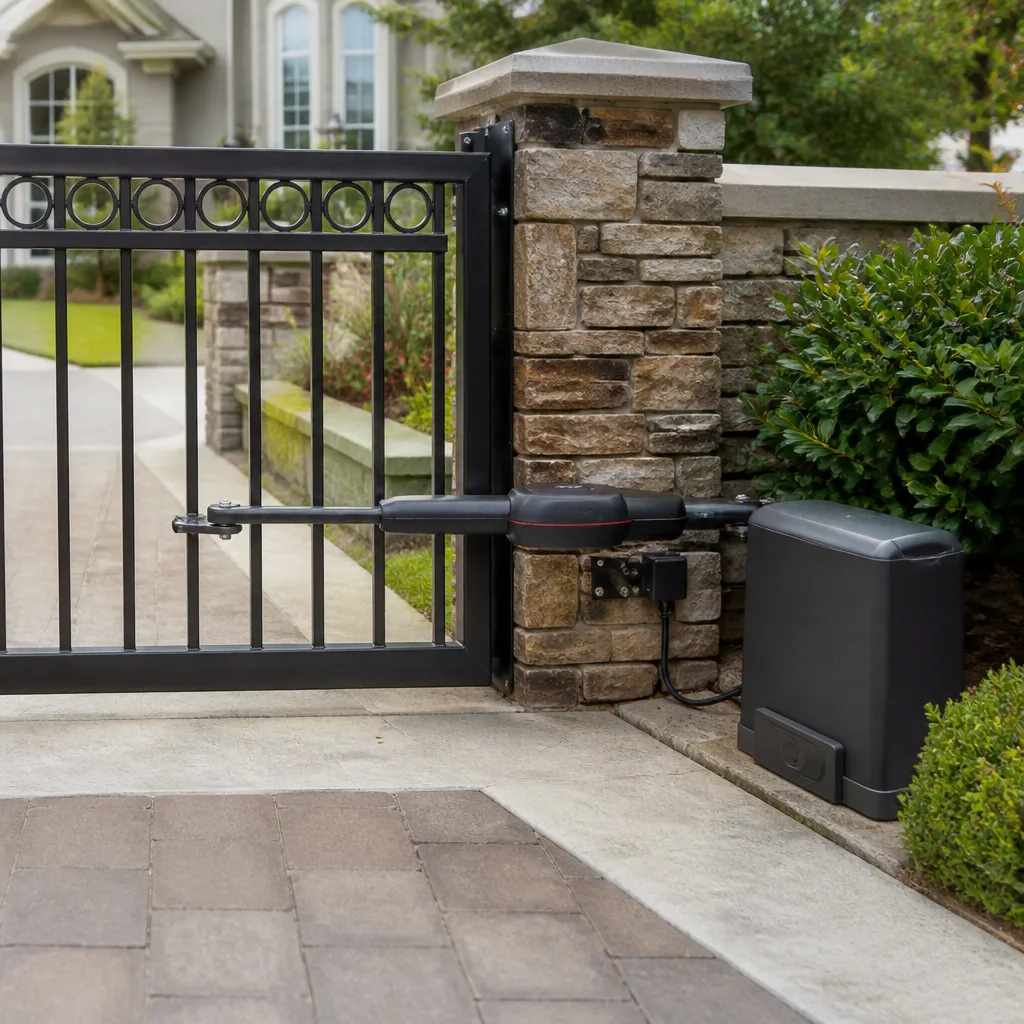
FAAC access control installation in Phoenix typically runs $1,200-$2,800 for a complete keypad, card reader, or telephone entry system, depending on whether we’re pulling wire through existing conduit or trenching new runs across hardscape. Most FAAC 412, 415, and 422 series swing or slide gate operators can accept these controls same-day if the wiring path is clear. We stock FAAC-compatible receivers, keypads, and loop detectors on our Phoenix service trucks, and we match the part to your operator series before we quote so you don’t pay for a control that speaks the wrong protocol.
Most Phoenix homeowners realize their FAAC access control is failing when the gate stops responding to the keypad entirely, or when visitors press the call button and nothing reaches the house. In summer, we’ve found heat-hardened wire insulation in attic-mounted receivers is often the real culprit, not the keypad itself.
Which FAAC Models This Applies To
FAAC has sold gate operators in the North American market for decades, and the access control ecosystem splits roughly into three compatibility groups. The 400-series hydraulic swing operators - 412, 415, 422, and the heavier 402 SBS - use FAAC’s own 868 MHz radio protocol or hardwired dry-contact inputs. The 740 and 844 electromechanical slide gate operators accept the same keypads and telephone entry modules but mount their control boards differently, so the wiring harness length matters. The newer S418 and S450 solar-compatible units have lower standby current draw, which means some older loop detectors and keypads pull too much in sleep mode and cause erratic behavior.
To identify your operator, find the silver data plate on the motor housing. The model number, production year, and input voltage are stamped there. For the access control itself, check whether your existing keypad has a part number ending in -P (proximity card), -K (keypad only), or -GSM (cellular). We carry both OEM FAAC controls and quality aftermarket equivalents from Linear and DoorKing that speak the same protocols. The aftermarket units often cost 30-40% less and carry the same one-year warranty, though we default to OEM when the existing mounting footprint is irregular and would require bracket fabrication.
One Phoenix-specific gotcha: FAAC’s 787752 keypad, common on 1998-2008 installations, used a threaded back-box that corrodes in our alkaline soil if the conduit seal fails. We check the box before quoting the keypad. Replacing a keypad on a rotted back-box is a two-trip job if you don’t catch it first.
Signs Your FAAC Access Control Installation Is Failing
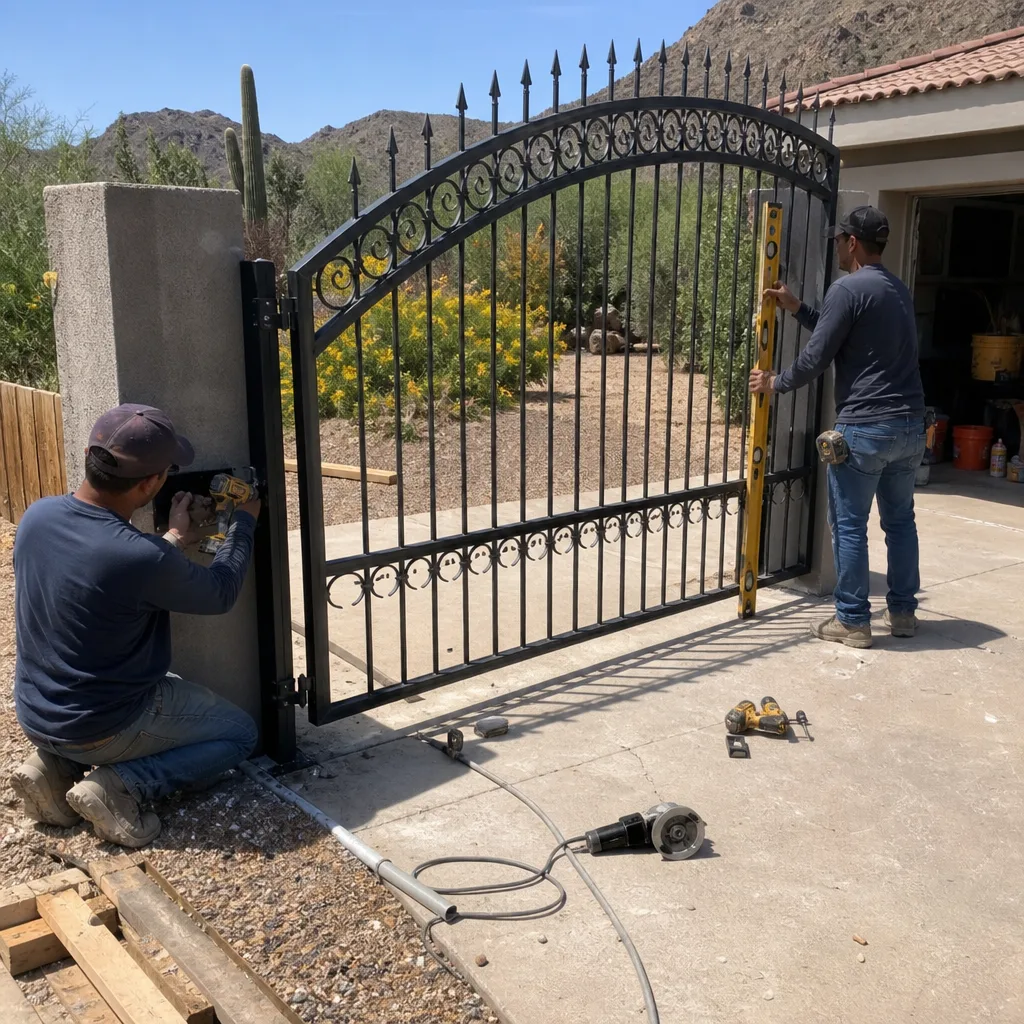
- Keypad beeps but gate doesn’t move. The keypad has power and logic, but the output relay or the wire run to the operator has failed. In Phoenix, we’ve traced this to rodent damage in attic runs more often than keypad failure - the 120°F summer attic temperatures drive rats toward cooler conduit paths.
- Intermittent response, worse in afternoon heat. The receiver or control board is thermally cycling out of spec. FAAC’s older 433 MHz receivers are particularly susceptible; we replace them with 868 MHz dual-band units that handle 140°F ambient without dropout.
- Card reader flashes red on valid credentials. The reader coil is degrading or the Wiegand wire run has developed resistance. On properties near the Salt River bed, we’ve found calcium buildup on terminal blocks from irrigation overspray causes this exact symptom.
- Telephone entry dials but never connects, or connects to wrong number. The GSM module has lost carrier registration, or the analog POTS line it was programmed for has been disconnected. Most Phoenix neighborhoods lost analog service 2019-2022; we reprogram for cellular or IP backhaul.
- Gate opens randomly, middle of the night. A neighbor’s new garage door opener or security system is broadcasting on a overlapping frequency, or the loop detector sensitivity has drifted. We scan the RF environment and recalibrate with a handheld spectrum analyzer on every suspected interference call.
 Before
 After
AfterReplacement Cost & What’s Included
Here’s what FAAC access control installation costs in Phoenix, with every line item visible before we start:
| Component | Typical Range |
|---|---|
| Basic keypad replacement (existing wiring intact) | $380-$620 |
| Telephone entry system, cellular backhaul | $1,400-$2,200 |
| Proximity card reader + 10 cards programmed | $720-$1,100 |
| Vehicle loop detector (in-ground installation) | $890-$1,450 |
| Complete access control overhaul, new conduit pull | $1,800-$2,800 |
The range depends on three things: how far the wire run is from gate to house, whether we’re cutting through existing Phoenix hardscape (pavers, decomposed granite, concrete), and whether the FAAC operator needs a firmware update to recognize the new control protocol. We quote every factor in writing before work starts, under Haven Standard Clause 1. The 365-Day Done Right Promise covers all access control work; if the keypad loses programming or the cellular module drops carrier, we return and make it right at no charge.
Every installation leaves with you a photo log of the wiring termination, the loop detector sensitivity setting, and the programmed phone numbers or card IDs. Under Clause 4, you get the same documentation we file - no future technician has to reverse-engineer what we did.
DIY or Call Us?
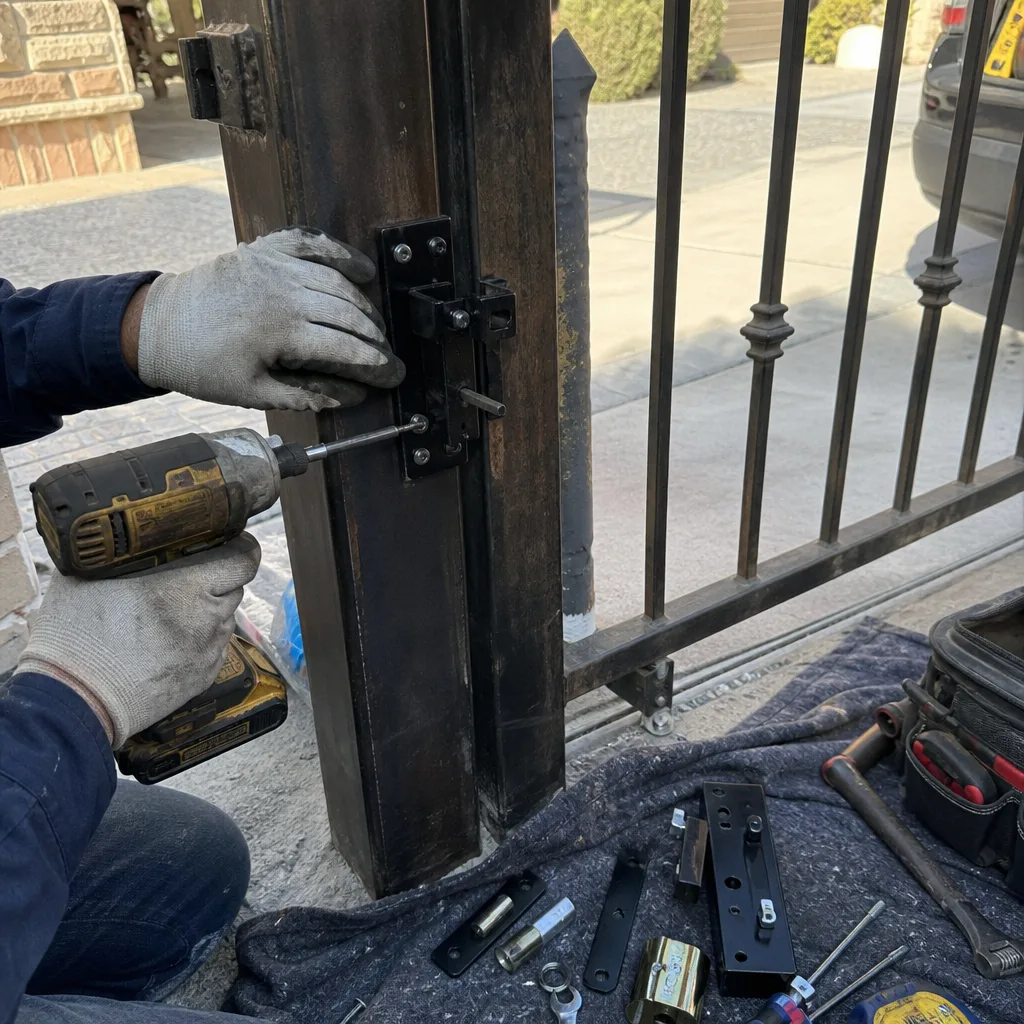
There’s a safe middle ground for FAAC access control, and a hard stop.
What you can check safely: verify the breaker hasn’t tripped, confirm the keypad display lights up (proving 24V AC or DC is reaching the device), and look for obvious wire damage at the operator end. If you have a multimeter, you can test for 24V at the keypad terminals - but stop there. The low-voltage side is safe; everything beyond the keypad involves line-voltage conduit runs, in-ground loop detector saw cuts, and RF programming that requires FAAC’s proprietary software or a compatible clone tool.
Where DIY goes wrong: programming a new keypad to an existing FAAC 844 without first reading the operator’s current limit-switch positions can cause the gate to overrun its travel and damage the arm or rack. We’ve been called to Paradise Valley and Arcadia properties where a well-meaning homeowner’s self-install cost $400 more in operator repairs than the original control replacement would have. The wiring itself is low-voltage, but the interaction with motor limits and safety edges is not forgiving.
We’re not affiliated with FAAC - we’re an independent service provider that stocks their parts and speaks their protocols. If you’re unsure whether your issue is the control, the operator, or the wiring between them, call (602) 483-6270. We’ll diagnose before we quote, and the quote is in writing before we pick up a tool.
FAQs
Most FAAC keypads and card readers last 8-12 years in Phoenix before the membrane or coil degrades, but the intense UV and 115°F+ summer attic temperatures where receivers often live cut that to 5-7 years if the enclosure isn’t ventilated. We spec outdoor-rated NEMA boxes with passive ventilation for any Phoenix installation that isn’t under covered eave. Call (602) 483-6270 if you’re unsure whether your existing enclosure is adequate - estimates are free.
Sometimes. A failed membrane on a 787752 keypad can be replaced separately from the logic board, saving roughly $200 over full replacement. But if the processor has lost its programming or the RF section has failed, repair exceeds replacement cost and we recommend a new unit with current encryption. We diagnose first, then quote both options in writing.
A straightforward keypad swap on existing wiring takes 90 minutes. A full telephone entry system with new conduit, cellular programming, and homeowner training runs 4-6 hours. We schedule, not dispatch, for installation work - you’ll get a written arrival window, not a same-day scramble. The price is fixed before we start regardless of duration.
We stock FAAC-compatible keypads, receivers, loop detectors, and proximity readers on every Phoenix service truck, plus the programming cables and software to configure them. For specialty items like long-range RFID or biometric modules, we overnight from our distributor and install next business day. We don’t charge a second trip fee for the return visit.
Written by Adrian Vance, Owner, Vance Gate Repair Phoenix at Vance Gate Repair Phoenix, serving Phoenix and nearby areas.