
Free on-site gate assessment - hinges, posts, and your LiftMaster or Nice gate operator checked before anything is quoted
The assessment is free and the quote is the invoice.

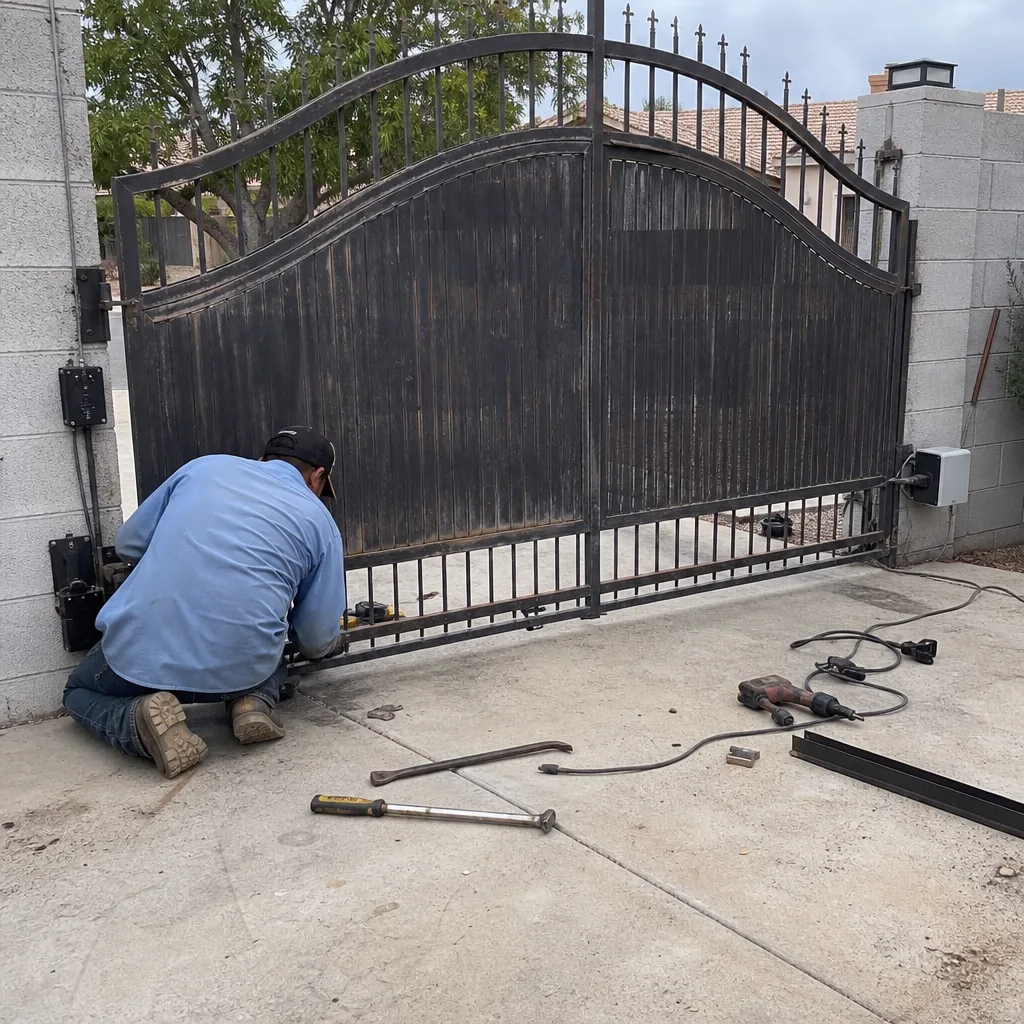 Before
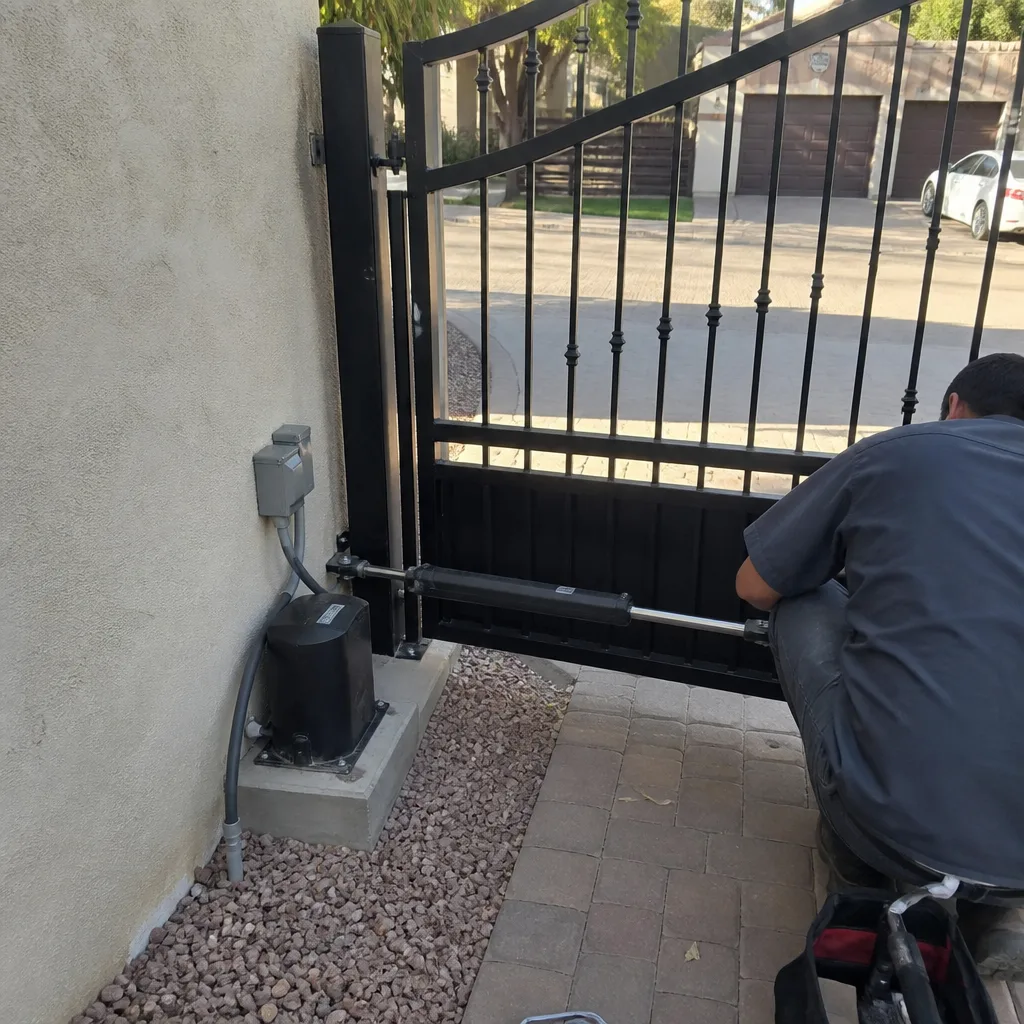 After
After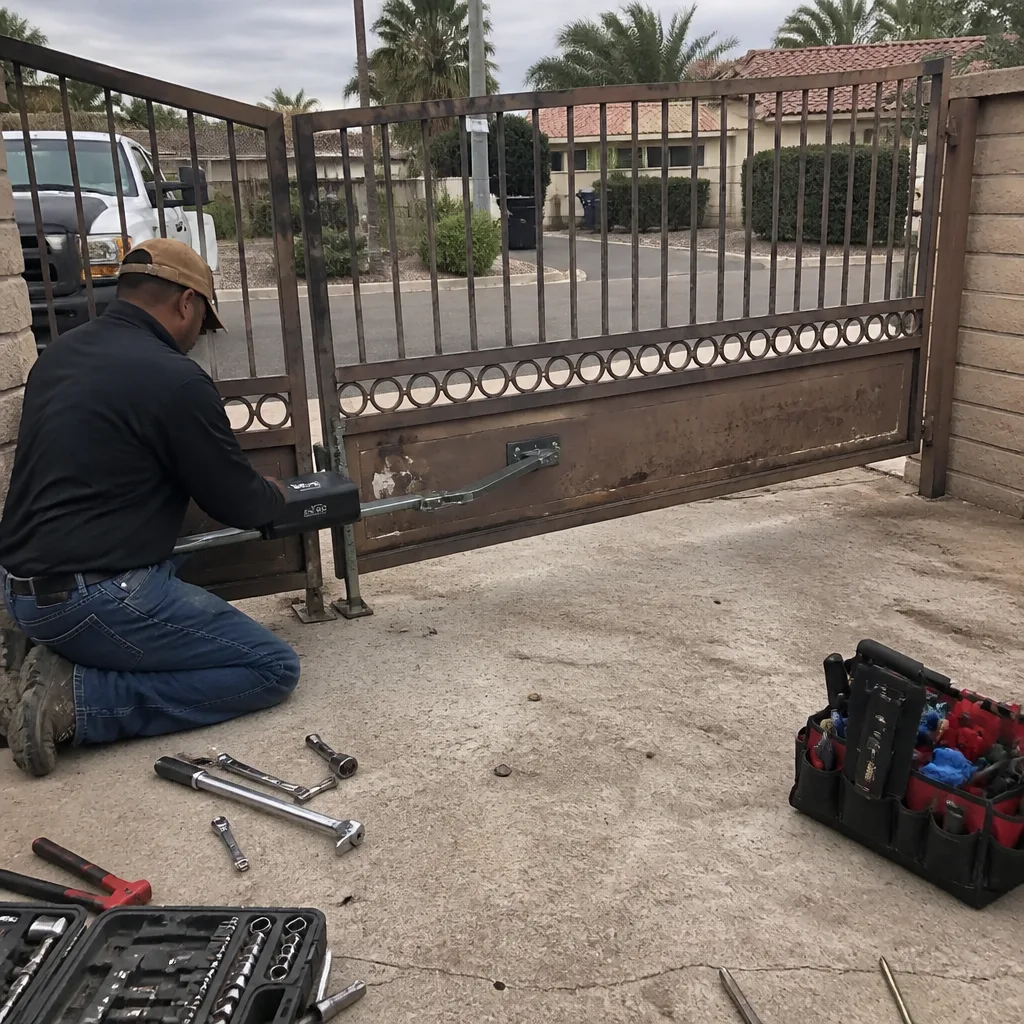 Before
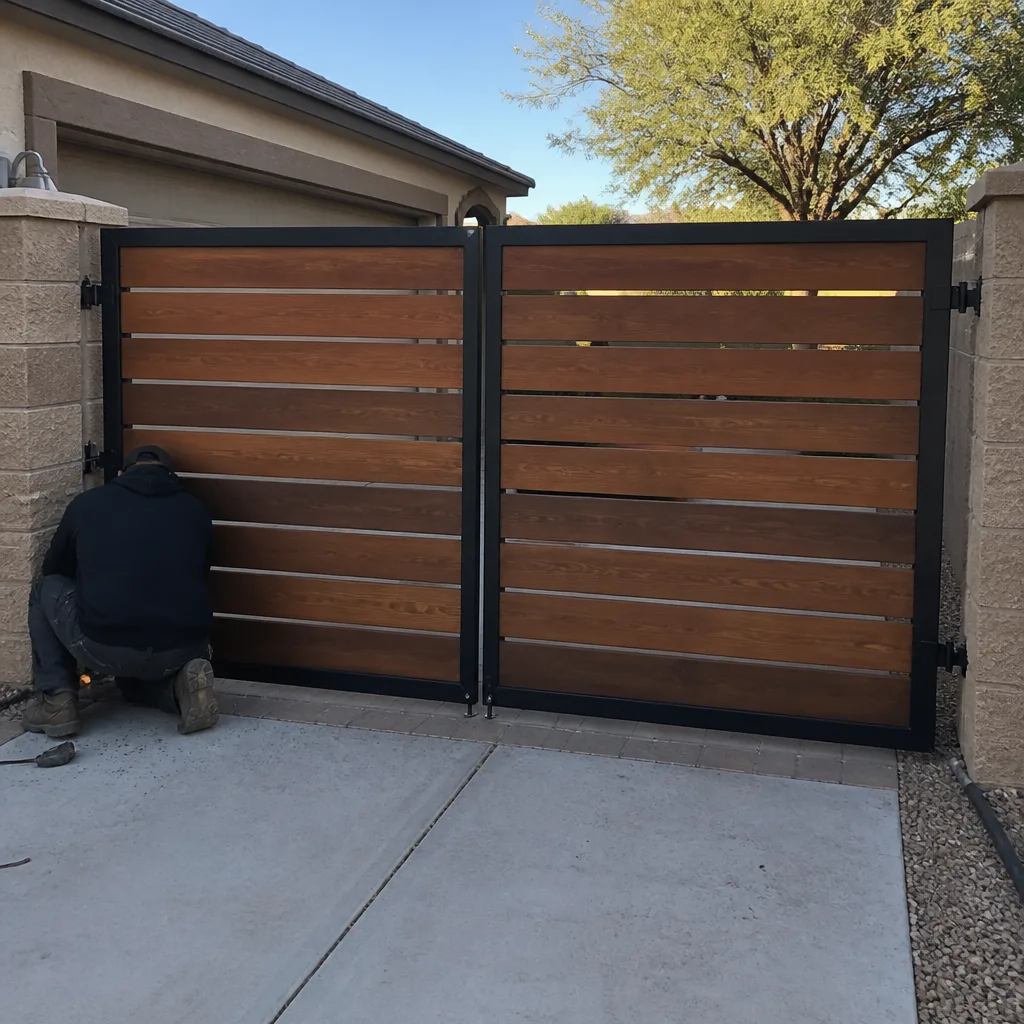 After
After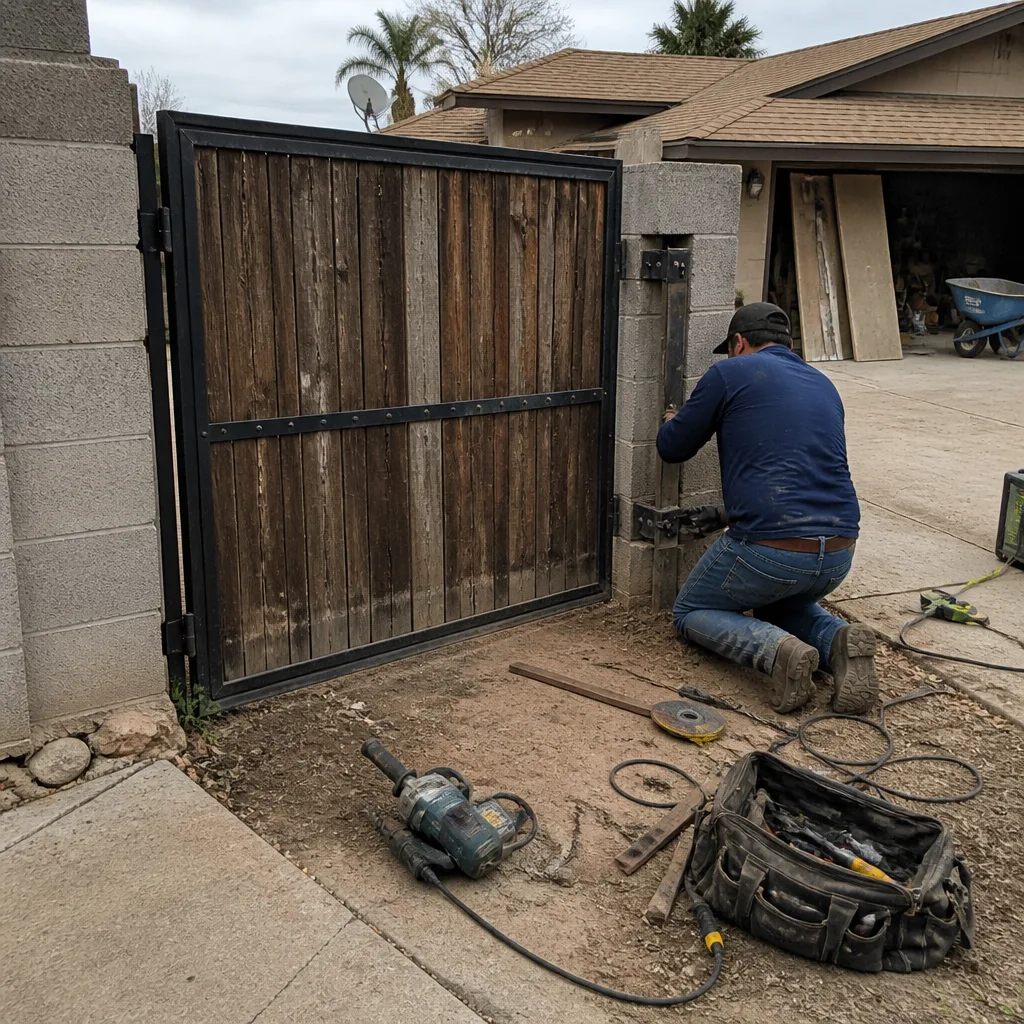 Before
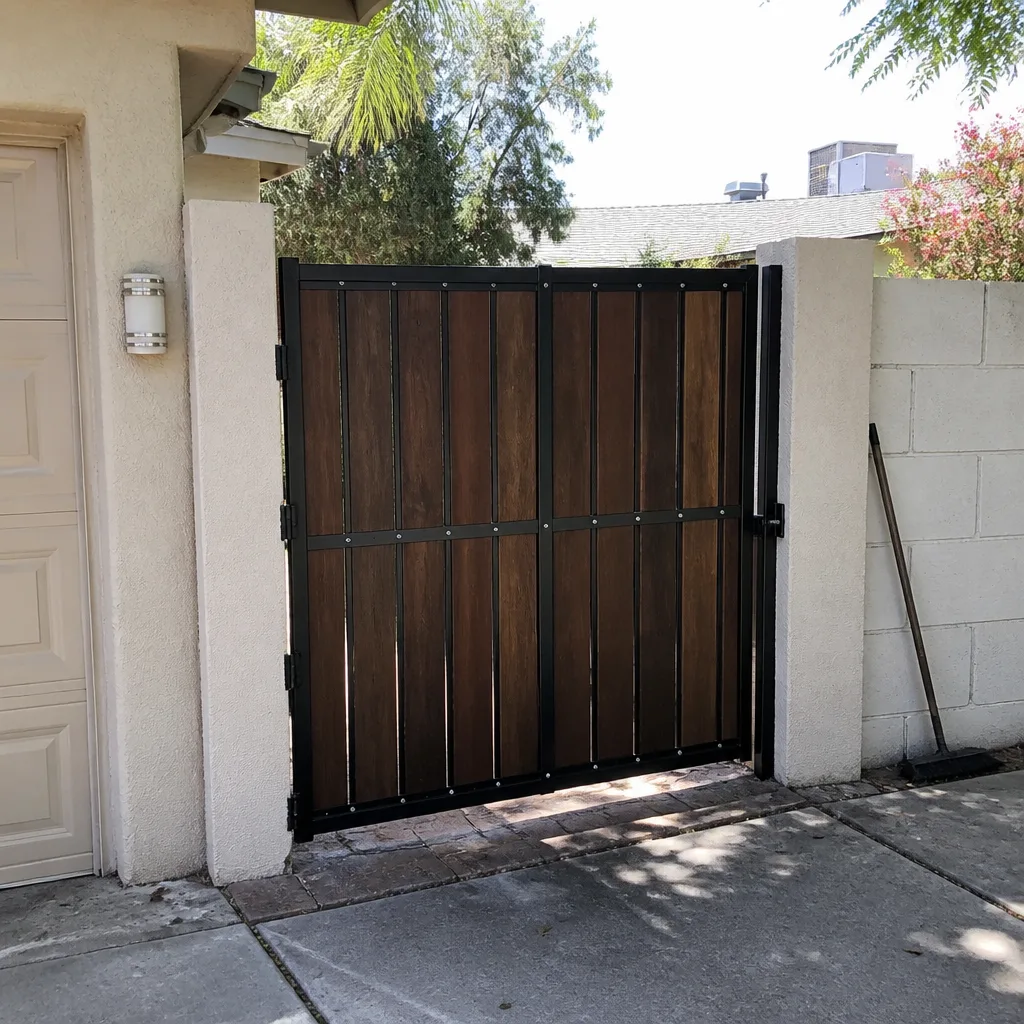 After
AfterGhost Controls Access Control Installation: The Phoenix Owner’s Guide
We stock and install Ghost Controls-compatible access control hardware for swing and slide gate operators across Phoenix, with most residential keypad, push-button, and remote-receiver installations running between $340 and $780 depending on the control type and whether we need to run low-voltage wire through existing conduit. Same-day installation is available when the part is on our truck, which it usually is for the TSS1, AXWK, and premium keypad lines. Most Phoenix homeowners realize their access control is failing when the gate stops responding to remotes but still works from the manual switch, or when visitors can hear the keypad power up but the gate won’t release.
Which Ghost Controls Models This Applies To
Ghost Controls organizes its access control around three product tiers: the entry-level TSS series, the mid-grade AXWK and AXPB push-button stations, and the premium architectural keypads like the DKLT and DKP. The critical compatibility gotcha is the voltage output: early TSS1 units shipped with a 12-volt AC control board, while everything from 2019 forward runs 24-volt DC. Installing a 24-volt keypad on a 12-volt board will power up but throw erratic release signals that burn out the relay in about six weeks.
To identify your board version, pop the operator cover and read the white label on the control board itself, not the operator model sticker on the housing. The label will show “12VAC” or “24VDC” in the upper right corner. We carry both OEM Ghost Controls keypads and a commercial-grade aftermarket line from Linear that matches the 24-volt spec and fits the same mounting footprint, though the keypad membrane on the Linear unit is slightly more UV-resistant for Phoenix exposure. We don’t steer toward replacement when your Ghost Controls motor is sound; we match the control to the board and document the voltage reading in your job record.
Signs Your Ghost Controls Access Control Installation Is Failing
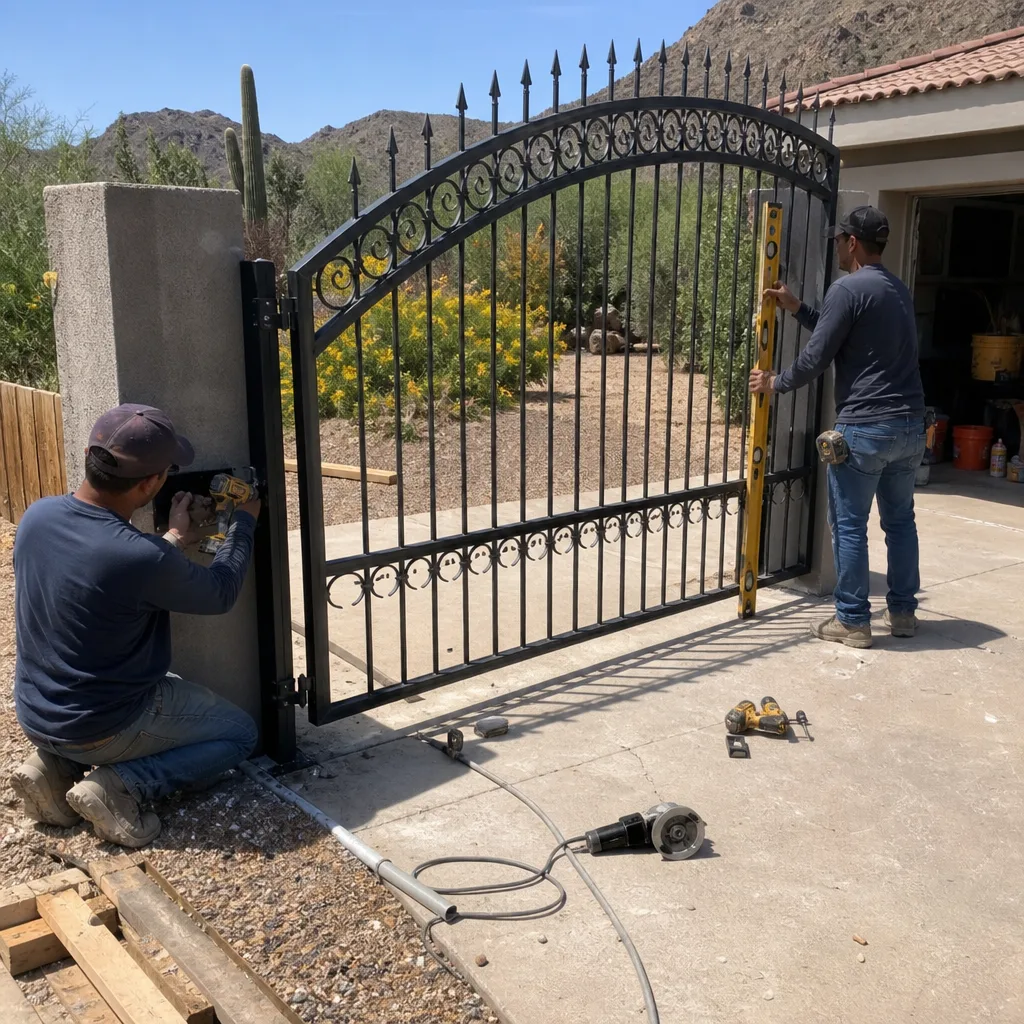
- Remote works, keypad doesn’t. This usually means the receiver is healthy but the control station has lost its pairing or the internal relay has carboned up from repeated arcing in dry Phoenix dust conditions.
- Keypad lights up, gate doesn’t move. Power is reaching the station, but the output relay isn’t closing the circuit back to the operator board. On Ghost Controls units, this often traces to a cracked solder joint on the relay pin that opens in summer heat.
- Intermittent response that gets worse after noon. Thermal expansion in the keypad housing shifts the membrane contacts. We’ve tracked this on south-facing installs in Arcadia and the Biltmore area where housing surface temps hit 140°F by 2 p.m. in July.
- Gate opens on its own, usually between 10 p.m. and 4 a.m. The control board’s “vacation mode” timer or a neighbor’s overlapping Ghost Controls remote on the same DIP-switch setting is triggering the release. We check for both and document the frequency scan.
- Keypad beeps but no tone feedback, or tones sound “sick.” The piezo speaker is failing from UV degradation. It’s a $12 part, but on integrated Ghost Controls stations the speaker isn’t separately replaceable; the whole station comes out.
 Before
 After
AfterReplacement Cost & What’s Included
| Control Type | Part + Labor Range | Typical Scenario |
|---|---|---|
| Basic push button (AXPB-style) | $340 - $460 | Surface mount, existing low-voltage wire intact |
| Keypad with lighting (DKP/DKLT) | $480 - $680 | Includes programming up to 25 codes, wire run through conduit |
| Wireless keypad with receiver | $580 - $780 | Full antenna install, range testing, interference check |
| Multi-receiver expansion | $220 - $340 add-on | Second channel for pedestrian gate or second operator |
What moves the price: whether we need to fish new 18/2 low-voltage wire through existing conduit (often brittle from Phoenix heat cycling), whether the mounting surface is block, stucco, or hollow tube, and whether your Ghost Controls board needs a firmware update to recognize newer keypad protocols. The price we write is the price you pay; we don’t open the housing and discover “unexpected complications.” Under Clause 1 of The Haven Standard, you get the written scope and price before we touch a tool. Every installation carries our 365-Day Done Right Promise.
DIY or Call Us?
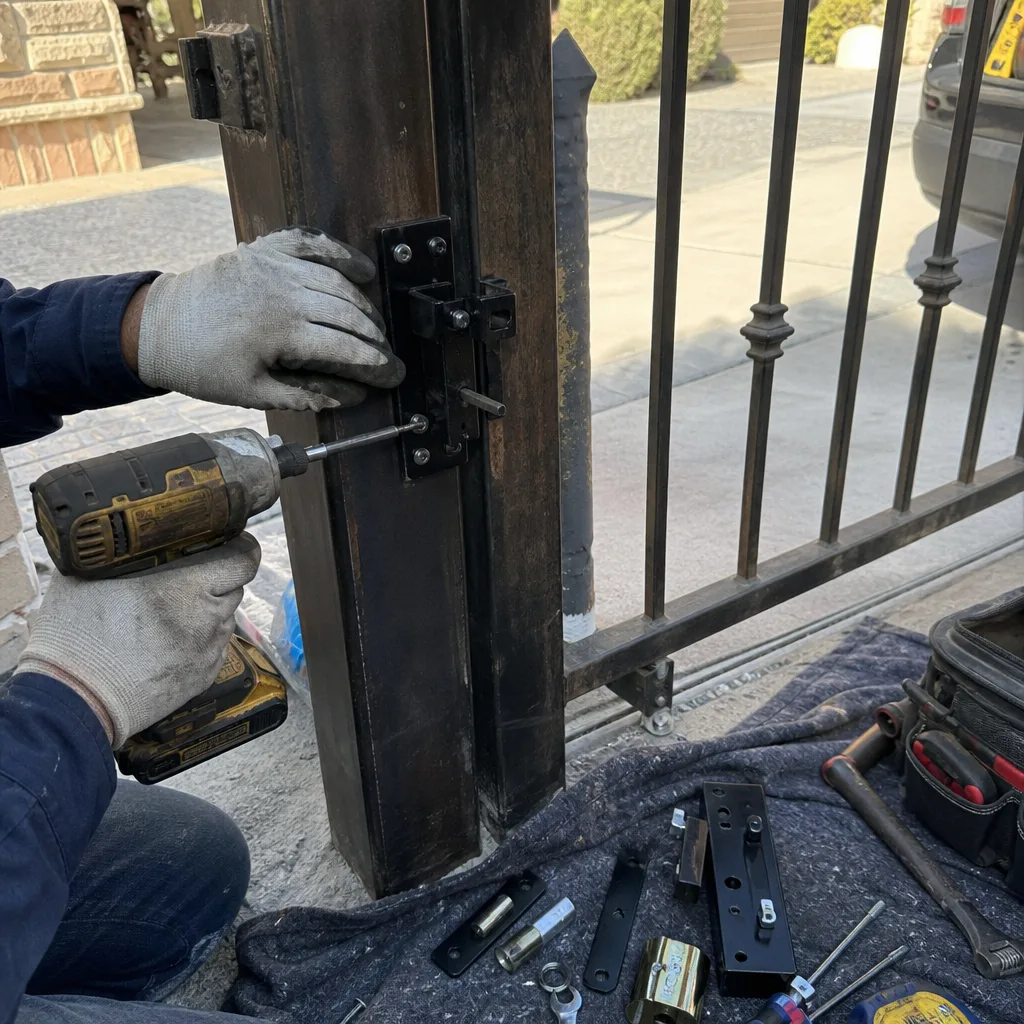
There’s safe homeowner territory and there’s territory where we’ve been called to fix what a YouTube video started. You can safely check whether the keypad is getting power with a basic multimeter set to DC volts, and you can verify the breaker hasn’t tripped. What you should not do is open the Ghost Controls operator housing to probe the control board with power on; the 120-volt AC input sits inches from the low-voltage terminals, and the capacitor holds a charge that can throw you even with the breaker off. We’ve replaced boards that were damaged by a homeowner’s screwdriver slipping across terminals.
The other DIY trap is programming: Ghost Controls keypads require a specific sequence of operator-button presses to enter learn mode, and timing matters. Get it wrong three times and some boards lock out for 30 minutes. We carry the programming charts for every series we’ve seen in Phoenix, and we photograph the final code list before we leave so you have it in writing. If you’re unsure about the voltage spec or the wire run looks questionable, call us at (602) 483-6270 and we’ll sort it without the guesswork.
FAQs
Most residential keypads last 5 to 8 years in Phoenix before the membrane or relay fails, though south-facing installs with no shade cover can see 3-year lifespans from UV and thermal cycling. The premium DKLT units with metal housings tend to outlast the polymer TSS series by two to three years. Call (602) 483-6270 for an exact quote - estimates are free.
Usually not cost-effectively. The relay, membrane, and processor are integrated on a single board, and Ghost Controls doesn’t sell sub-assemblies. We check for a simple loose wire or failed transformer first, but when the station itself is the problem, replacement is the practical fix. Call (602) 483-6270 for an exact quote - estimates are free.
Most residential swaps take 90 minutes to 2 hours, including removal, mounting, wire termination, programming, and range testing. A fresh wire run through existing conduit adds 30 to 60 minutes if the conduit isn’t compromised. Call (602) 483-6270 for an exact quote - estimates are free.
We carry the TSS1, AXPB, DKP, and DKLT lines on our standard inventory, plus the Linear-compatible 24-volt units. For discontinued Ghost Controls models, we can typically cross-reference to a current part within one business day. Call (602) 483-6270 for an exact quote - estimates are free.
Vance Gate Repair Phoenix is an independent service provider and is not affiliated with Ghost Controls. We also stock parts for LiftMaster, Mighty Mule, and DoorKing systems.
Name what you found. Name what it costs. Name what you left behind. That’s the habit Adrian Vance developed rewiring intercom panels in Queens apartment buildings before he moved the operation west, and it’s how we still run every Phoenix service call today.
Written by Adrian Vance, Owner, Vance Gate Repair Phoenix at Vance Gate Repair Phoenix, serving Phoenix and nearby areas.