
Last updated September 22, 2026
Free on-site gate assessment - hinges, posts, and your LiftMaster or Nice gate operator checked before anything is quoted
The assessment is free and the quote is the invoice.

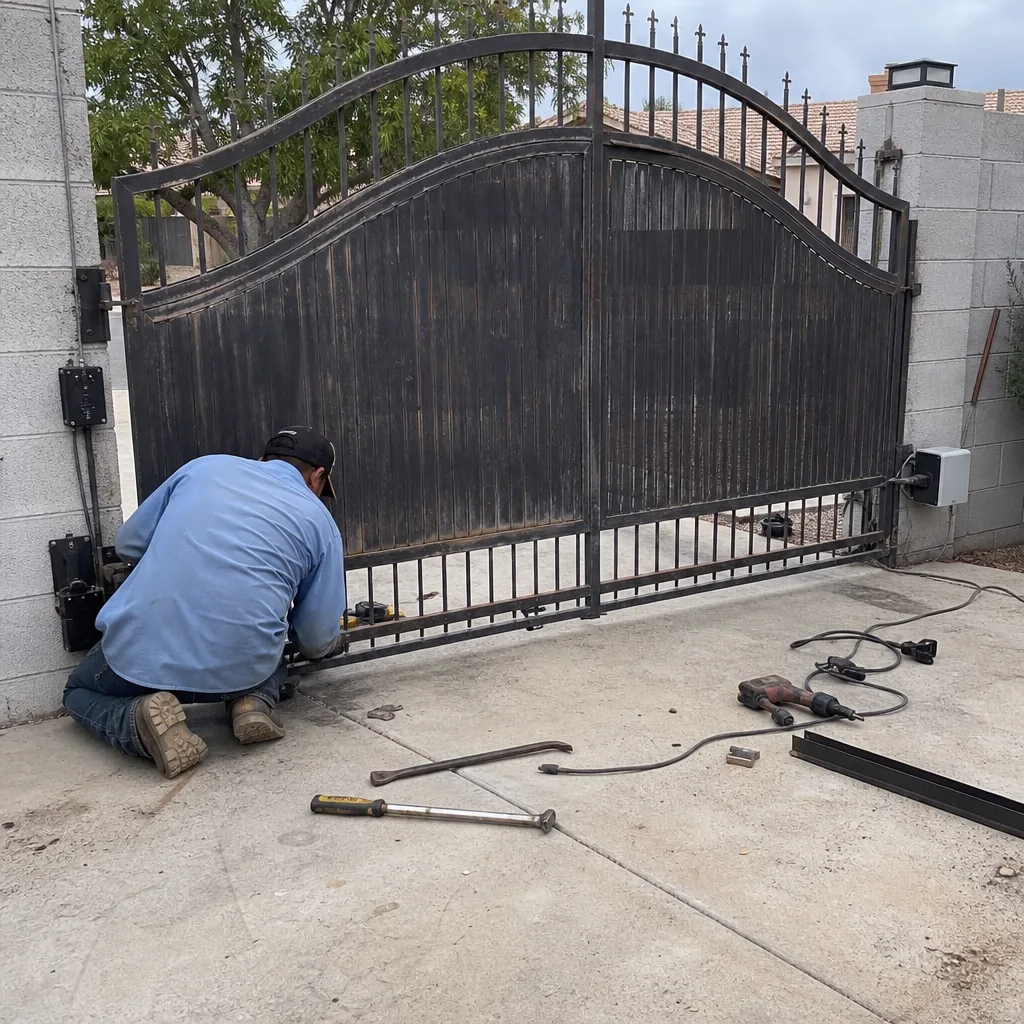 Before
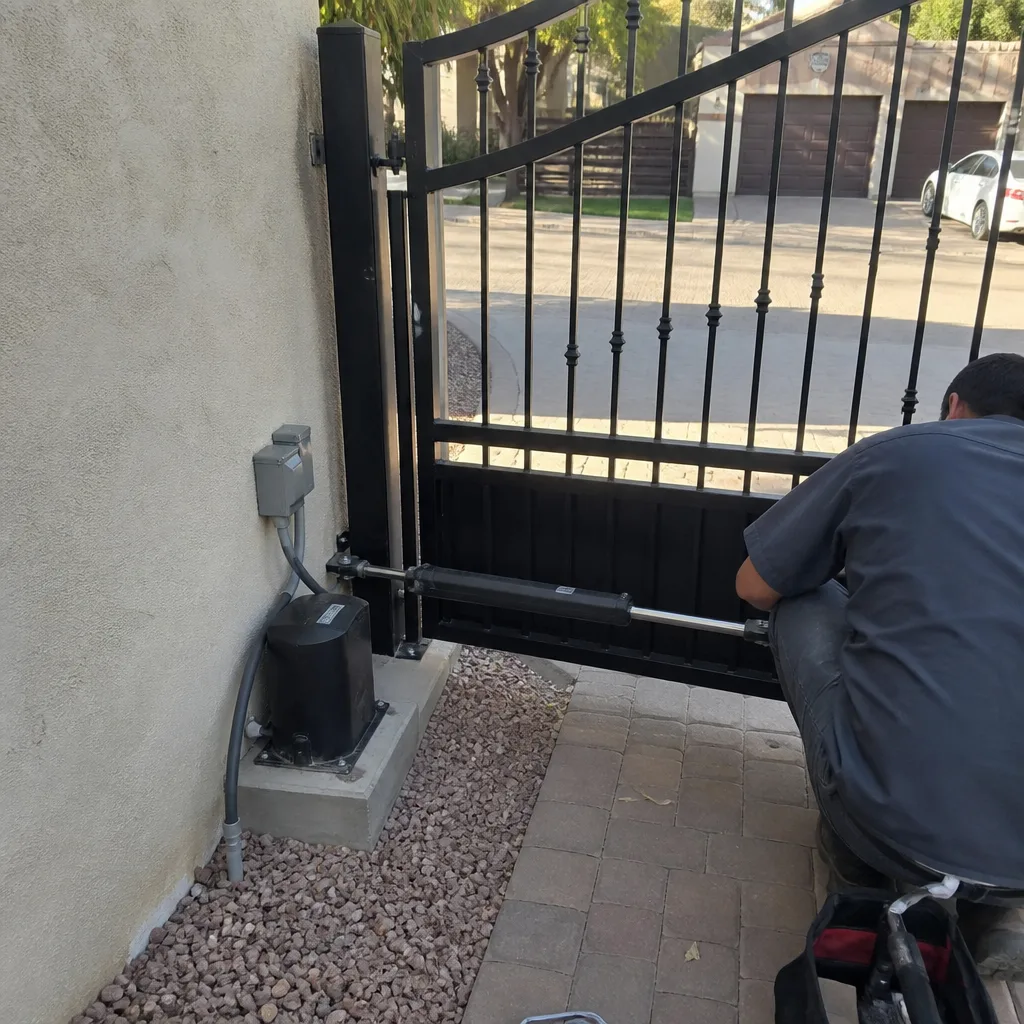 After
After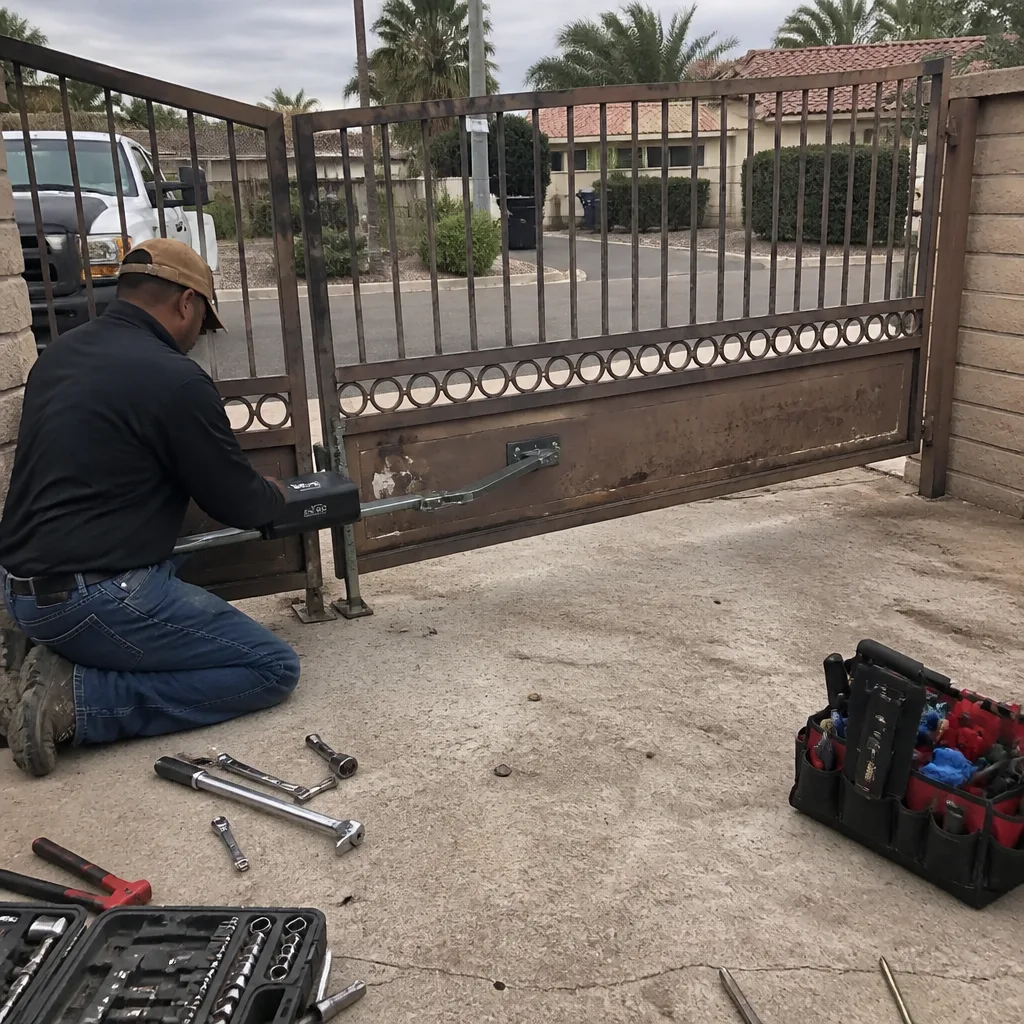 Before
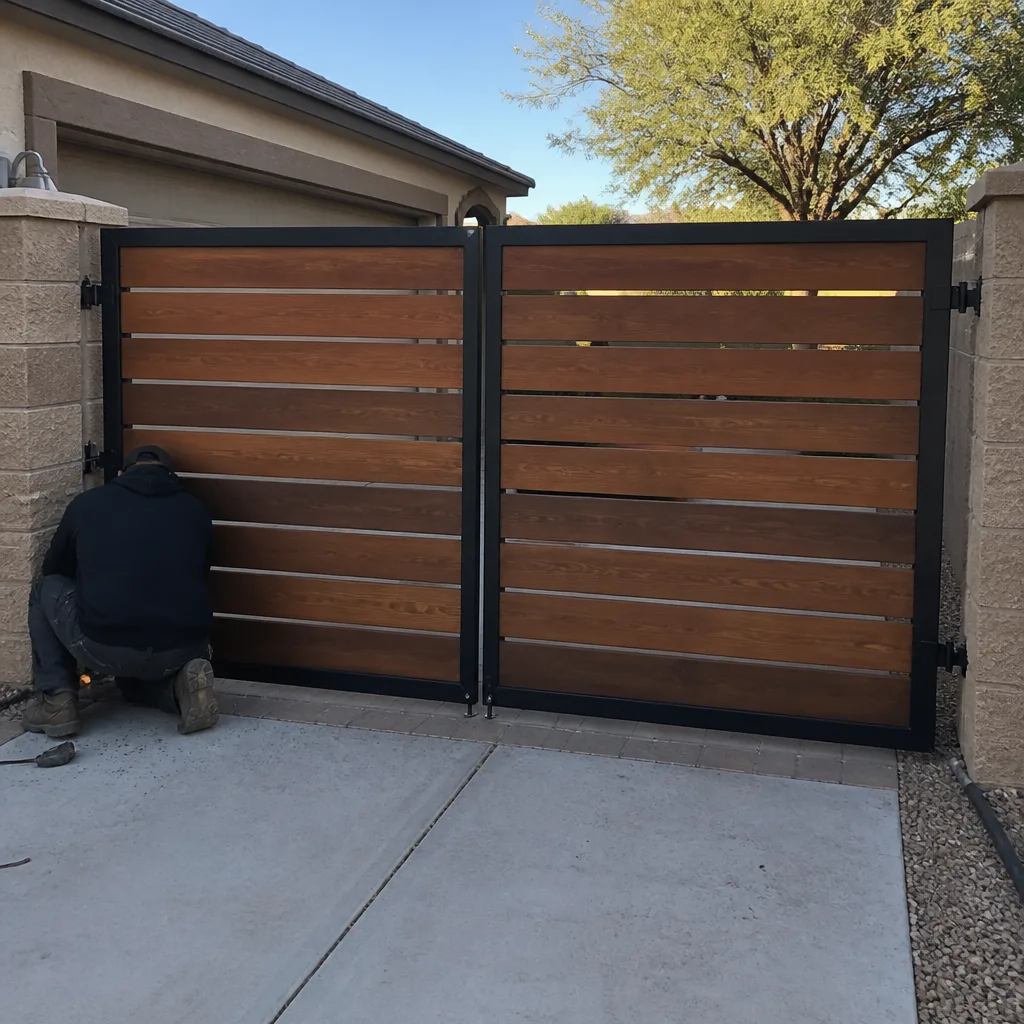 After
After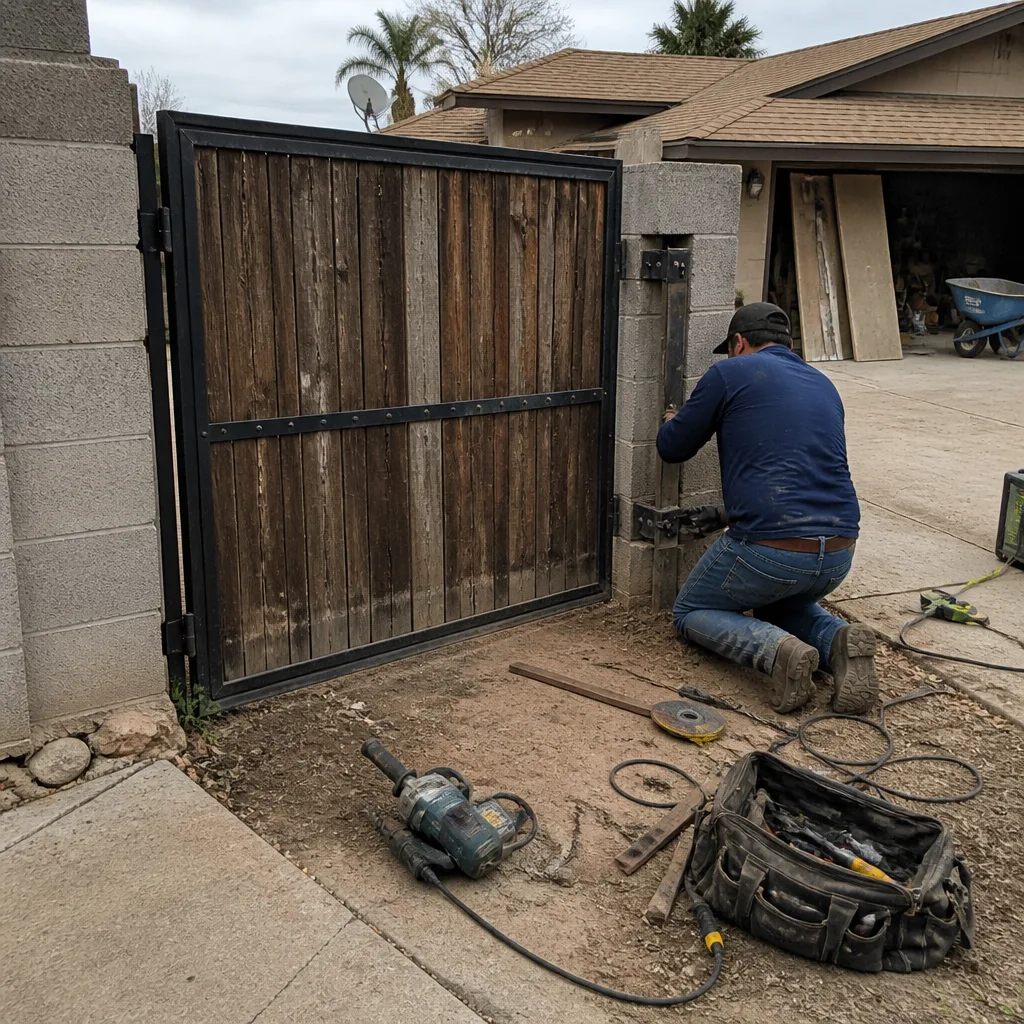 Before
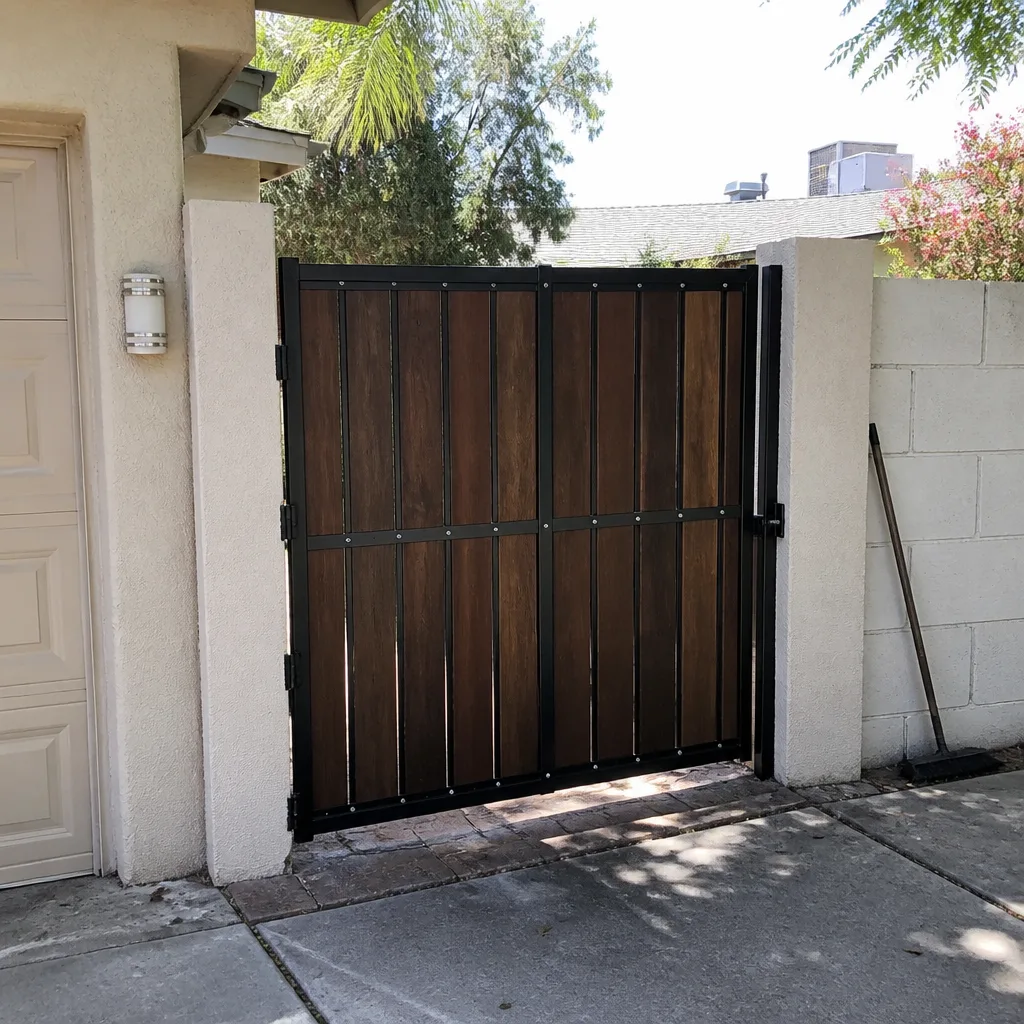 After
AfterSeasonal Gate Repair Care for Phoenix: Year-Round Homeowner’s Guide
The worst time to discover your gate’s surge protector is missing is three days into monsoon season. The best time to check it is the last week of May - before the first storm, when replacement parts are on the shelf and labor isn’t backed up. In Phoenix, gate maintenance timed to national “spring and fall” calendars misses both critical intervention points. We’ve repaired over 22,000 gates since 2014, and the pattern is consistent: Phoenix gates fail predictably, but not seasonally in the way The Complete Guide to Gate Repair in Phoenix and most other guides assume. This guide reframes your maintenance calendar around Phoenix’s actual climate stressors - pre-monsoon electrical prep, mid-storm damage control, post-summer component assessment, and winter thermal cycling - so you catch failures before they lock you out or leave your driveway exposed.
Quick Answer
Phoenix gate owners should perform targeted maintenance four times per year: pre-monsoon electrical inspection in late May, post-storm checks after each major monsoon event, a full component assessment in October after summer heat stress, and UV/wiring inspection during the winter dry season. This schedule prevents the three most common failure modes in Phoenix - surge damage to control boards, thermal degradation of motor capacitors, and UV-brittled wiring insulation - while building a documented baseline that makes every future repair faster and more precise.
Table of Contents
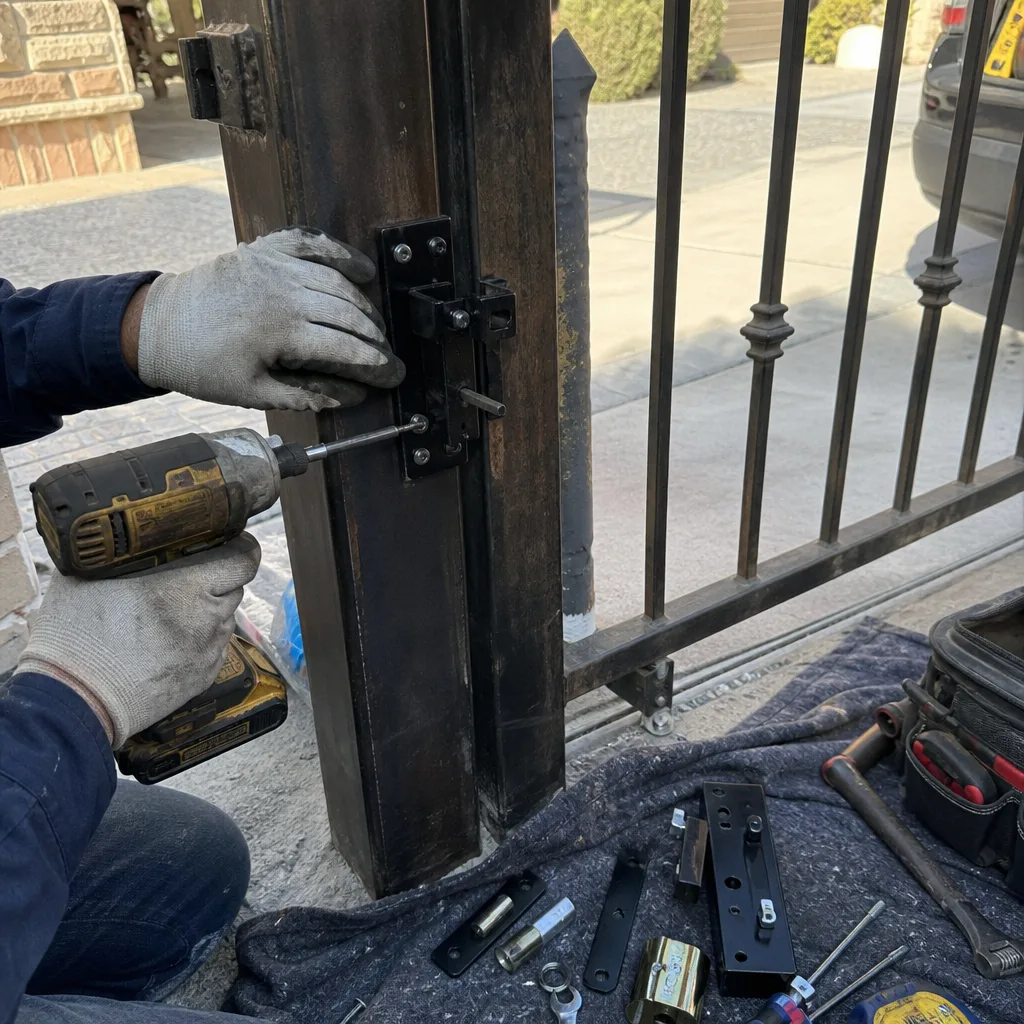
- Why Phoenix’s Two Stress Seasons Break National Maintenance Advice
- Pre-Monsoon Window: Late May Electrical Prep
- During Monsoon: Storm Protocol and Damage Control
- Post-Monsoon Assessment: October Component Audit
- Winter Dry Season: UV, Thermal Cycling, and Hidden Wiring Damage
- Building a Seasonal Log That Saves Money on Every Future Call
- Common Mistakes to Avoid
- When to Call a Professional
- Frequently Asked Questions
 Before
 After
AfterWhy Phoenix’s Two Stress Seasons Break National Maintenance Advice
Most national gate maintenance guides assume four distinct seasons with moderate temperature swings. Phoenix has two gate-stress seasons and two relative recovery windows, and treating them equally leads to missed inspections and predictable failures.
The two stress seasons:
- Monsoon season (June 15 - September 30): Sudden electrical surges, wind-driven debris, flash flooding at gate low points, and humidity spikes that corrode contacts designed for dry operation. In Arcadia and the Foothills, we’ve seen sustained 50+ mph gusts misalign photo-eyes and physically bend aluminum track on sliding gates.
- Core summer (May - September): Sustained temperatures above 105°F push motor capacitors, control boards, and transformer housings past their thermal design limits. Gates in direct sun on south-facing driveways in Ahwatukee and Desert Ridge experience housing temperatures 20-30 degrees above ambient air temperature.
The two recovery windows:
- October - November: Post-monsoon, post-peak-heat. The ideal window for comprehensive assessment because all summer stress is visible but winter cold hasn’t added thermal contraction yet.
- December - April: Cool, dry, stable. Perfect for detailed wiring inspection and documentation because components aren’t thermally stressed and monsoon debris is cleared.
The national advice to “lubricate in spring and inspect in fall” fails in Phoenix because spring is already pre-monsoon crunch time, and fall is when you assess damage, not prevent it. Our gate repair work in Phoenix spikes predictably in July (surge damage) and January (brittle winter failures from deferred summer damage), both avoidable with the calendar below.
Pre-Monsoon Window: Late May Electrical Prep
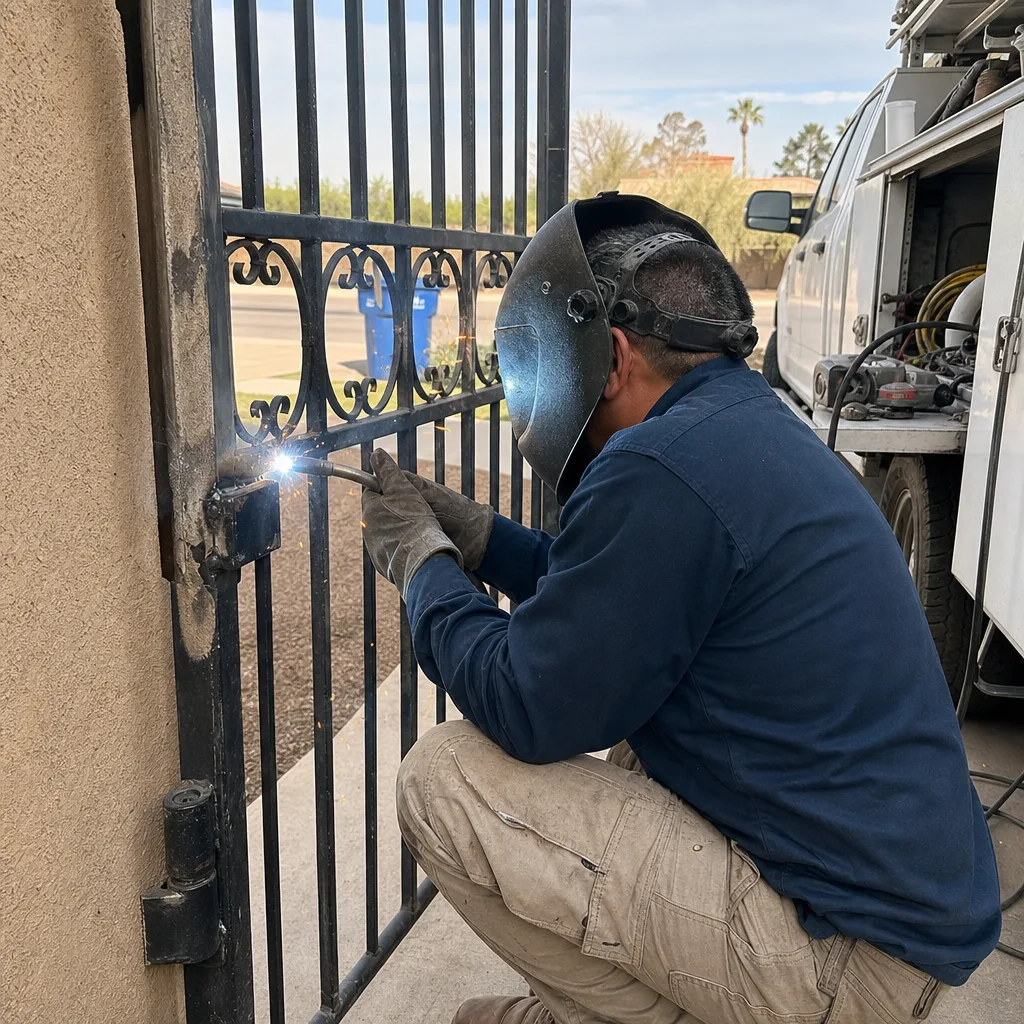
The last week of May is your only guaranteed preparation window before the first storm. Parts distributors stock surge protectors and sealed enclosures heavily in May; by mid-June, backorders are common and technicians are booked 5-7 days out.
What to inspect and replace:
- Surge protector on the control board. Look for a small cylindrical or block component near the transformer input, usually labeled MOV or VDR. If it’s discolored, cracked, or missing entirely, replace it. We’ve found missing surge protectors on roughly 15% of gates we service in Paradise Valley and the Biltmore area - previous technicians removed failed ones and never installed replacements.
- Transformer housing seal. The transformer steps down 120V to 24V for the control board. Its housing has a rubber gasket that hardens in Phoenix heat. Check for cracks or gaps; moisture intrusion here destroys the board.
- Photo-eye alignment and hood condition. The infrared beam that stops the gate if something crosses the path needs clear alignment and intact hoods. Monsoon wind blows dust that scatters the beam; hoods reduce this. Tighten mounting brackets - vibration loosens them over summer.
- Drainage at the gate low point. Sliding gates in particular have a track section that’s the lowest point in the driveway. If water pools there during monsoon downpours, the track foundation shifts and the gate binds. Clear debris and verify the track bed drains within 30 minutes of a heavy spray from a hose.
- Battery backup test (if equipped). Power outages spike during monsoon. Test the battery under load - open and close the gate twice on battery alone. If voltage drops below 12V during the second cycle, replace before July. On Linear and Ghost Controls systems, the battery health indicator on the board is often inaccurate; test with a multimeter.
Documentation for this visit: Photograph the surge protector part number, the transformer housing seal condition, and the photo-eye alignment measurement (distance from a fixed reference point on the post). Under Haven Standard Clause 4, our technicians leave this record with you and file a copy - but if you’re doing this yourself, a phone photo with date stamp builds your baseline.
During Monsoon: Storm Protocol and Damage Control
Phoenix monsoon storms don’t arrive on a schedule - they build in the mountains and hit with 30 minutes of warning. Your gate needs a protocol, not a panic response.
Immediate post-storm check (within 24 hours):
- Visual walk-around before operating. Look for new debris in the track, bent or displaced photo-eye mounts, and water line marks on posts or the operator housing. If you see standing water near electrical components, do not power cycle the gate - call for inspection.
- Test manual release. Every automated gate has a manual release mechanism (usually a key switch or lever). Verify it functions. If the power is out and the release is stuck, you’re locked in or out.
- Listen to the first automated cycle. Grinding, hesitation, or a motor that runs longer than usual before stopping indicates debris in the track, misaligned limit switches, or water intrusion in the housing.
- Check the photo-eye beam path. Dust on the lens scatters the infrared signal. Clean with a dry cloth - moisture can worsen the problem if the seal is compromised.
What counts as a reportable change:
- Any new sound - clicking, grinding, whining, or relay chatter
- Any change in open/close speed - even 2-3 seconds difference
- Any intermittent behavior - works fine three times, fails the fourth
- Any water mark or corrosion visible on electrical components
- Any physical movement of the operator housing or arm mount
These are not “wait and see” items in monsoon season. Intermittent electrical faults in humid conditions progress to hard failures within 48-72 hours. In our experience across Phoenix, from Encanto to South Mountain, the gates that survive monsoon season without a service call are the ones where owners reported the first intermittent symptom immediately.
On Viking and BFT systems, the control board stores error codes that persist through power cycles. If your gate behaves oddly after a storm, note the LED flash pattern before resetting - it saves diagnostic time.
Post-Monsoon Assessment: October Component Audit
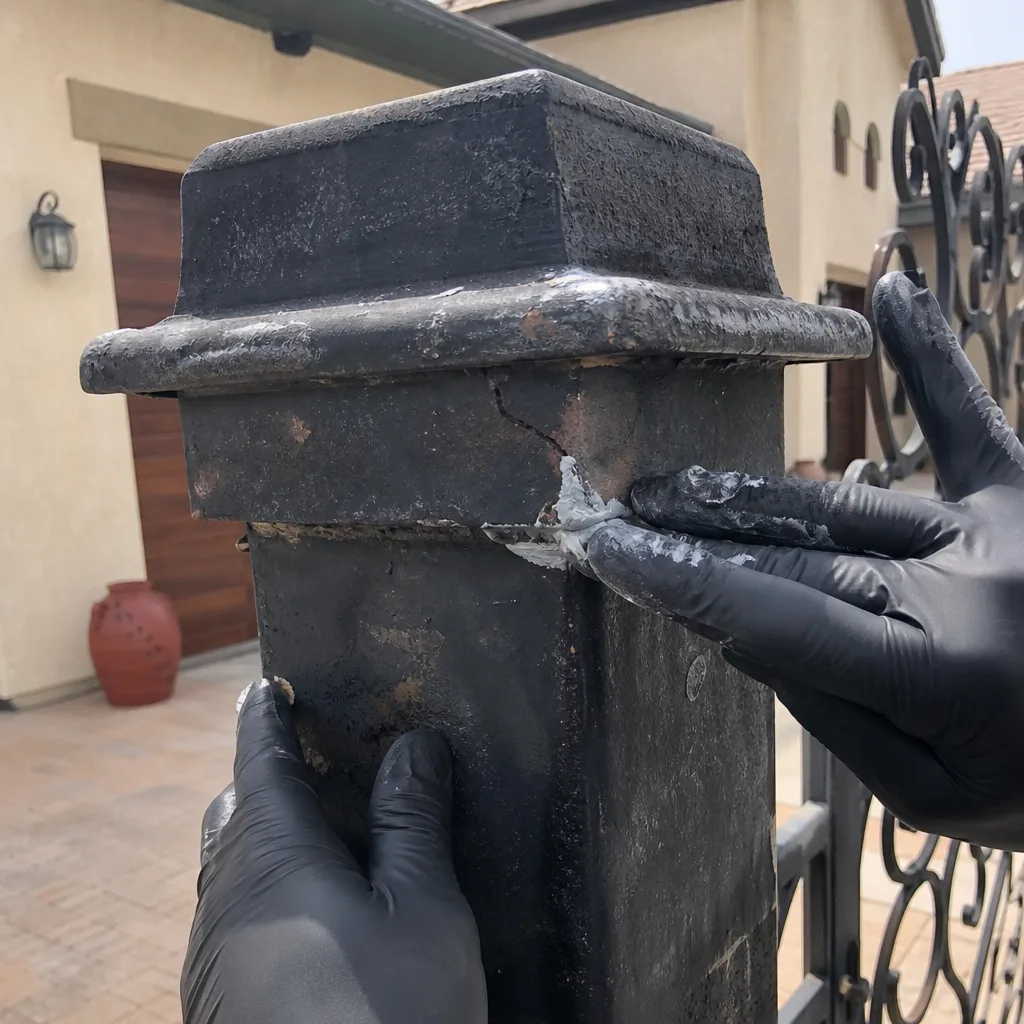
October is the honest month. Every component that was stressed in June, July, August, and September now shows its damage. The heat has baked capacitors. Surges have weakened board traces. Thermal expansion and contraction have loosened mechanical connections. This is when you assess, not when you prevent - prevention was May.
The October audit checklist:
- Motor capacitor test. The capacitor provides the starting torque for the motor. In Phoenix summer, it operates near its thermal limit daily. A capacitor that’s within 10% of its microfarad rating but shows bulging, leaking, or discoloration is a winter failure waiting to happen. We replace these preventively - the cost of a capacitor is $40-$80; the cost of a motor that fails because the capacitor degraded is $600-$1,400 depending on brand and access.
- Control board trace inspection. Remove the board cover and examine with a flashlight. Look for discoloration around solder joints, especially near the surge protector and relay outputs. Phoenix heat accelerates solder creep - the slow movement of solder under thermal cycling that eventually cracks connections.
- Limit switch accuracy test. Open the gate fully and measure the gap between the gate and the stop post with a tape measure. Close it and measure the latch engagement depth. Compare to your May documentation. A shift of more than 1/2 inch indicates mechanical wear or foundation movement from monsoon moisture.
- Gearbox oil condition. On swing gate operators with integrated gearboxes (common on Linear and Elite systems), the oil darkens with heat exposure. If it’s black or has metallic particles, the gearbox is wearing acceleratedly.
- Structural fastener torque check. Thermal cycling loosens bolts. Check the operator mount to the post, the arm bracket to the gate, and the track anchors on sliding systems. In Phoenix’s expansive clay soils, monsoon moisture causes foundation movement that shows up first as loose track anchors.
This audit is also when you update your seasonal log with summer’s actual conditions - highest temperature recorded near the gate, number of power outages, number of storms with 40+ mph winds, any service calls made. Next May, this data lets you target inspections precisely.
For gates needing more than preventive attention, our gate installation team in Phoenix can assess whether summer damage has reached the threshold where replacement is more economical than continued repair - but only after a documented inspection, under Clause 1 (written price before work).
Winter Dry Season: UV, Thermal Cycling, and Hidden Wiring Damage
Phoenix winter is not a rest period for gate components. The combination of intense UV (Phoenix averages 300+ sunny days annually) and wide day-night temperature swings creates a specific failure mode that national guides never mention: UV-brittled wiring insulation subjected to daily thermal contraction.
How UV and thermal cycling damage wiring:
Low-voltage control wiring on gates is typically PVC-insulated. Phoenix UV degrades the plasticizers in PVC, making it brittle. Then, every winter night, temperatures drop 30-40 degrees from daytime highs. The metal conductor contracts less than the brittle insulation, creating micro-cracks. These cracks admit moisture during rare winter rains or irrigation overspray, causing corrosion that increases resistance. The gate behaves intermittently - works fine in warm afternoon sun, fails at 6 AM when the wiring is coldest.
What to inspect in December-February:
- Low-voltage wiring runs from the control board to the photo-eyes, keypad, and safety edges. Look for chalking (white powder on the surface), cracking, or stiffness when flexed. Flexible wiring should bend easily; if it snaps or cracks audibly, replace the run.
- High-voltage conduit from the house to the operator. Check for UV damage to PVC conduit - it becomes brittle and shatters on impact. Metal conduit shows corrosion at joints where the galvanizing has worn.
- Grounding connections. Phoenix’s dry soil increases grounding resistance. Verify the ground rod connection at the operator is tight and free of corrosion. A poor ground makes surge damage worse and can cause erratic board behavior.
- Expansion loop at the gate hinge. The wiring that crosses the hinge must have a service loop - extra length to accommodate gate movement. In winter, stiffened wiring pulls tight and can disconnect or fatigue at terminals.
Neighborhood-specific note: In older Phoenix neighborhoods like Willo and Coronado, original low-voltage wiring from 1990s installations is often direct-burial cable with no conduit. UV isn’t the issue - rodent damage and soil alkalinity corrosion are. Look for voltage drop under load: if the photo-eye LED dims when the gate motor starts, the wiring has high-resistance faults.
This is also the ideal window for gate motor and opener service in Phoenix - cool temperatures mean accurate thermal readings and no heat-induced false positives in diagnostic tests.
Building a Seasonal Log That Saves Money on Every Future Call
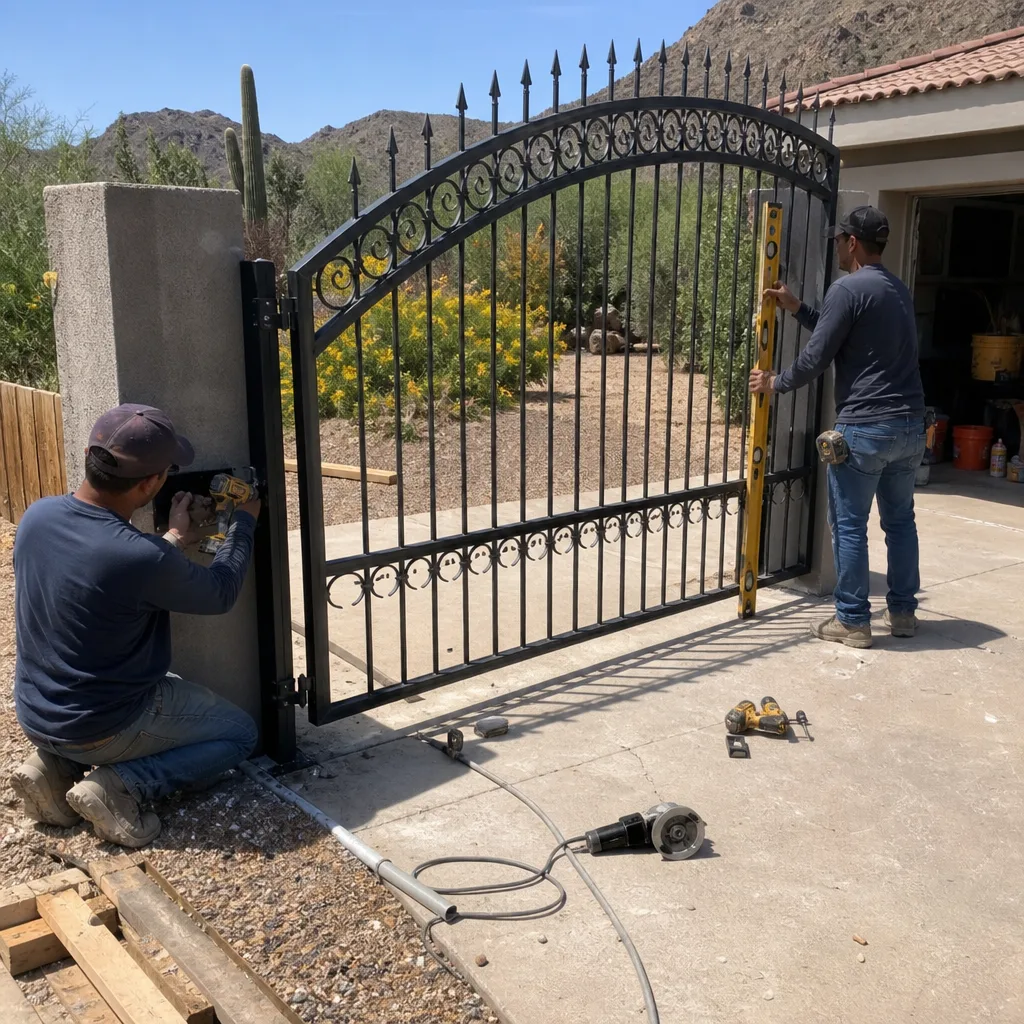
A seasonal log transforms gate maintenance from reactive panic to predictive care. More importantly, it gives any technician who works on your gate - including us - a baseline that eliminates diagnostic guesswork and redundant labor.
What the log contains:
| Section | Contents | Updated |
|---|---|---|
| Gate specifications | Brand, model, serial number, installation date, original installer | Once, at creation |
| Component history | Part numbers and dates for every replaced component - motor, board, capacitor, battery, photo-eyes, keypad, safety edges | After every service |
| Seasonal inspection records | May, October, and winter inspection findings with photos | After each inspection |
| Environmental data | Peak summer temperature at gate location, monsoon storm count and peak wind speed, power outage count | Annually, in October |
| Performance baseline | Normal open/close time in seconds, normal motor current draw (if measured), normal photo-eye alignment measurement | When known; after professional service |
| Service history | Date, company, technician name, work performed, price paid, warranty terms | After every service |
How this saves money:
When a technician knows the capacitor was replaced 14 months ago, they test it instead of assuming it’s original. When they know the gate opened in 12 seconds last October and now takes 18, they look for mechanical binding or motor degradation, not photo-eye misalignment. When they know the photo-eye was realigned 2 inches in May and is now 2.5 inches off, they look for post movement, not random drift.
Under Haven Standard Clause 4, we provide this documentation automatically - a photographed record of what was found, what was adjusted, and what was installed, with part numbers and settings. But even if you’ve never used our Gate Repair services, building your own log from this template gives you leverage in every future service interaction. Bring it to any estimate review, including our free second opinion on written estimates from other companies.
Common Mistakes to Avoid
- Waiting for a failure before inspecting. In Phoenix, the first symptom of surge damage is often a dead control board - no warning, no intermittent behavior, just a gate that won’t respond. Pre-monsoon inspection is the only prevention.
- Using national maintenance calendars unmodified. “Spring lubrication” in March misses the pre-monsoon window by two months. By May, you should be finished with prep, not starting it.
- Ignoring the manual release mechanism. Phoenix power outages cluster in monsoon season. If you haven’t tested manual release since installation, you may not be able to exit during an outage - a genuine safety issue, not merely an inconvenience.
- Cleaning photo-eyes with water during monsoon season. If the housing seal is already compromised, adding moisture accelerates corrosion. Use dry compressed air or a dry cloth until you can verify the seal.
- Assuming winter cool-down means no stress. The widest temperature swings in Phoenix occur in December and January. UV-brittled wiring fails most often on the coldest mornings, not the hottest afternoons.
- Not documenting what was done. Every gate in Phoenix has a history of heat stress and surge exposure. Without records, every technician starts from zero, and you pay for rediscovery.
- Delaying service for “intermittent” problems during monsoon. Intermittent faults in humid conditions become permanent within days. The cost difference between a May surge protector replacement and a July control board replacement is $200 versus $800-$1,200.
When to Call a Professional
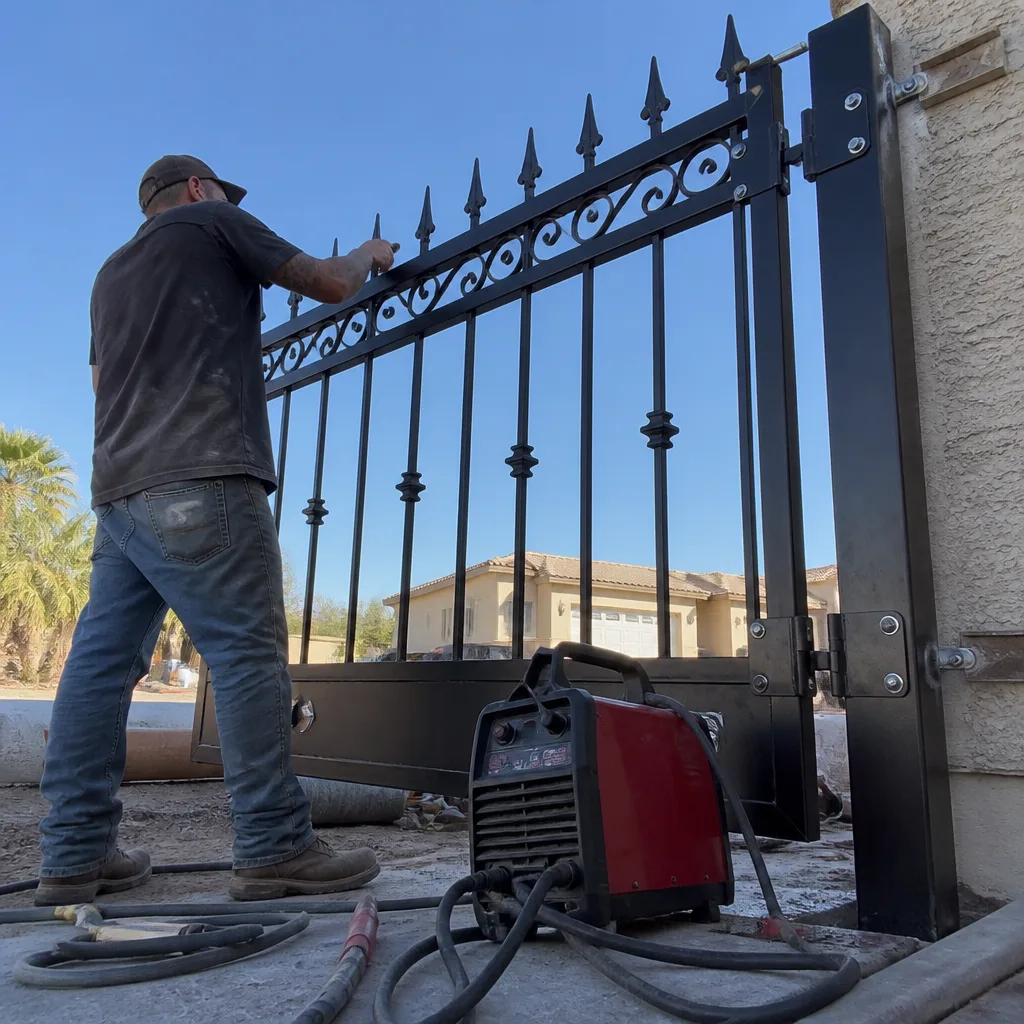
Some gate maintenance is genuinely homeowner-accessible: visual inspection, debris clearing, photo-eye cleaning, and manual release testing. Other work carries real risk and requires specific knowledge - see our DIY vs Professional Gate Repair: The Phoenix Homeowner’s Decision Guide for details.
Call a professional when you find water intrusion in any electrical housing, when the gate makes new mechanical sounds you can’t source, when the manual release fails to function, or when you measure voltage at any point and don’t know what the reading should be. High-voltage wiring and motor capacitor discharge can cause serious injury or death - this is not a recommendation, it’s a statement of fact we’ve encountered in the field.
Also call when your seasonal log shows a trend: open times increasing, alignment shifting, current draw rising. These are pre-failure indicators that a technician can address preventively.
Vance Gate Repair Phoenix offers free estimates in Phoenix - call (602) 483-6270. A live person answers 24 hours a day. Under Haven Standard Clause 1, you’ll receive a written scope and written price before any work begins. We service nine automation brands including BFT, Linear, Viking, and Ghost Controls, so we can repair what’s installed rather than steering you toward replacement. Every visit includes a documented photo record under Clause 4, and all work is covered by our 365-Day Done Right Promise.
Frequently Asked Questions
A professional seasonal inspection typically runs $150-$250 for a single-family residential gate, depending on access complexity and whether the technician performs preventive component replacement during the visit. If the inspection reveals needed repairs, you’ll receive a written price for those separately before any additional work begins. Call (602) 483-6270 for an exact quote - estimates are free.
Homeowners can safely inspect surge protectors, photo-eye alignment, and drainage visually. Replacing electrical components inside the operator housing requires knowledge of lockout/tagout procedures and capacitor discharge safety - we recommend a trained technician for this. We’ve seen control boards destroyed by well-intentioned owners who didn’t ground themselves properly before handling.
The most reliable indicator is behavioral change: slower operation, new sounds, or intermittent response. Physical signs include water marks inside the operator housing, corrosion on terminal blocks, and photo-eyes that work only in direct sunlight (indicating moisture sensitivity). If you observe any of these, schedule inspection promptly - monsoon damage to control boards progresses from intermittent to permanent failure within 48-72 hours in Phoenix humidity.
A full replacement includes removal of the failed unit, installation of the new motor matched to gate weight and cycle frequency, alignment of limit switches, programming of remote controls and keypad codes, installation or transfer of safety devices (photo-eyes and safety edges), and a documented photo record of all settings. On most residential swing gates in Phoenix, motor replacement runs $1,200-$2,400 depending on brand and whether the arm bracket and post mount are reusable. We provide a written price before work starts - no exceptions.
This pattern strongly suggests UV-degraded wiring insulation with thermal contraction faults. The wiring has micro-cracks from Phoenix sun exposure; at night, contraction separates these cracks slightly, increasing resistance. When the morning sun warms the wiring, expansion reconnects the circuit. The fix is replacement of the affected wiring run, not adjustment of the motor or board. A multimeter voltage drop test under load confirms this diagnosis.
A properly maintained residential gate motor in Phoenix typically lasts 10-15 years, but summer heat exposure reduces this by 20-30% for gates in direct sun without shade structures. The capacitor usually fails first, at 5-8 years. Preventive capacitor replacement in October often extends motor life significantly. We’ve documented motors still functional at 18 years in shaded Phoenix installations where owners maintained seasonal logs and replaced capacitors preventively.
The Bottom Line
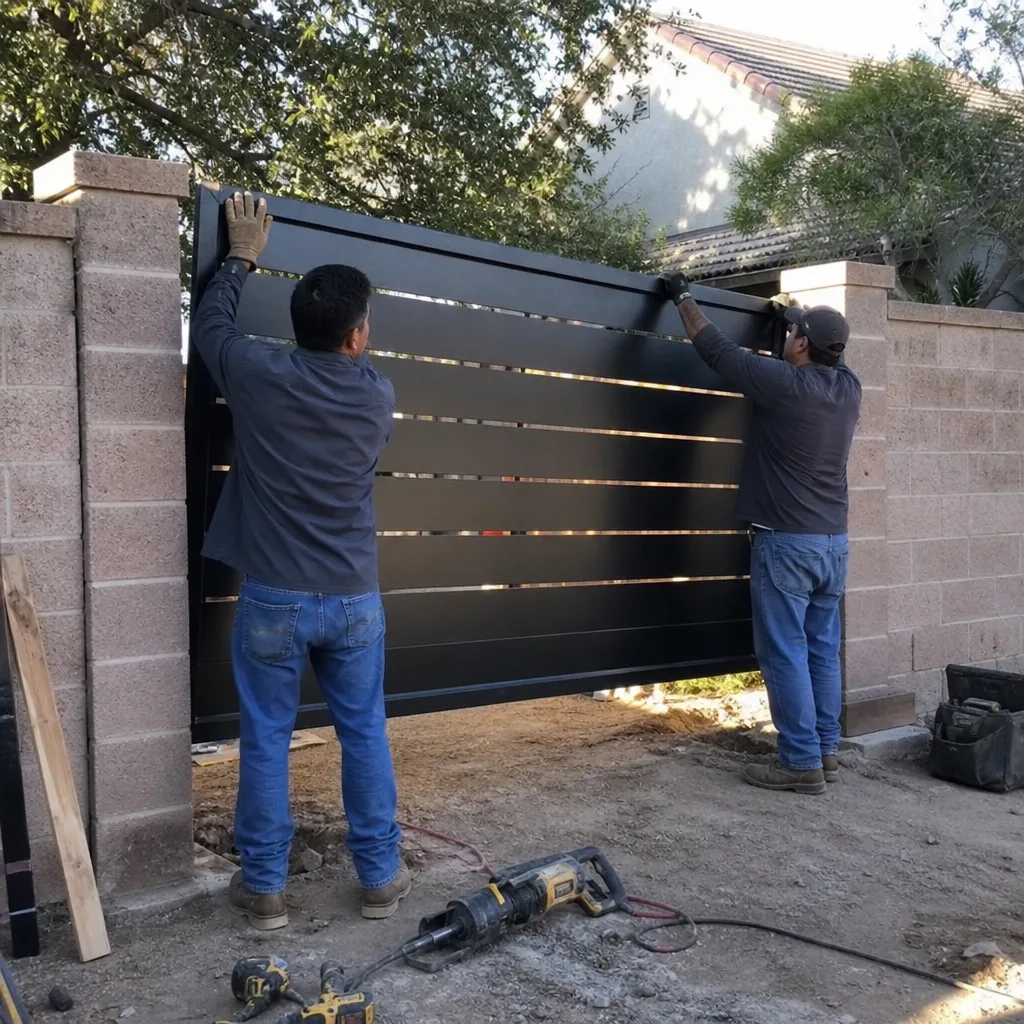
Phoenix gate maintenance succeeds when it’s timed to actual local stressors, not national seasonal advice. The four critical windows are: late May for pre-monsoon electrical prep, immediate post-storm response during monsoon season, October for comprehensive component assessment after summer stress, and December-February for UV and thermal cycling damage inspection. A documented seasonal log transforms every future service call from diagnostic exploration to targeted repair, saving money and preventing lockouts. For more guides & resources on Phoenix gate care, visit our blog. The gates that last decades in Phoenix are the ones whose owners treat maintenance as scheduled infrastructure care, not emergency response.
Written by Adrian Vance, Owner at Vance Gate Repair Phoenix, serving Phoenix since 2014.