
Last updated September 22, 2026
Free on-site gate assessment - hinges, posts, and your LiftMaster or Nice gate operator checked before anything is quoted
The assessment is free and the quote is the invoice.

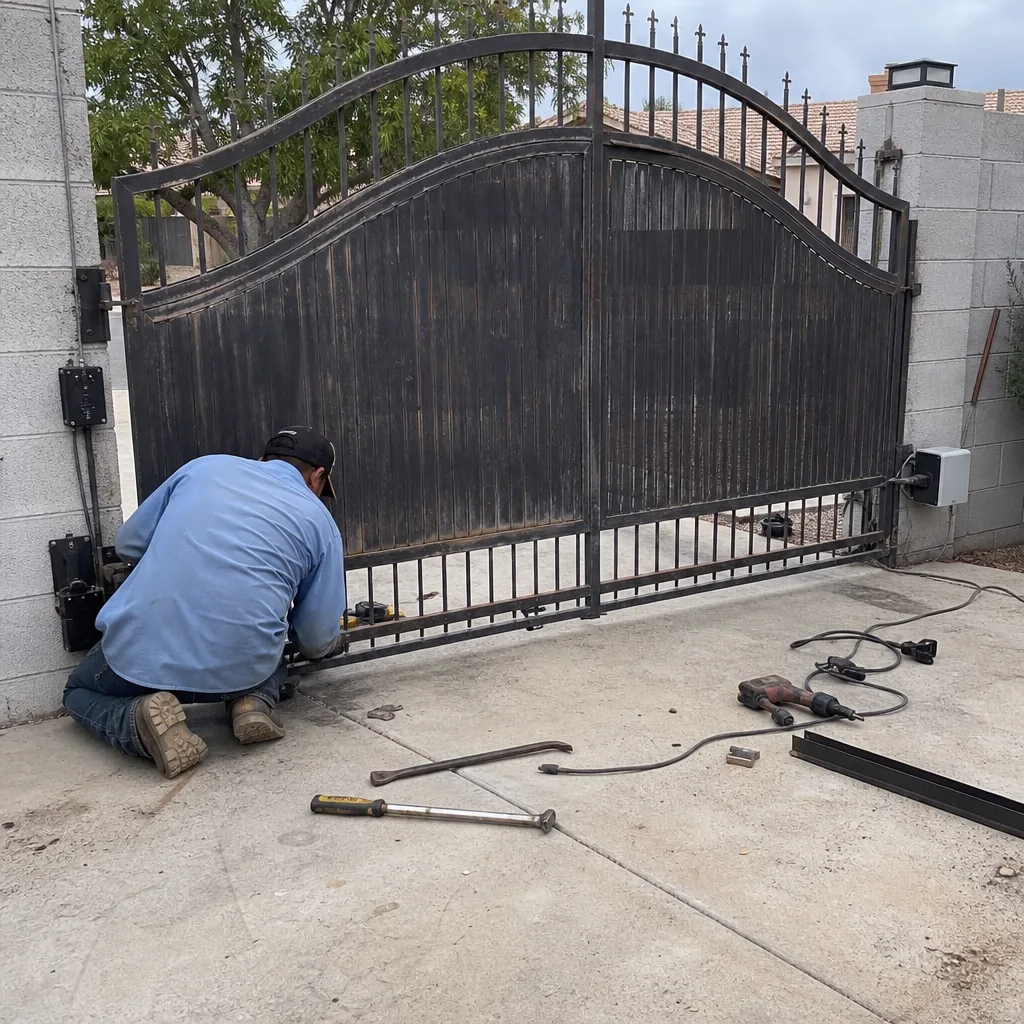 Before
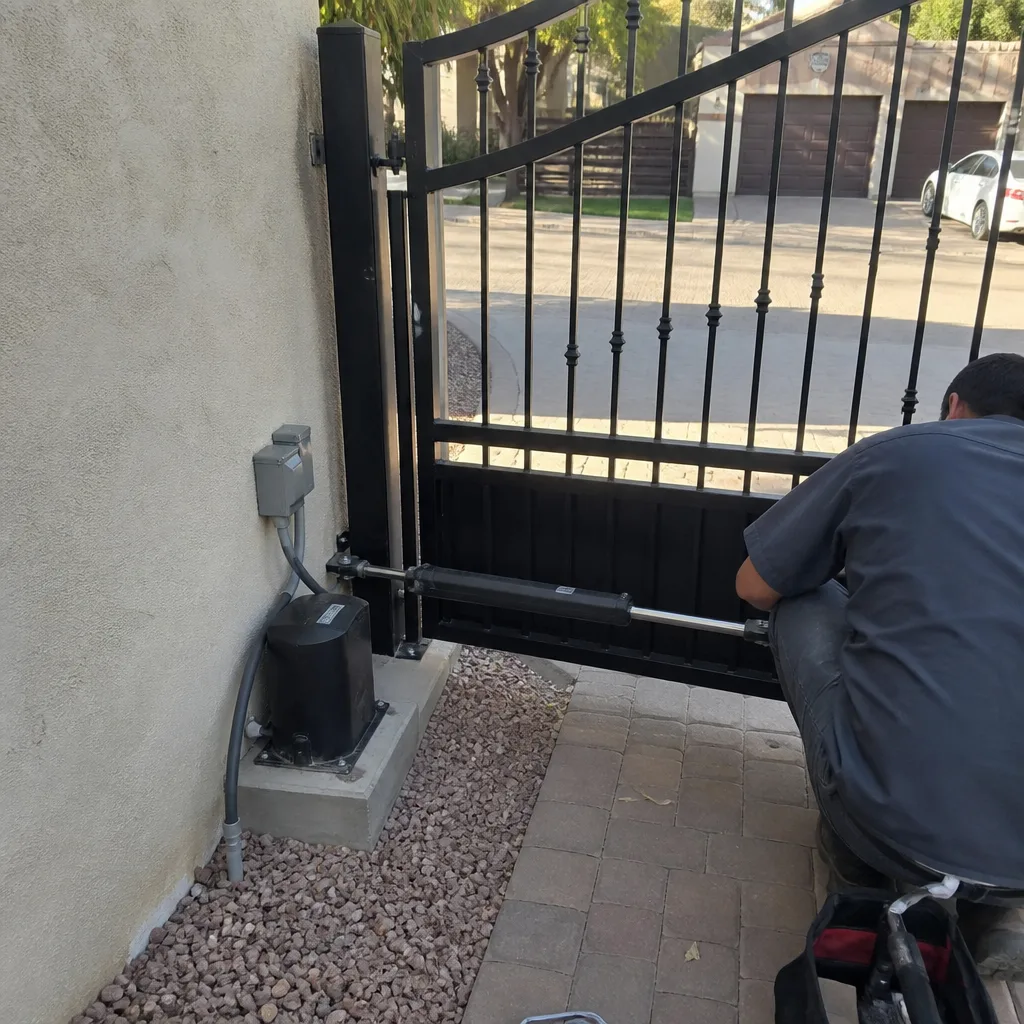 After
After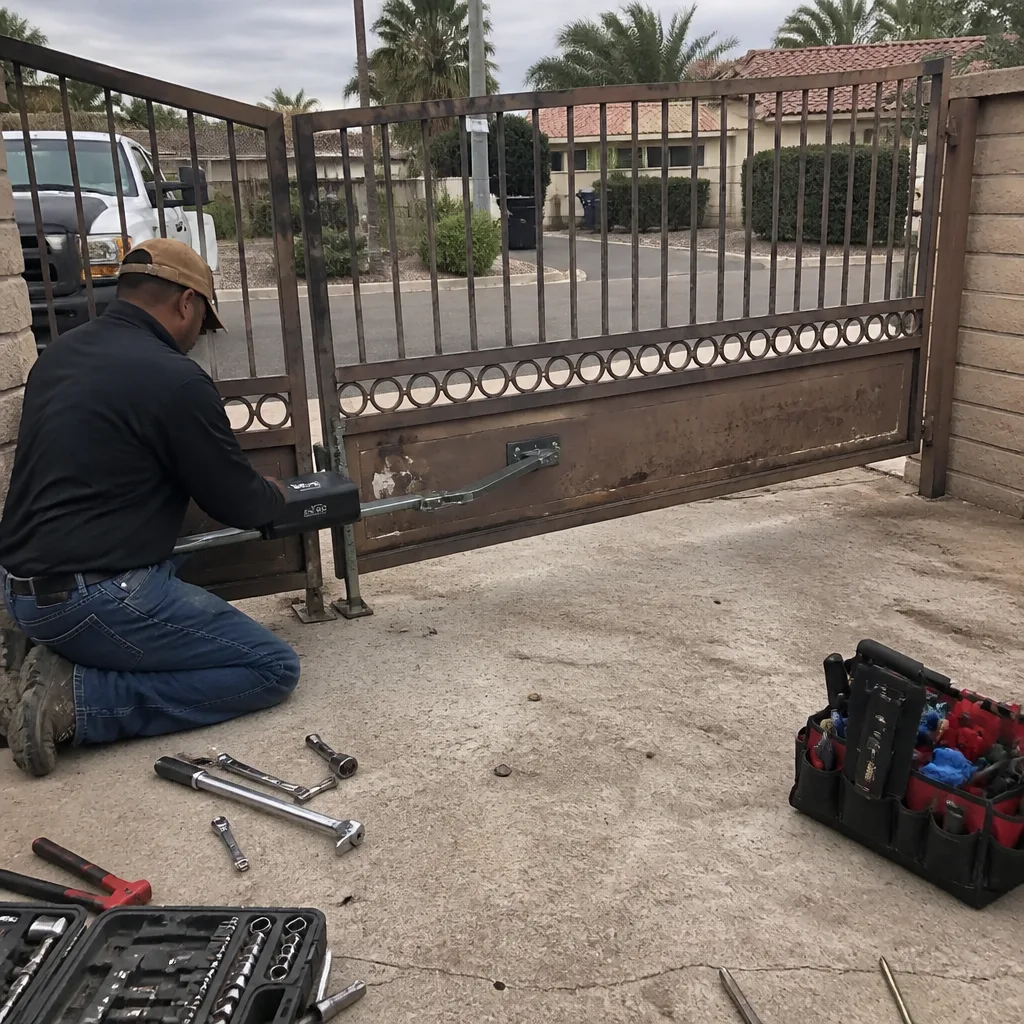 Before
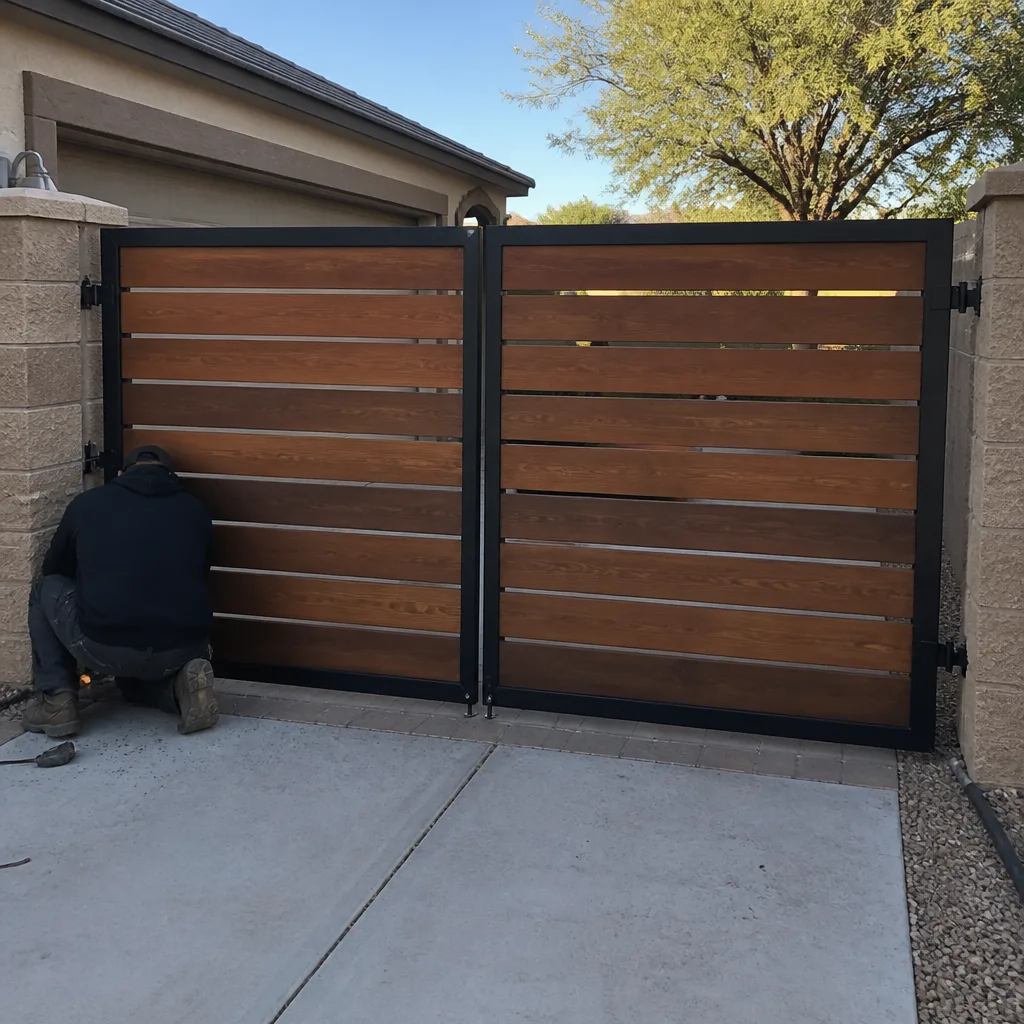 After
After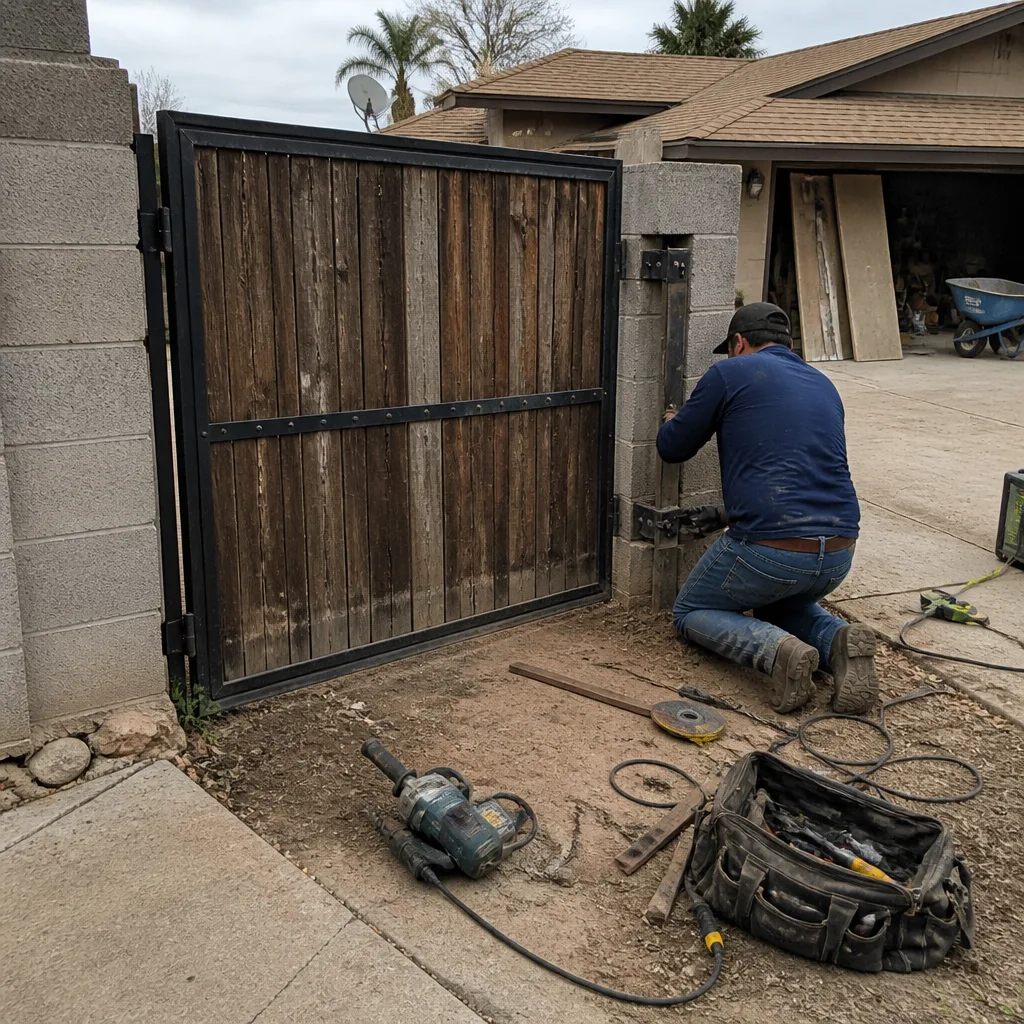 Before
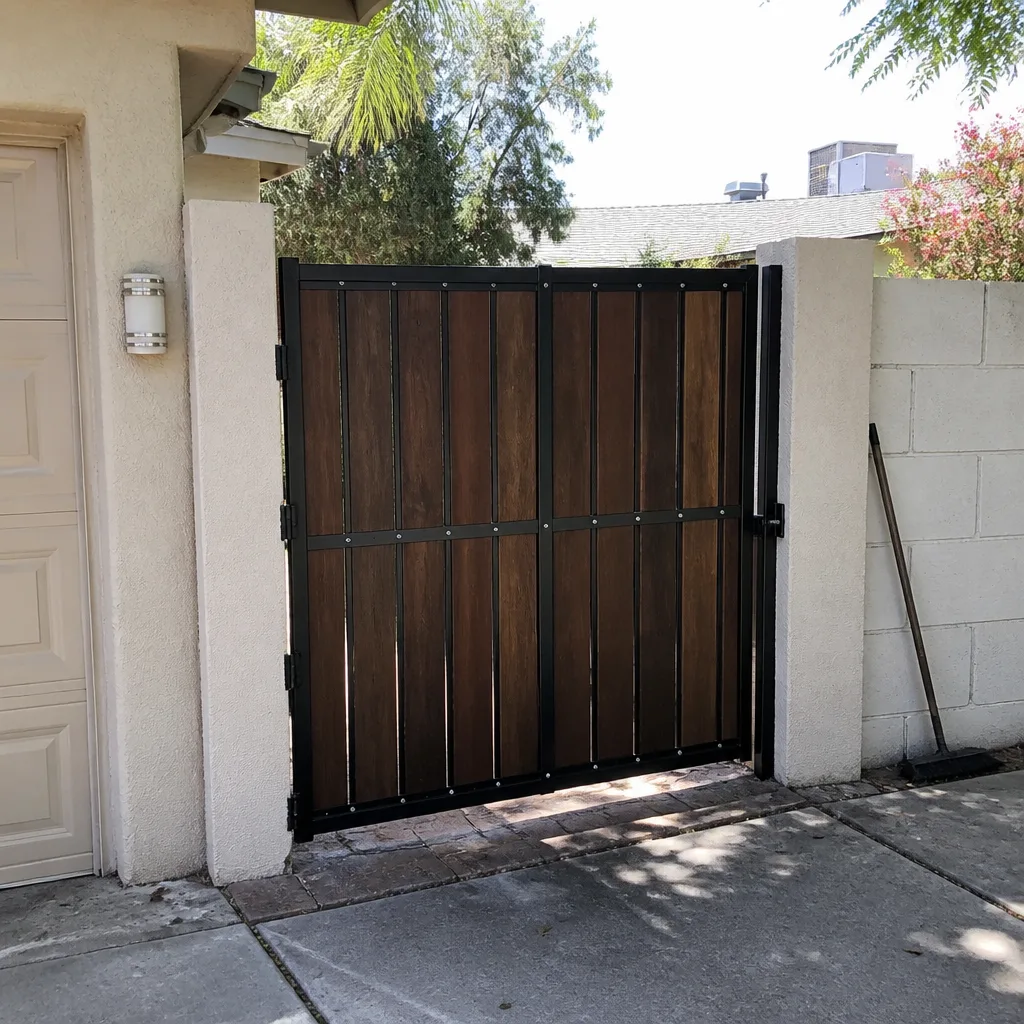 After
AfterGate Repair Cost Breakdown: The Phoenix Homeowner’s Reference for 2026
The $95 gate repair advertised across Phoenix is real. It’s also usually the diagnostic fee collected before anyone confirms whether the actual repair costs $95 or $950. We’ve watched homeowners in Arcadia, Desert Ridge, and the Willo District sign off on verbal estimates, then receive invoices with line items they never discussed. This guide breaks down what Gate Repair services actually cost in Phoenix, item by item, so you can read a written quote the way a technician reads a control board - knowing which numbers are fixed and which ones carry risk of expansion.
Quick Answer
Gate repair in Phoenix typically runs $180 to $1,400 depending on the component failed and whether excavation is needed. Most common repairs - limit-switch adjustments, photo-eye realignments, and minor weld repairs - fall between $180 and $450. Motor replacements, control board swaps, and post resets damaged by caliche or vehicle impact push toward the upper range. Diagnostic fees in the Phoenix market range from $95 to $150, and should include a written findings report with photographed evidence.
Table of Contents
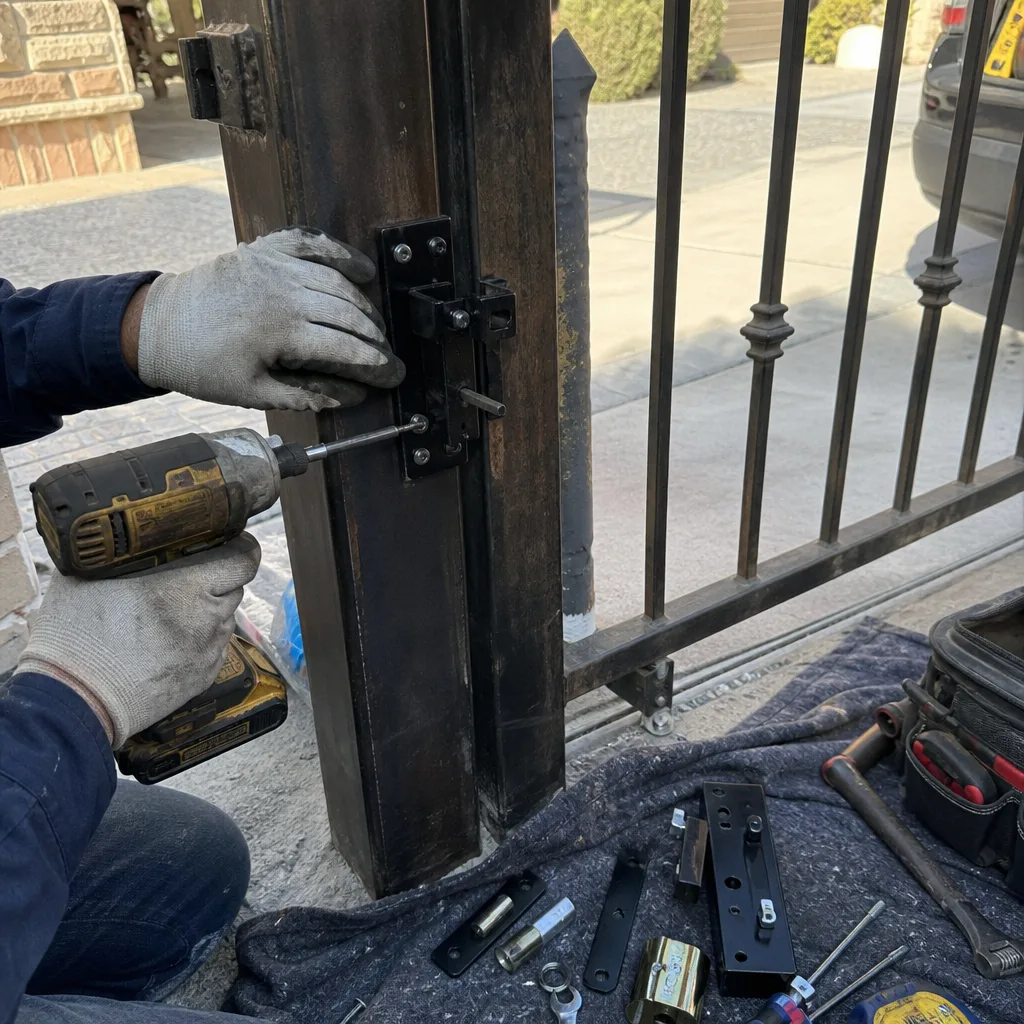
- How Phoenix Climate Affects Gate Repair Costs
- Diagnostic Fees: What You’re Paying For
- Itemized Repair Costs: Common Jobs in Phoenix
- How to Read a Written Gate Repair Quote
- Phoenix-Specific Cost Drivers: Caliche, Heat, and Codes
- The Hidden Cost of Undocumented Repairs
- Motor and Opener Replacement Costs by Brand
- When Repair Becomes Replacement
 Before
 After
AfterHow Phoenix Climate Affects Gate Repair Costs
Phoenix gate systems fail differently than gates in temperate climates. The 110-plus degree days from June through September don’t just make components uncomfortable; they fundamentally alter failure modes and replacement requirements. A control board that might last twelve years in Portland often fails in seven here. Photo-eye lenses cloud with UV degradation. Grease in actuator arms separates and runs.
These climate effects show up in your invoice in specific ways:
- Heat-rated component premiums: Standard residential control boards rated to 140°F cost less than industrial-temperature boards rated to 185°F. In Phoenix, we specify the higher-rated board for any gate in direct sun, particularly on west-facing driveways in neighborhoods like Ahwatukee and Laveen. The premium runs $40 to $80 per board, but prevents the callback that comes from a thermal shutdown in July.
- UV-hardened photo-eye housings: Standard photo-eyes last two to three years in Phoenix before the lens clouds or the housing cracks. UV-stabilized housings add $25 to $40 per pair.
- Thermal expansion in steel frames: Welded gate frames in Phoenix experience wider temperature swings than almost any major U.S. city - 40°F winter lows to 118°F summer highs. That 78-degree swing causes weld stress at hinge points. We’ve re-welded more Phoenix gates at the bottom hinge than any other single location, particularly on older ironwork in historic districts like Coronado and Garfield.
Homeowners who understand these climate premiums can evaluate whether a quote includes appropriate components or cuts corners with standard-grade parts. The cheaper quote often costs more when the callback comes in August.
Diagnostic Fees: What You’re Paying For
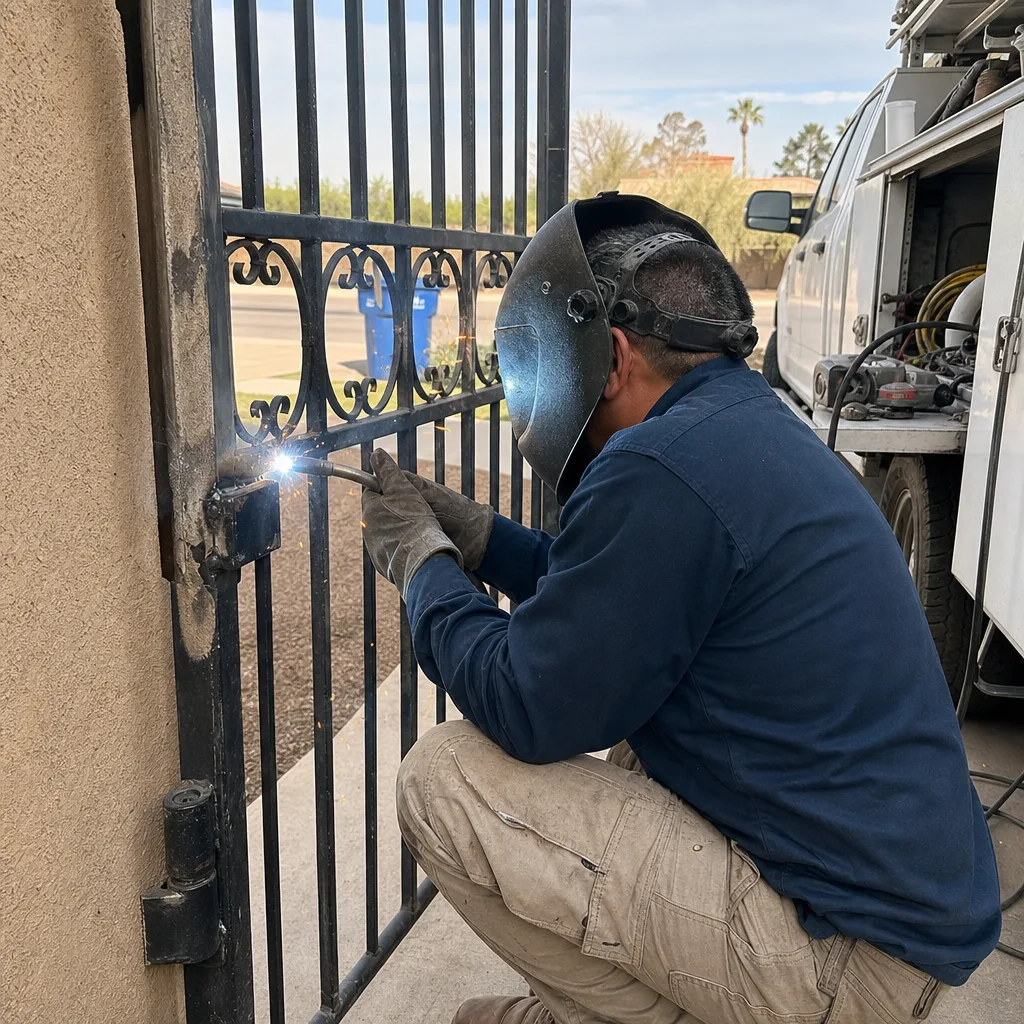
The diagnostic fee is where most pricing confusion begins. In Phoenix, we’ve seen this fee range from $75 to $175, and the variation isn’t arbitrary. What matters is what the fee includes and what documentation you receive.
Here’s what a proper diagnostic should cover:
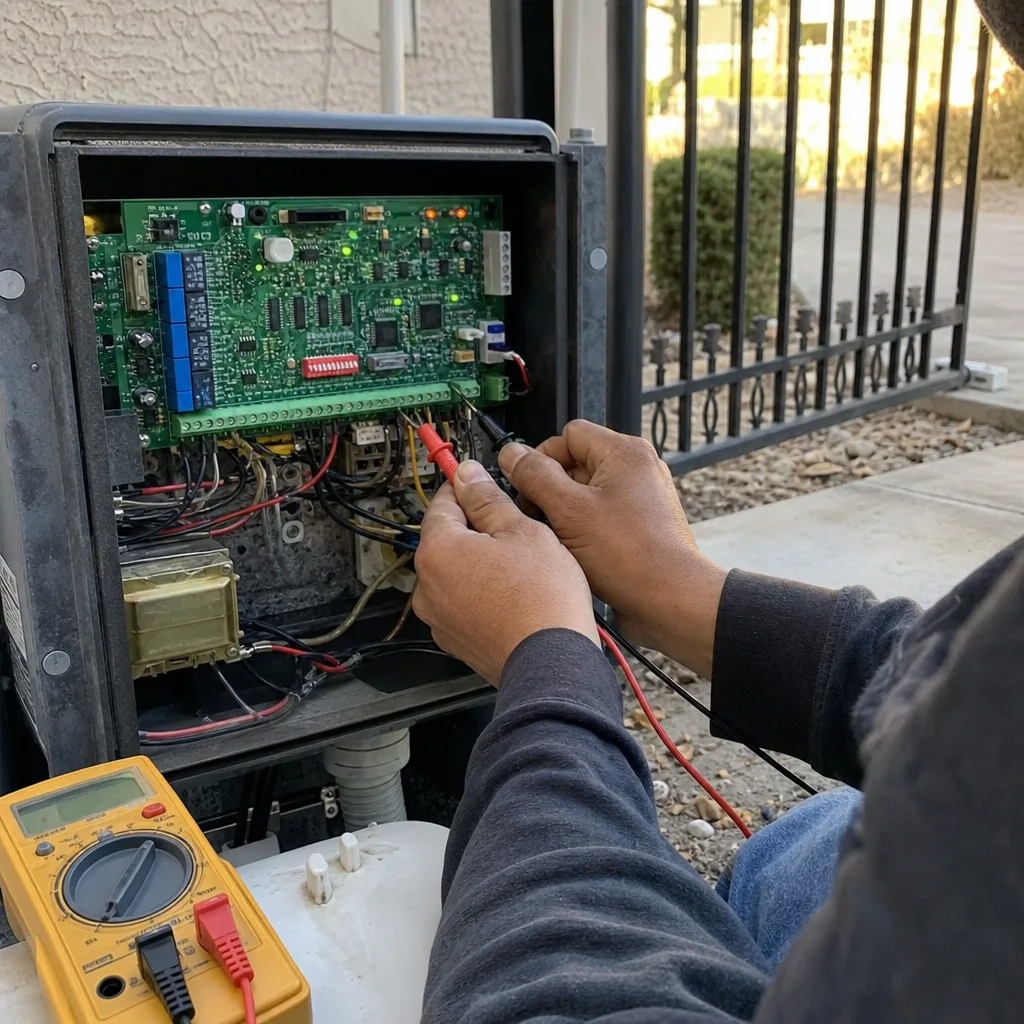
- Full electrical test: Voltage at the board, amperage draw at the motor, resistance across the limit switch. These three readings tell us whether the problem is power supply, motor load, or control logic.
- Mechanical travel test: Manual operation to feel for binding, worn hinges, or actuator arm play. We measure free travel in degrees and note where resistance begins.
- Safety system verification: Photo-eye alignment check, edge sensor test, and auto-reverse force measurement. In Phoenix, photo-eyes are the most common safety failure; we see misalignment from ground shift after monsoon rains in Sunnyslope and North Mountain neighborhoods.
- Written findings with photographs: Under the Haven Standard, every diagnostic at Vance Gate Repair Phoenix includes a photo log of what we found, what we measured, and what we recommend. You get this before any repair quote.
A diagnostic fee that includes only a verbal “it’s the motor” and a handwritten price on a carbon copy isn’t a diagnostic. It’s a guess with a cover charge. The documented diagnosis costs more upfront because it takes longer - typically 45 to 90 minutes versus 15 minutes - but it eliminates the repeat-diagnosis cycle that costs homeowners hundreds when the first guess is wrong.
We’ve seen cases in Phoenix where a homeowner paid three separate companies to diagnose the same intermittent failure. Each technician guessed differently because no one documented the control board error codes during the failure state. A proper diagnostic captures those codes while the gate is malfunctioning, not after it’s been cycled twenty times and the code has cleared.
Itemized Repair Costs: Common Jobs in Phoenix
These ranges reflect what we quote in writing before work begins on residential gates in the Phoenix market. Prices include parts, labor, and the documented photo record included under Haven Standard Clause 4. They do not include diagnostic fees, which are charged separately and credited toward repair if you proceed.
| Repair Type | Typical Range | What Affects Price |
|---|---|---|
| Limit-switch adjustment or replacement | $180 - $320 | Switch type (mechanical vs. magnetic), access difficulty, whether the arm bracket needs re-drilling |
| Photo-eye alignment or replacement | $150 - $280 | Single vs. dual beam, UV-stabilized housing, conduit run length |
| Control board replacement | $340 - $650 | Board manufacturer (LiftMaster and FAAC boards run higher than Mighty Mule), heat rating, number of auxiliary outputs used |
| Actuator arm replacement (single) | $480 - $780 | Brand compatibility, arm length, whether the mounting bracket is reusable |
| Dual actuator swap (swing gate) | $890 - $1,400 | Master/slave synchronization requirement, brand match to existing system |
| Minor weld repair (hinge, catch point) | $220 - $380 | Access for welding, paint match requirement, whether the gate must be removed |
| Post reset or replacement (no excavation) | $340 - $520 | Post size, concrete pad condition, whether the actuator mount is integrated |
| Post reset with caliche excavation | $680 - $1,200 | Depth to stable substrate, caliche hardness, permit requirements if over 30 inches |
| Keypad or access control repair | $180 - $420 | Hardwired vs. wireless, programming complexity, whether the unit is obsolete |
These ranges assume standard residential swing or slide gates up to 16 feet. Commercial-grade gates, ornamental iron with intricate welding, or systems with integrated telephone entry push toward the higher end or beyond.
In our experience across Phoenix, from Encanto to Paradise Valley, the most commonly under-estimated repair is the post reset. Homeowners see a leaning gate post and assume it’s a quick concrete pour. But Phoenix’s caliche layer - the calcium carbonate hardpan that begins anywhere from 6 inches to 3 feet below grade - often requires pneumatic breaking or auger work to reach stable substrate. A post that simply gets re-poured in shallow soil leans again within two monsoon seasons.
How to Read a Written Gate Repair Quote
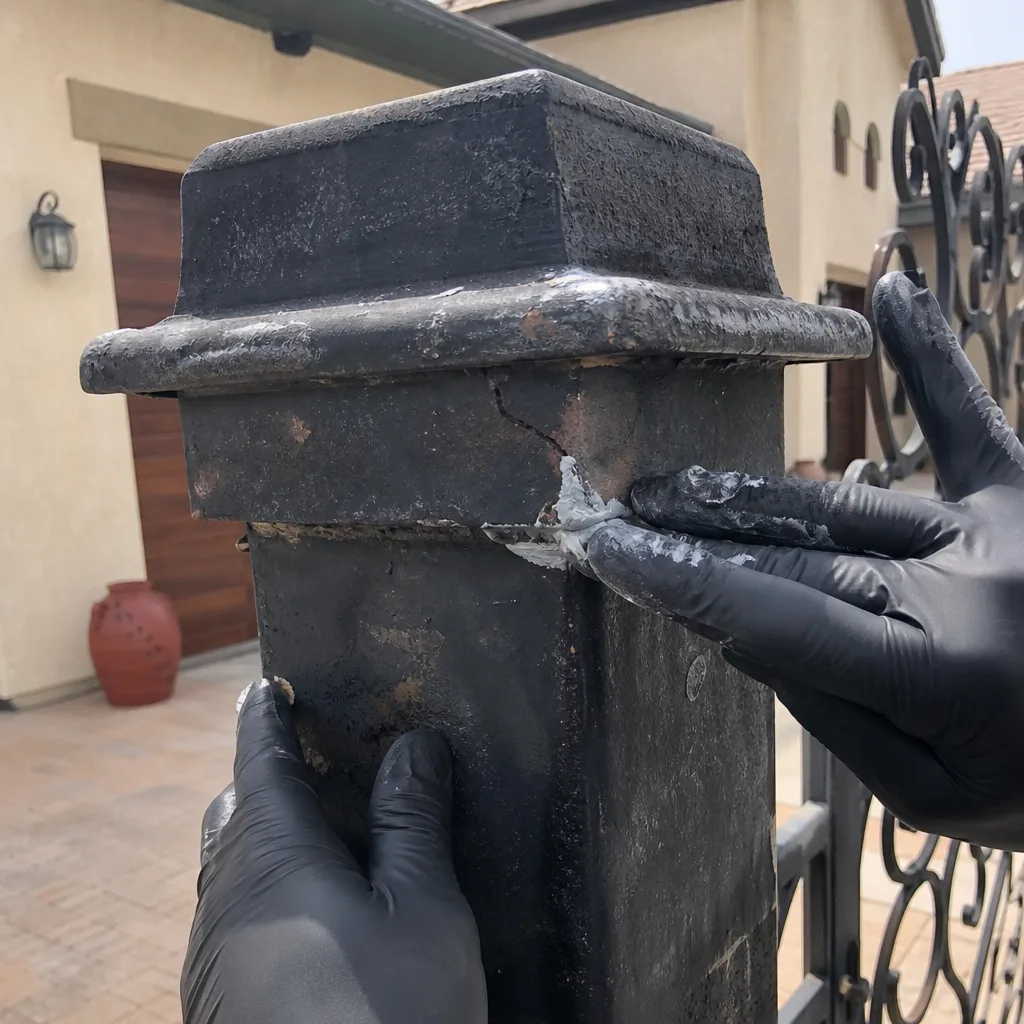
A written quote is only as useful as your ability to read it. We’ve reviewed competitor quotes brought in for our free second opinion service, and the pattern is consistent: opaque totals hide scope expansion risk.
Here’s how to evaluate a quote line by line:
- Separate parts and labor: A quote that lists only “gate repair: $650” gives you no basis to compare. Parts have fixed costs; labor has variable risk. If the motor is $380 and labor is $270, you can verify the motor price independently. If it’s bundled, you can’t.
- Identify contingent items: Look for language like “if needed” or “subject to excavation.” These are scope expansion triggers. A post reset with “concrete pour, $420, additional excavation if caliche encountered, $85/hour” is honest about risk. A post reset at $420 with no contingency language is either underpriced or planning to upsell on site.
- Check for diagnostic credit: If you paid $125 for diagnosis, that should appear as a credit on the repair quote. We apply diagnostic fees directly to repair cost at Vance Gate Repair Phoenix; some companies double-charge by treating diagnosis as pure revenue.
- Verify warranty terms: “One year warranty” means nothing without specifying what it covers - parts only, or parts and labor? Our 365-Day Done Right Promise covers both, with no expiration within that window and no service fee for callbacks.
- Confirm documentation included: Under Haven Standard Clause 4, we specify “documented photo record included” on every quote. If documentation isn’t listed, you’re not getting it, and the next technician will charge you to rediscover what this one found.
The quote should also name the specific part being installed, not just “new motor” or “compatible board.” A LiftMaster LA500UL is not interchangeable with a Mighty Mule MM560, and the quote should say which one you’re receiving. Generic descriptions are a flag for aftermarket or refurbished parts sold at new-part prices.
Phoenix-Specific Cost Drivers: Caliche, Heat, and Codes
Three factors push Phoenix gate repair costs above national averages. Understanding them helps you evaluate whether a quote is inflated or appropriately adjusted for local conditions, including Gate Repair Permits, Codes & Inspections in AZ: What You Need to Know.
Caliche excavation: Phoenix sits atop ancient lakebed deposits that cement into calcium carbonate hardpan. Gate post footings that require depth - any post supporting a swing gate with dual actuators, for instance - must break through this layer. Pneumatic breaking adds $200 to $400 in equipment and labor. Augering through dense caliche can add $300 to $600. We’ve encountered caliche so dense in parts of Cave Creek and Anthem that we needed to bring in a mini-excavator for a residential post reset, pushing the job to $1,800. A quote that doesn’t account for this possibility is either naive or planning to surprise you.
Heat-rated component premiums: As noted above, standard electronic components fail faster in Phoenix. But the cost difference goes beyond the part itself. Installations in direct sun require additional shading considerations, conduit routing that avoids the hottest surfaces, and sometimes cooling fans for control enclosures. These add $50 to $150 to motor installations on unshaded west-facing gates.
Permit and code requirements: Phoenix requires permits for any gate operator installation on a commercial property, and for residential installations that modify the electrical service panel or involve excavation deeper than 30 inches. Permit fees run $85 to $150, with inspection scheduling that can add a week to project timeline. A quote that doesn’t mention permit costs for deep excavation work is either absorbing them silently or planning to perform unpermitted work.
We’ve also seen code compliance costs rise in Phoenix’s hillside neighborhoods - Moon Valley, parts of North Scottsdale within our service area - where grade changes require longer actuator arms or specialized mounting geometry. The standard 18-inch arm won’t clear a steep driveway approach; a 24-inch or 36-inch arm adds $120 to $200 to the parts list.
The Hidden Cost of Undocumented Repairs
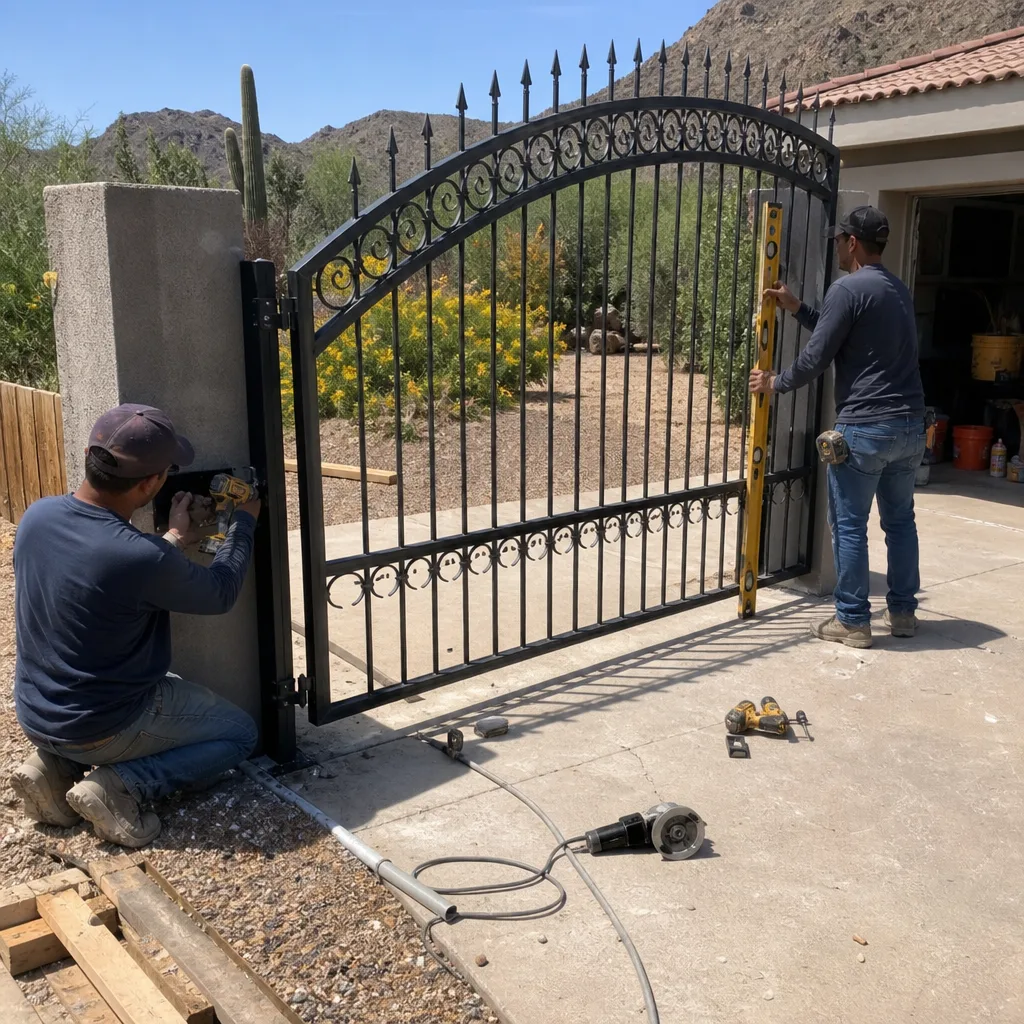
This is the cost competitors never discuss, because it benefits them directly. When a repair is performed without documentation - no photos, no wiring diagram, no limit-switch readings - the next problem starts from zero. And the next technician charges you to rediscover what the prior one already knew.
We’ve documented the pattern across our 22,000-plus jobs since 2014. A typical undocumented repair cycle looks like this:
- Homeowner calls for intermittent failure. Technician adjusts limit switch, charges $220, leaves no record of the setting.
- Three months later, gate stops mid-travel. New technician can’t determine if the limit switch drifted or the actuator is failing. Performs full diagnostic, $125. Recommends actuator replacement, $680. No way to know if the prior adjustment was correct or if the switch was failing all along.
- Total spent: $1,025. Total documentation: zero photographs, zero written settings.
Under the Haven Standard, every Vance Gate Repair Phoenix visit leaves a photo log showing what was found, what was adjusted, and what was installed. If the same gate calls back, we review our own documentation before dispatch. We know the limit switch was set at 87 degrees open and 12 degrees closed. We know the photo-eye was aligned to spec. We can isolate the new variable instead of charging to rediscover the old ones.
The cost of documentation isn’t an add-on. It’s built into our pricing because it saves money on both ends - fewer callbacks for us, no repeat-diagnosis fees for you. Companies that charge less and skip documentation externalize that cost to your next service call.
Motor and Opener Replacement Costs by Brand
One of the most common questions we receive: “Can you work on my [brand] motor, or do I have to replace it with something else?” We service nine major automation brands - Gate Motor & Opener in Phoenix covers our full capabilities - and we don’t steer customers toward replacement when repair is viable. But when replacement is necessary, brand compatibility affects cost.
Here’s how replacement pricing breaks down for common brands in the Phoenix market:
| Brand | Single Swing Motor (Installed) | Dual Swing (Pair, Installed) | Slide Gate Motor (Installed) |
|---|---|---|---|
| LiftMaster (LA500 series) | $1,100 - $1,450 | $1,800 - $2,400 | $1,400 - $1,850 |
| FAAC (400/422 series) | $1,200 - $1,600 | $2,000 - $2,600 | $1,500 - $2,000 |
| BFT (Ares/Phobos series) | $1,050 - $1,400 | $1,750 - $2,300 | $1,350 - $1,800 |
| Linear (Pro Access series) | $980 - $1,300 | $1,650 - $2,150 | $1,250 - $1,650 |
| Mighty Mule (MM560/562) | $650 - $900 | $1,100 - $1,450 | $850 - $1,150 |
These installed prices include motor, mounting hardware, basic programming, and the Haven Standard documentation package. They do not include electrical run if the existing conduit is damaged, or post work if the mounting surface is compromised.
The price spread within each brand reflects installation complexity - a direct swap on a sound post with intact wiring is at the low end; a relocation, post rebuild, or electrical upgrade pushes higher. We specify which scenario applies before any work begins.
Mighty Mule systems, common in Phoenix’s 1990s and 2000s residential builds, present a specific consideration: the brand is now positioned as a DIY product, and factory support for professional installation is limited. We can service and replace Mighty Mule units, but we flag for homeowners that future parts availability may favor upgrading to a LiftMaster or Linear system with established professional distribution. This isn’t upselling; it’s advising on total cost of ownership based on what we’re seeing in the supply chain.
When Repair Becomes Replacement
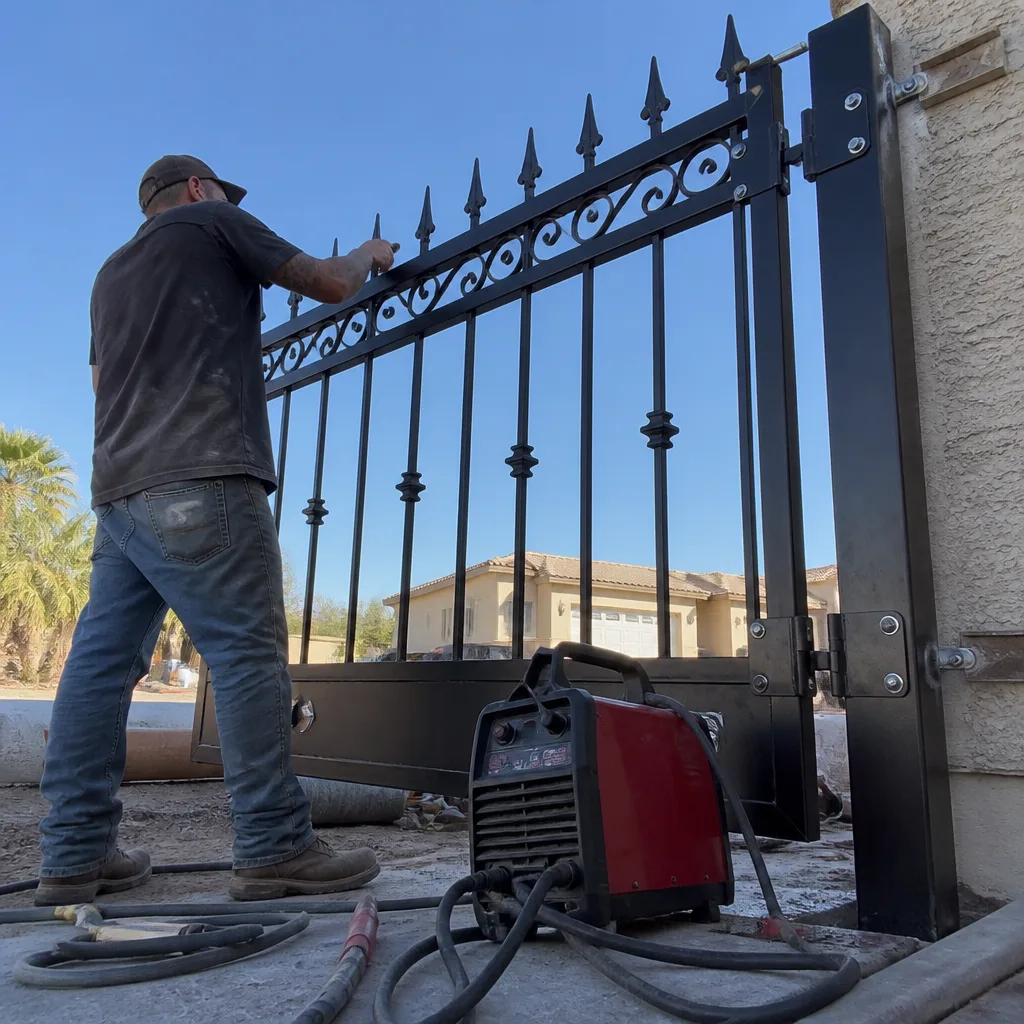
There’s an honest threshold where repair economics don’t make sense. We cross it openly with homeowners, because recommending repair on a failing system violates the Haven Standard’s intent.
Replacement typically makes more sense than repair when:
- The control board is obsolete and no replacement is manufactured. We see this with pre-2010 FAAC boards and certain DoorKing models. Repair requires hunting refurbished units with no warranty; replacement provides current technology with full support.
- The gate frame has multiple weld failures indicating systemic metal fatigue. Individual weld repairs on iron gates over 25 years old often become whack-a-mole; the next hinge point fails within months.
- The motor has been repaired twice in two years. At that point, accumulated labor exceeds replacement cost, and the underlying cause - typically voltage fluctuation or mechanical overload - hasn’t been addressed.
- The system lacks required safety features and cannot be upgraded. Pre-1993 operators without auto-reverse, or systems without photo-eyes, cannot be brought to current UL 325 standards without essentially rebuilding the system.
We specify this threshold in writing when we encounter it. A quote for $680 in repairs on a system we believe needs $1,400 replacement includes our assessment of why, with photographs of the failure patterns that support the recommendation. The homeowner decides; we document.
Common Mistakes to Avoid
- Accepting a verbal estimate. In Phoenix, we’ve seen verbal estimates diverge from final invoices by 40% or more. The Haven Standard exists because Adrian Vance documented every commercial access-control job starting in 2014, and the residential side carries the same requirement: written price before work starts, every time.
- Skipping the diagnostic to save $125. The diagnostic fee is the cheapest insurance against misdiagnosis. We’ve replaced motors that only needed limit-switch adjustments, because a prior technician skipped electrical testing and guessed. The homeowner paid for the motor plus the unnecessary labor.
- Ignoring caliche warnings. A quote for post work that doesn’t mention excavation contingency is either underpriced or dishonest. In Phoenix’s Desert Ridge, Deer Valley, and northern Arcadia neighborhoods, caliche is predictable. It should be predictable in the quote.
- Assuming all technicians document. Ask specifically: “Will I receive photographs of the work performed?” If the answer is hesitation or “we can email you something,” you’re not getting Haven Standard documentation. The record should be standard, not optional.
- Comparing total prices without comparing line items. A $450 quote and a $680 quote for “gate repair” are incomparable. One might include a heat-rated board and UV-stabilized photo-eyes; the other might use standard components and plan to return in August. Itemization reveals the difference.
- Neglecting to verify brand compatibility. Some Phoenix gate companies stock one brand and steer all replacements toward it. If your existing system is FAAC and the quote specifies Mighty Mule without explanation, ask why. There may be a valid reason, but it should be stated.
When to Call a Professional
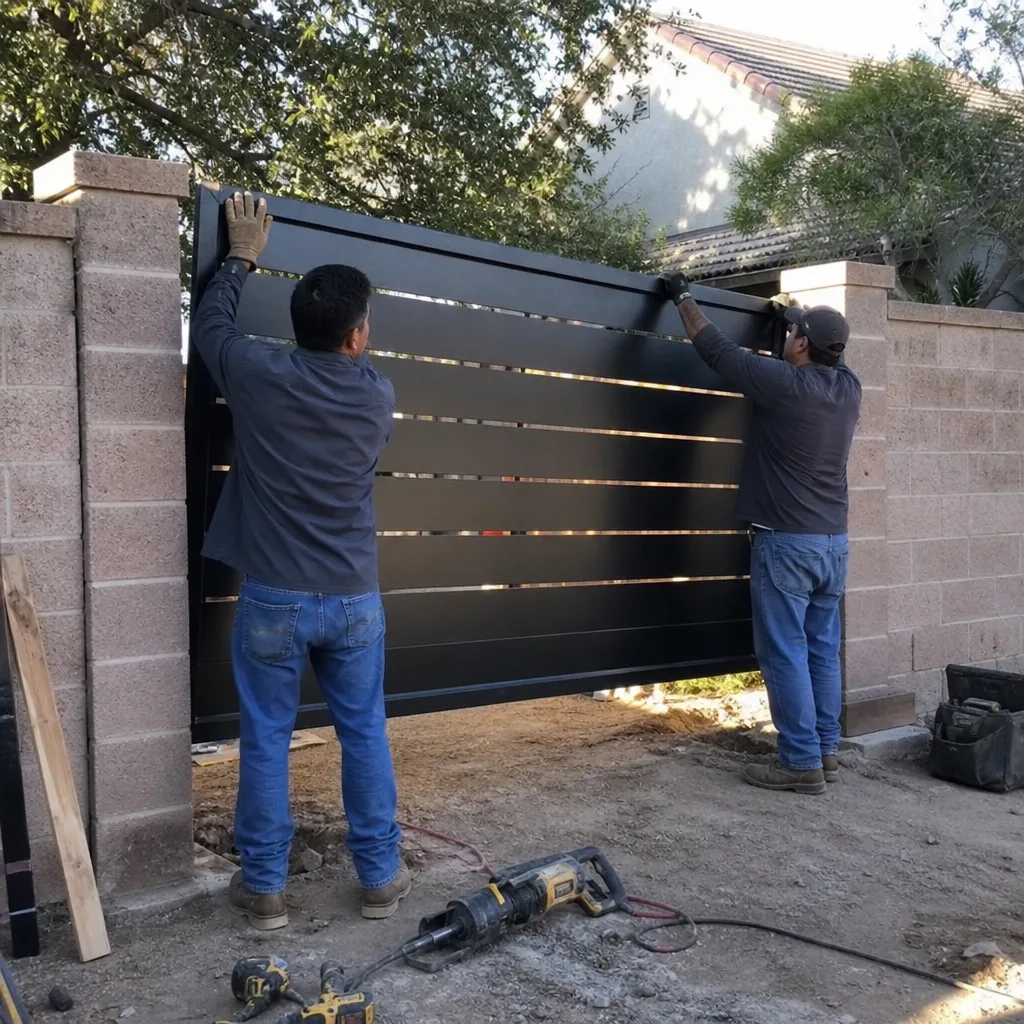
Gate systems combine high-tension mechanical components, 110V or 220V electrical supply, and safety-critical logic. Specific scenarios require professional service: intermittent operation that could indicate control board failure, visible weld cracks at hinge points, motor straining or overheating, photo-eyes that fail to stop the gate during the auto-reverse test, and any post movement or gate sag that suggests footing failure.
For electrical issues specifically, we recommend against homeowner troubleshooting beyond verifying that the breaker is engaged and the manual release is properly reset. Control boards store capacitive charge even when disconnected, and actuator arms can move unexpectedly if power is restored during testing.
Gate Repair in Phoenix from Vance Gate Repair Phoenix includes free estimates with written pricing before any work begins. Call (602) 483-6270 to schedule. A live person answers 24 hours a day - no voicemail, no callback queue.
Frequently Asked Questions
Most residential gate repairs in Phoenix range from $180 to $650 for common issues like limit-switch adjustments, photo-eye replacements, and control board swaps. Motor replacements and post work with excavation run $680 to $1,400. The diagnostic fee, typically $95 to $150, is charged separately and should be credited toward repair. Call (602) 483-6270 for a written estimate - estimates are free and include itemized pricing.
The advertised $95 is almost always the diagnostic fee, not the repair cost. It covers travel and time to identify the problem, not parts or labor to fix it. Some Phoenix companies use this as a loss-leader to get on site, then quote repairs at inflated rates. At Vance Gate Repair Phoenix, we apply your diagnostic fee directly to repair cost, and we quote the full repair in writing before any work starts.
Yes. Standard control boards rated to 140°F fail prematurely in Phoenix’s summer conditions, particularly on west-facing gates in neighborhoods like Ahwatukee and Laveen. We specify heat-rated components for direct-sun installations, typically adding $40 to $80 per board. UV-stabilized photo-eye housings add $25 to $40 but prevent the lens clouding that causes false obstruction errors.
A proper diagnostic includes voltage and amperage testing at the motor and board, mechanical travel testing for binding or play, safety system verification including photo-eye alignment and auto-reverse force, and a written findings report with photographs. Under the Haven Standard, every Vance Gate Repair Phoenix diagnostic includes this documentation at no additional charge. If you’re not receiving written findings with photos, you’re paying for a guess.
Replacement becomes the better option when the control board is obsolete, the frame shows systemic metal fatigue with multiple weld failures, the motor has been repaired twice in two years, or the system lacks safety features that cannot be retrofitted. We specify this threshold in writing with photographic evidence when we encounter it, and we never recommend replacement when repair is the sounder economic choice.
We service nine major automation brands: LiftMaster, FAAC, BFT, Linear, Viking, Ghost Controls, DoorKing, Elite, and Mighty Mule. We don’t steer customers toward replacement with a different brand when repair is viable. If your existing brand has supply-chain limitations - we’re seeing this with certain Mighty Mule professional lines - we note this in our written assessment so you can factor total cost of ownership into your decision.
The Bottom Line
Phoenix gate repair pricing becomes legible when you demand itemization, documentation, and written quotes before work begins. The $95 service call is real; it’s also just the beginning. Climate-specific components, caliche excavation, and the cost of undocumented callbacks separate honest quotes from opaque ones. Ask for line-item breakdowns, verify what’s included in the diagnostic, and confirm that you’ll receive photographic evidence of the work performed. The homeowners who do this - in Arcadia, Desert Ridge, Encanto, and across Phoenix - pay once for the right repair instead of twice for the wrong guess. For more guides & resources, explore our blog.
For a free written estimate with itemized pricing before any work starts, call Vance Gate Repair Phoenix at (602) 483-6270. A live person answers 24 hours a day, and every quote is delivered under the Haven Standard: written price, documented evidence, and the 365-Day Done Right Promise.
Written by Adrian Vance, Owner at Vance Gate Repair Phoenix, serving Phoenix since 2014.