
Last updated September 22, 2026
Free on-site gate assessment - hinges, posts, and your LiftMaster or Nice gate operator checked before anything is quoted
The assessment is free and the quote is the invoice.


 Before
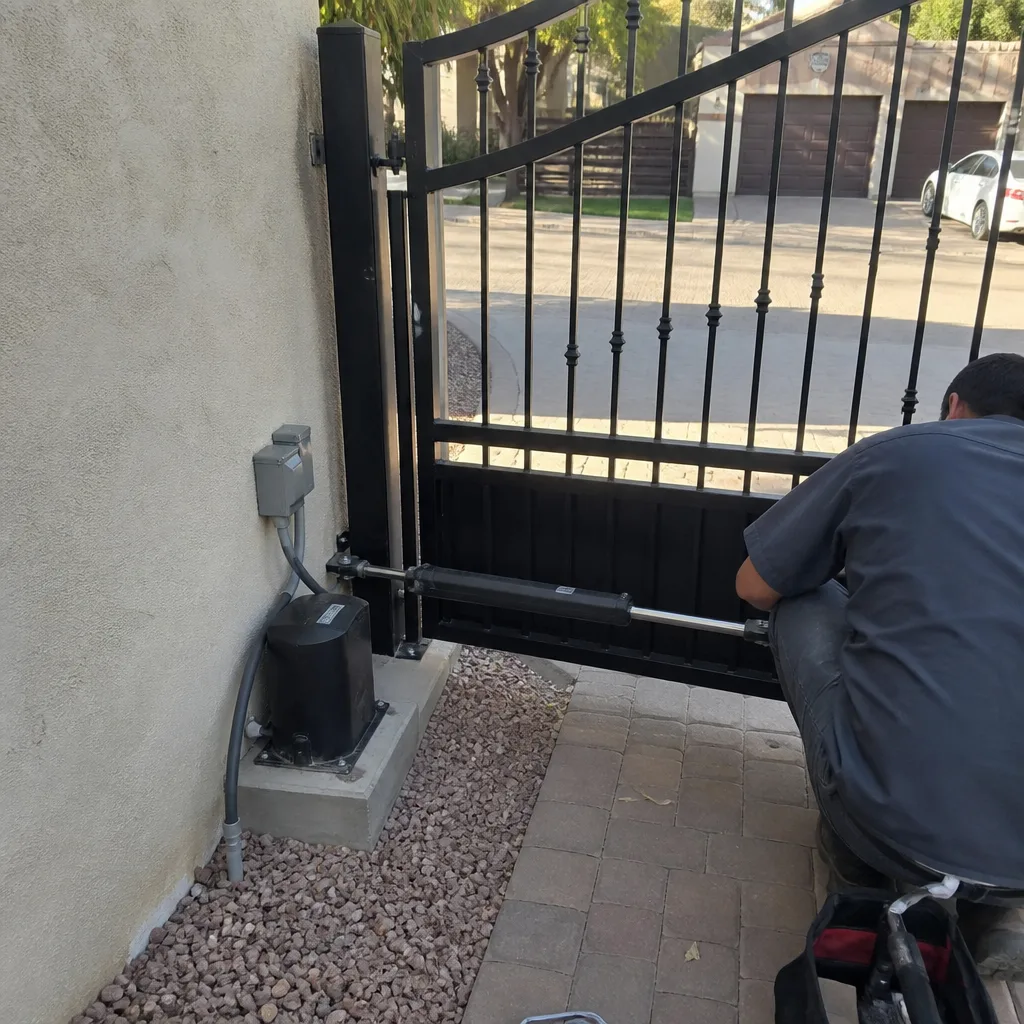 After
After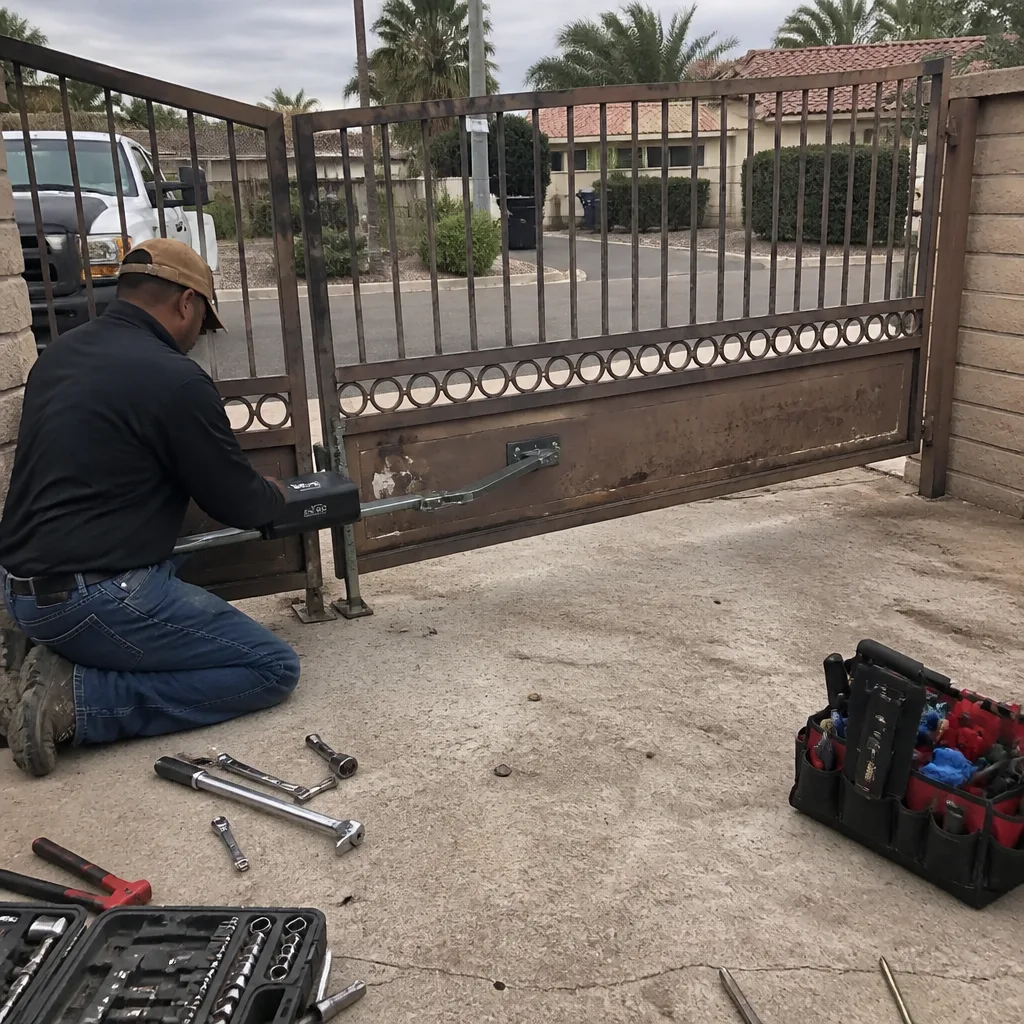 Before
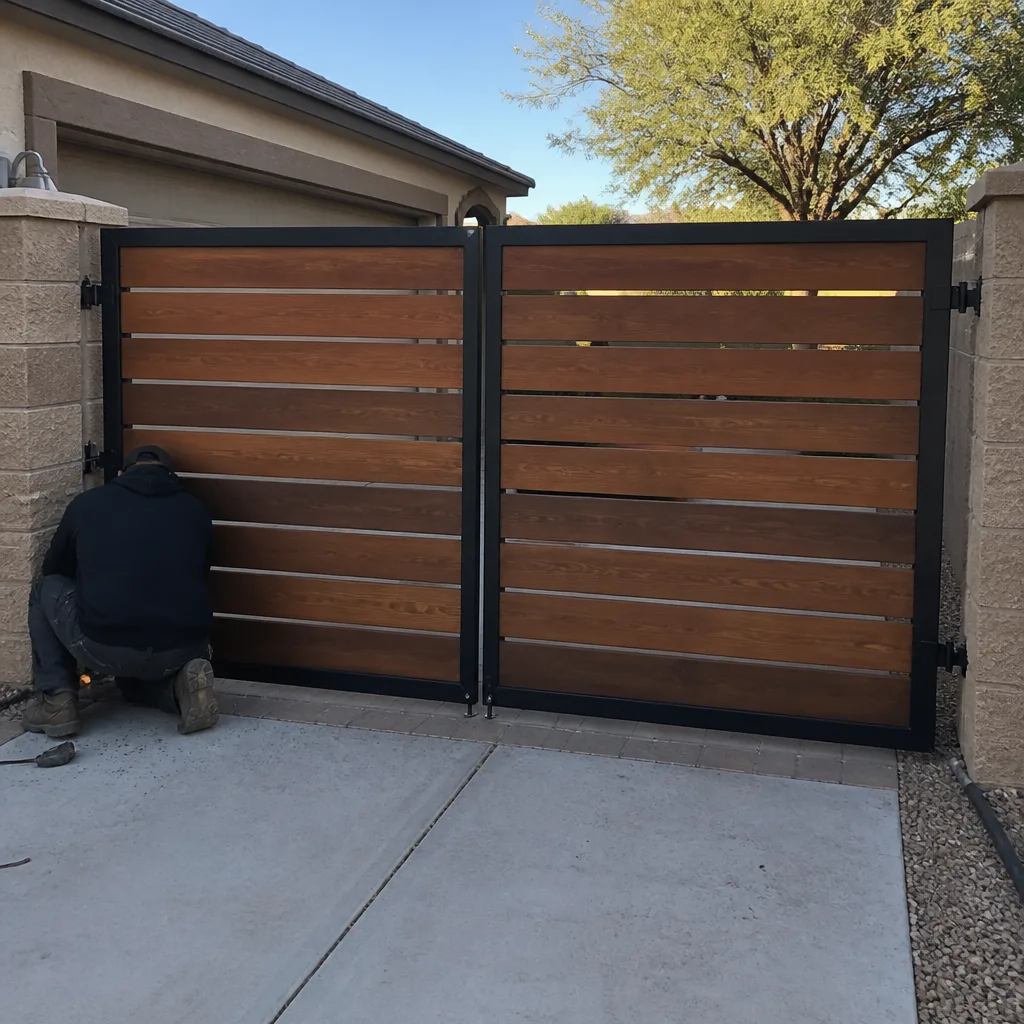 After
After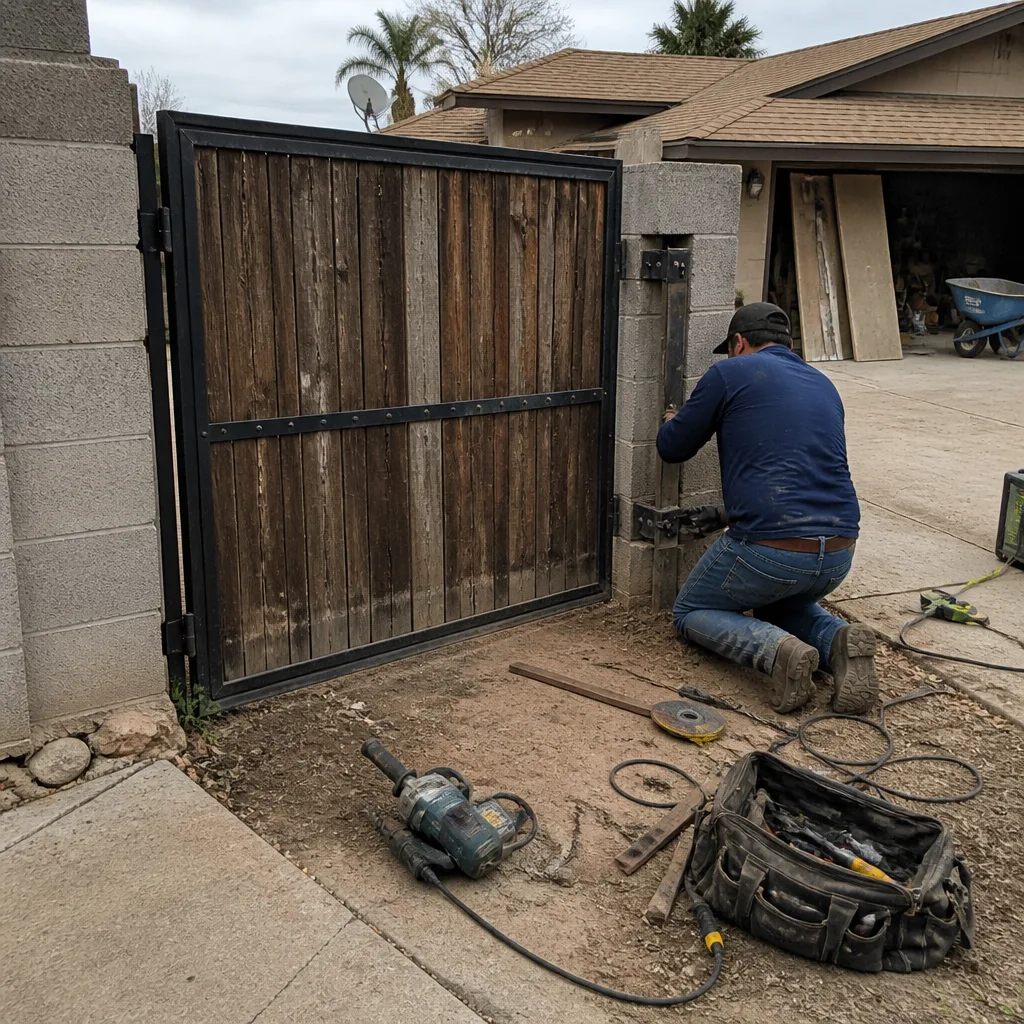 Before
 After
AfterGate Repair Permits, Codes & Inspections in AZ: What You Need to Know
Here’s the threshold most Phoenix homeowners miss: swapping a gate motor is almost never a permit trigger, but setting a new gate post in concrete almost always is. That distinction sounds simple until you’re three weeks from closing on your house and the title search flags unpermitted work from a repair you barely remember. In Phoenix’s deed-restricted communities and aging infill neighborhoods, we’ve seen that exact scenario cost sellers thousands in delayed closings, rush permits, and contractor callbacks. This guide maps where City of Phoenix permit law actually draws the line between repair and replacement, how HOA rules stack on top, and what documentation keeps you clean regardless of which side you’re on.
Quick Answer
Most gate repair work in Phoenix, including motor replacement, hinge adjustment, and welding fixes, does not require a city permit. A permit is triggered when the work constitutes “new construction” under City of Phoenix code, typically defined as replacing structural elements like gate posts, footings, or the gate leaf itself, or when electrical work extends beyond a like-for-like motor swap. When a permit is required, it must be pulled before work begins and closed with a passed inspection.
Table of Contents
- Repair vs. Replacement: Where Phoenix Draws the Line
- The City of Phoenix Permit Process Step by Step
- HOA Regulations: The Second Layer of Gate Rules
- What a Gate Inspector Actually Checks
- Unpermitted Work on Title: How It Shows Up and How to Fix It
- Building a Defensible Paper Trail
- Permit Costs and Timeline in Phoenix
- Common Mistakes to Avoid
- When to Call a Professional
- Frequently Asked Questions
- The Bottom Line
 Before
 After
AfterRepair vs. Replacement: Where Phoenix Draws the Line
The City of Phoenix follows the 2018 International Residential Code with local amendments, and the permit threshold hinges on whether the work is “repair and maintenance” versus “alteration or new construction.” This is where homeowners get tripped up, because the same project can look like either depending on how it’s scoped.
Work that typically does NOT require a permit:
- Replacing a gate motor or operator with a unit of comparable capacity (a LiftMaster replaced with another LiftMaster, for example, or an Elite with an equivalent Elite model)
- Adjusting, welding, or reinforcing the existing gate frame without changing its dimensions or weight
- Replacing hinges, rollers, or wheels on the existing post hardware
- Repairing or replacing photo-eyes, loop detectors, keypads, or other access-control peripherals
- Reprogramming limit switches or control boards
Work that typically DOES require a permit:
- Installing a new gate post or replacing an existing post that requires new excavation and concrete footing
- Changing the gate opening width, height, or swing direction
- Replacing a swing gate with a sliding gate, or vice versa
- Adding electrical service where none existed (new conduit run from the main panel, not just motor hookup)
- Structural welding that modifies the gate’s load path or support geometry
The gray zone, and where we’ve seen the most trouble, is post replacement. If a technician can bolt a new post to an existing concrete pier using the original anchor pattern, that’s generally repair. If the concrete is deteriorated, frost-heaved, or improperly sized and must be removed and re-poured, you’ve crossed into new construction. Phoenix’s caliche soil and monsoon-driven erosion make that second scenario more common than homeowners expect, especially in older neighborhoods like Encanto, Coronado, and parts of Arcadia where original footings were poured shallow.
Our documentation habit, carried over from commercial access-control work, helps here. Under The Haven Standard, we photograph the existing footing before we touch it. If the concrete is sound and we’re bolting to existing anchors, you get a photo record showing why no permit was triggered. If the concrete’s gone, we stop and discuss permit requirements before proceeding. That pause has saved dozens of Phoenix homeowners from unpermitted-work headaches.
The City of Phoenix Permit Process Step by Step
When permit-triggering work is identified, the sequence matters. Pulling a permit after work starts is legally possible but practically expensive, and closing an open permit during a home sale is a special kind of stress.
Step 1: Determine the correct permit type
Gate work in Phoenix typically falls under one of three categories:
- Residential Building Permit - for structural work: new posts, new gate leaf, footing excavation, or any change to the gate’s size or operation type
- Electrical Permit - for new electrical service runs, panel modifications, or low-voltage work that extends beyond the gate operator’s factory wiring
- Combination Permit - when both structural and electrical work are performed together, which is common on new gate installations
The City of Phoenix uses the ProjectDox online system for residential permits under $50,000 in valuation. For gate work, that’s nearly everything.
Step 2: Prepare the application package
You’ll need:
- A site plan showing the gate location relative to property lines, the residence, and the street
- Construction details for any new footing (depth, diameter, rebar specification - Phoenix requires 12-inch minimum diameter for gate posts in residential zones, with depth below frost line, which is effectively the caliche layer or 18 inches, whichever is deeper)
- Manufacturer cut sheets for the gate operator, showing UL 325 compliance
- A copy of the property survey or a hand-drawn dimensioned sketch if no survey is available
Step 3: Submit and pay
Residential building permit fees for gate work in Phoenix run roughly $85-$180 depending on project valuation. Electrical permits are typically $55-$95. The city reviews simple permits in 3-5 business days; complex or incomplete applications can stretch to two weeks.
Step 4: Schedule inspections
At minimum, you’ll need a rough inspection (footing and post placement before concrete pour) and a final inspection (completed gate, operator, and safety devices). Some projects trigger a framing inspection if the gate is part of a larger fence structure.
Step 5: Close the permit
The permit is not closed until all inspections pass and the city issues a Certificate of Completion. This document is what future title searches will find, or not find. Keep it with your home records indefinitely.
HOA Regulations: The Second Layer of Gate Rules
Phoenix’s master-planned communities, historic districts, and condominium associations add a parallel regulatory layer that has nothing to do with city code but everything to do with whether your gate stays up. We’ve responded to calls in Ahwatukee, Desert Ridge, and North Scottsdale where the gate was code-compliant, beautifully installed, and legally required to come down because the HOA architectural committee never approved the design.
What to check before any gate work in a deed-restricted community:
- Design guidelines - Many HOAs specify gate style, material, color palette, and maximum height. Some prohibit sliding gates entirely; others mandate them for corner lots.
- Architectural review timelines - Approval can take 30-45 days, and work started without approval may trigger fines or removal orders regardless of permit status.
- Maintenance responsibility boundaries - In some communities, the HOA owns the gate structure and the homeowner only owns the operator. Replacing a motor in that scenario is your cost; replacing a post is theirs, but only if you follow their vendor requirements.
- Access control integration - Communities with centralized entry systems (DoorKing and Elite are common in Phoenix HOAs) may require specific protocols or approved installer lists for any modification.
Our recommendation: pull the CC&Rs and any architectural guidelines before you call a contractor. If the documents are silent on gates, request written confirmation from the HOA management company. That email is your shield if a future board disputes the work. We’ve seen homeowners in Phoenix’s older condo conversions spend more on attorney fees than the gate cost because they skipped this step.
What a Gate Inspector Actually Checks
Homeowners often imagine inspectors with clipboards hunting for flaws. In practice, Phoenix building inspectors are checking compliance against the approved plans and adopted codes, not subjective quality. Knowing what they measure reduces surprises and failed inspections.
Structural inspection (rough):
- Footing depth and diameter against the permit drawings
- Post plumb and position relative to property lines (setback requirements vary by zoning; R-1-6 typically requires 3 feet from side property lines for structures over 6 feet)
- Rebar placement and concrete mix if specified
- Underground utility clearance - Arizona 811 markings must be visible
Final inspection:
- Gate dimensions match the approved plans
- UL 325 safety compliance on the operator: required entrapment protection (photo-eyes or edge sensors), auto-reverse function, and warning signage
- Electrical grounding and GFCI protection for any new outlets or direct-burial cable
- Fire department access compliance - gates on emergency access routes must have Knox box compatibility or automatic open-on-alarm integration, increasingly required in Phoenix’s newer developments
One specific Phoenix consideration: monsoon drainage. Inspectors in flood-prone zones, particularly near Indian Bend Wash and throughout the Salt River corridor, may check that gate footings don’t obstruct established drainage patterns or create ponding. We’ve had to redesign post placement in south Phoenix after rough inspections flagged drainage conflicts that weren’t obvious on dry ground.
Unpermitted Work on Title: How It Shows Up and How to Fix It
This is where the opening hook becomes real. Unpermitted gate work surfaces during title searches in two ways: as an open permit that was never closed, or as a flagged improvement with no permit history at all.
Open permits are the easier problem. The city database shows a permit pulled but no final inspection recorded. This often happens when a homeowner or contractor skipped the final inspection, or when an inspector flagged a correction that was never verified. Resolution: call the original contractor if they’re still operating, or hire a new licensed contractor to schedule a re-inspection. Phoenix allows re-inspection for a fee, typically $50-$75, if the work is still code-compliant. If code has changed since installation, you may need upgrades.
No-permit improvements are harder. These don’t appear in city records at all, but they appear on physical inspection, aerial imagery comparison, or neighbor complaint. A title company may flag them, or a buyer’s inspector may note a gate that clearly required a permit but has none. The city can require full permitting retroactively, which means opening walls, exposing footings, or even removing the gate until compliance is proven.
In Phoenix’s competitive real estate market, sellers often learn about this 10 days before closing. The fix is usually a rush permit with expedited inspection, but that assumes the work is compliant. If the original post is 8 inches diameter in 12-inch-required soil, or if the electrical was run without GFCI protection, you’re looking at reconstruction, not just paperwork.
Our documentation practice helps owners who bought homes with existing gates. Under our repair service, we photograph and measure what exists, compare it to current code, and flag potential permit gaps before they become sale problems. It’s not a legal service, but it’s a factual record that a permit expediter or attorney can work with.
Building a Defensible Paper Trail
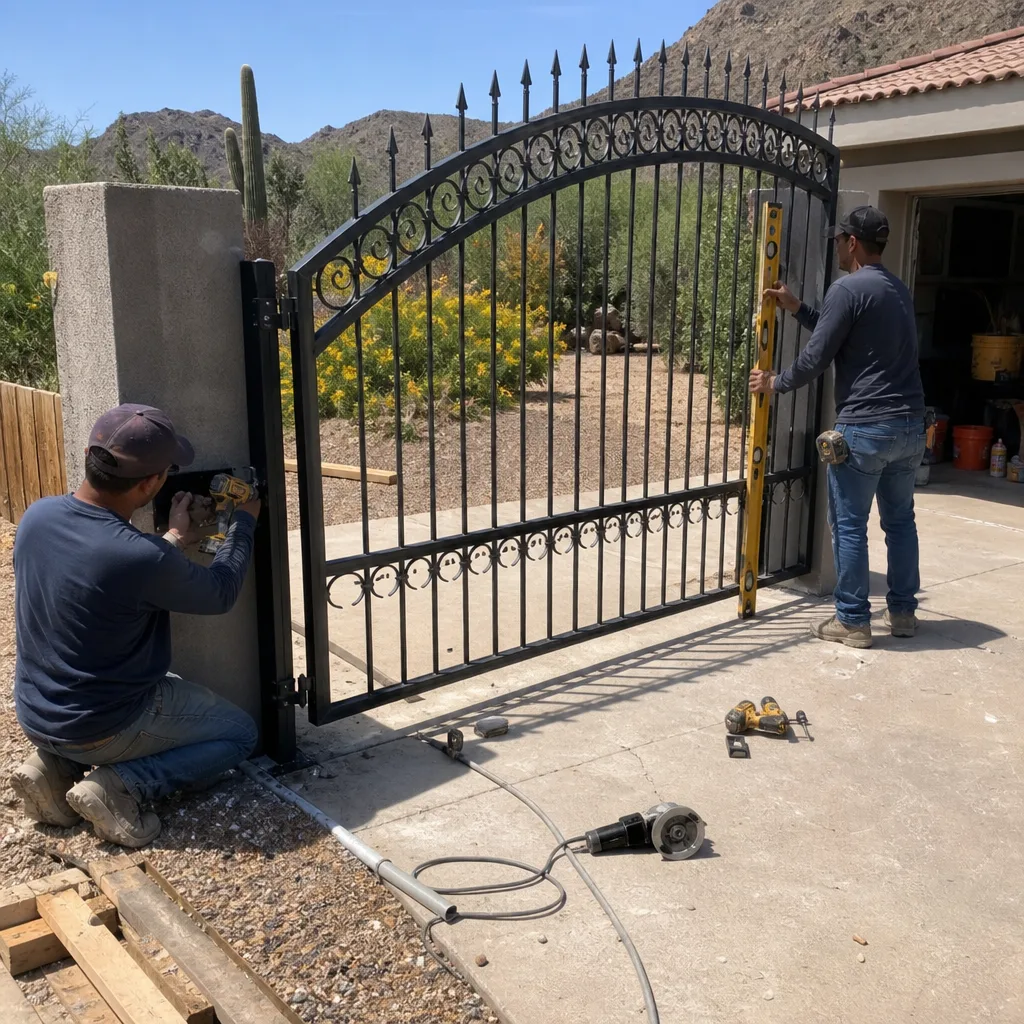
Whether your project triggers a permit or not, documentation is your protection. Phoenix’s climate, soil, and code evolution mean that a gate installed correctly in 2015 might not meet 2025 standards, and proving what was actually done matters when questions arise.
For permit-required work:
- Keep the permit application, approved plans, inspection records, and Certificate of Completion permanently with your home files
- Request that your contractor provide as-built drawings if any field changes occurred during construction
- Photograph each inspection stage independently, even if the contractor also photographs
For permit-exempt work:
- Demand a written scope and written price before work begins (this is Haven Standard Clause 1; we provide this on every job, permit or not)
- Request photographs of the condition before work, the work in progress, and the completed installation
- Keep part numbers, model numbers, and manufacturer warranties
- Note the technician’s name, license number, and company - Arizona Registrar of Contractors records are public and searchable
The specific Phoenix risk: caliche and expansive clay soils shift gate posts over time. A gate that was plumb and code-compliant at installation may lean or bind after two monsoon seasons. Without documentation of the original footing depth and concrete specification, you can’t prove the original work was correct. You just have a leaning gate and a suspicious buyer. Our photo logs include a tape measure in every footing shot for exactly this reason.
Permit Costs and Timeline in Phoenix
Permit costs are predictable; timeline costs, in delayed closings or rush fees, are where homeowners feel the pain.
| Permit Type | City Fee Range | Typical Review Time | Inspection Scheduling |
|---|---|---|---|
| Residential Building (gate structure) | $85 – $180 | 3-5 business days | 24-48 hours after rough complete; 24 hours after final ready |
| Electrical (new service) | $55 – $95 | 2-3 business days | Same day if called before 10 AM |
| Combination (structure + electrical) | $140 – $275 | 5-7 business days | Coordinated rough and final; electrical can often combine with building final |
| Re-inspection (failed or missed) | $50 – $75 | N/A | 24-48 hours |
| Expedited plan review | 2x base fee | 24-48 hours | Standard scheduling |
Rush permitting during a real estate transaction adds roughly $200-$400 in city fees and often requires a permit expediter at $75-$150 per hour. The real cost is stress and uncertainty, which is why we advise documenting existing gates before they become transaction issues.
On new gate installations, we include permit assistance as part of our standard scope: we prepare the technical drawings, submit the application, and coordinate inspections. The homeowner pays city fees directly; we don’t markup permit costs. On repair work that unexpectedly crosses into permit territory, we stop, explain the threshold, and offer to manage the permit or refer the owner to a permit expediter if they prefer to self-manage. Under Clause 1 of The Haven Standard, that discussion happens before any additional work or cost is incurred.
Common Mistakes to Avoid
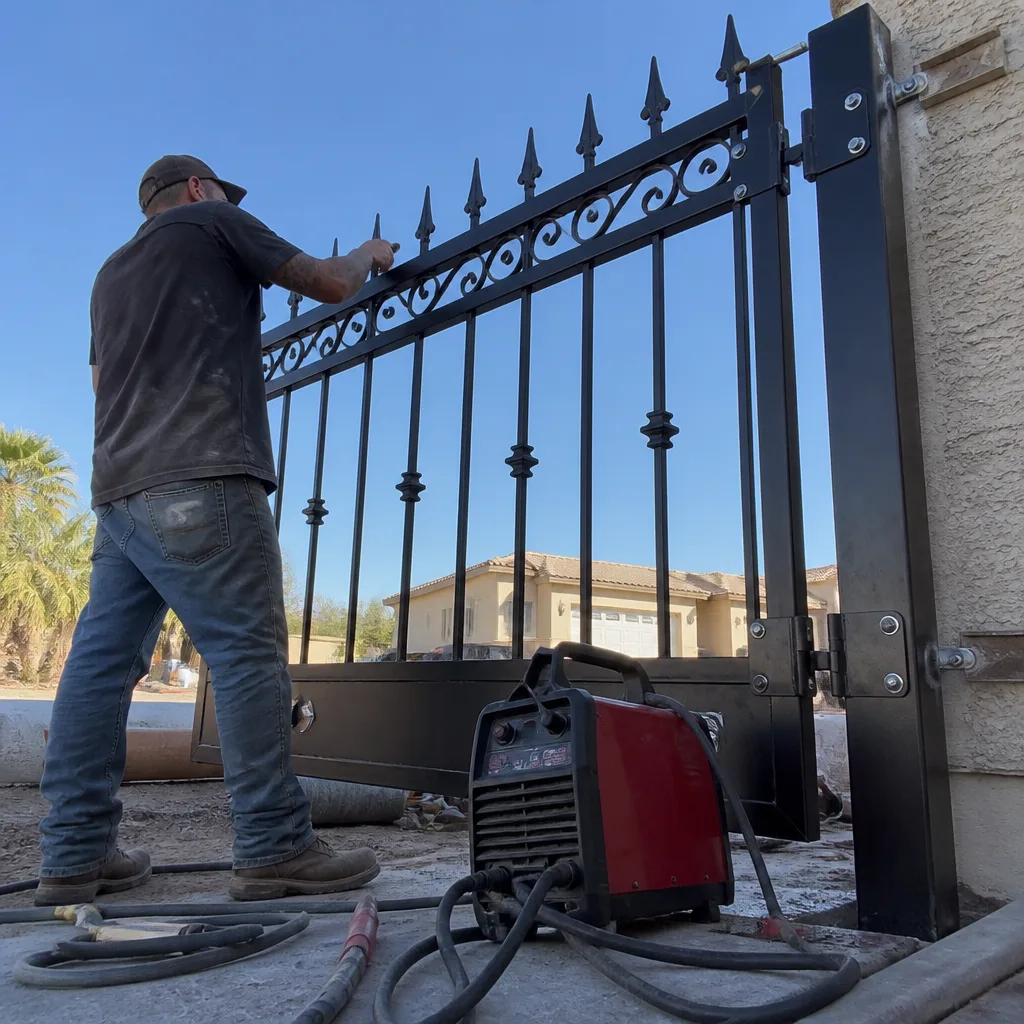
- Assuming motor replacement is always permit-free. It usually is, but if the new motor requires a new electrical circuit, new conduit run, or panel modification, the electrical work may need its own permit even if the gate structure doesn’t.
- Letting a contractor start work “while the permit is in process.” Phoenix inspectors can red-tag active work and require demolition to verify concealed elements. No reputable contractor should begin permit-triggering work before permit approval.
- Ignoring HOA approval until after city permit. We’ve seen homeowners get city permits, install gates, then face HOA removal orders. Check both tracks in parallel, not sequence.
- Discarding documentation after the gate works. Keep permits, inspections, and contractor records for the life of the home plus seven years. Digital backup is fine; original scans are better.
- Buying a home with a gate and never verifying permit status. A pre-purchase inspection should include a permit history search. Title companies don’t always catch open permits on structures under certain valuation thresholds.
- Assuming a “licensed contractor” pulled required permits. Verify independently through the City of Phoenix permit lookup or Arizona Registrar of Contractors. License status and permit compliance are separate databases.
- Repairing a gate post in caliche without testing footing depth. Shallow original footings are common in pre-1990 Phoenix construction. A repair that looks simple can become a permit-triggering replacement once you discover the concrete is inadequate.
When to Call a Professional
Call a licensed gate contractor when the work involves structural elements, electrical modifications, or any uncertainty about permit thresholds; see our step-by-step guide to hiring a gate repair contractor in Phoenix for what to ask. Call before you need a permit if you want an opinion on whether one is required. The cost of a service call is trivial compared to the cost of unpermitted-work remediation.
Gate motor and opener service is our core work, and most of it is permit-exempt. But we also install new gates, replace posts, and manage full permitting when the scope requires it. Vance Gate Repair Phoenix offers free estimates in Phoenix - call (602) 483-6270. Every estimate includes a written price before work starts, photographic documentation of existing conditions, and a clear statement of whether permit work is anticipated. If we arrive and find conditions that change that assessment, we stop and discuss before proceeding. That’s Haven Standard Clause 1, and it’s how we’ve operated since 2014.
Frequently Asked Questions
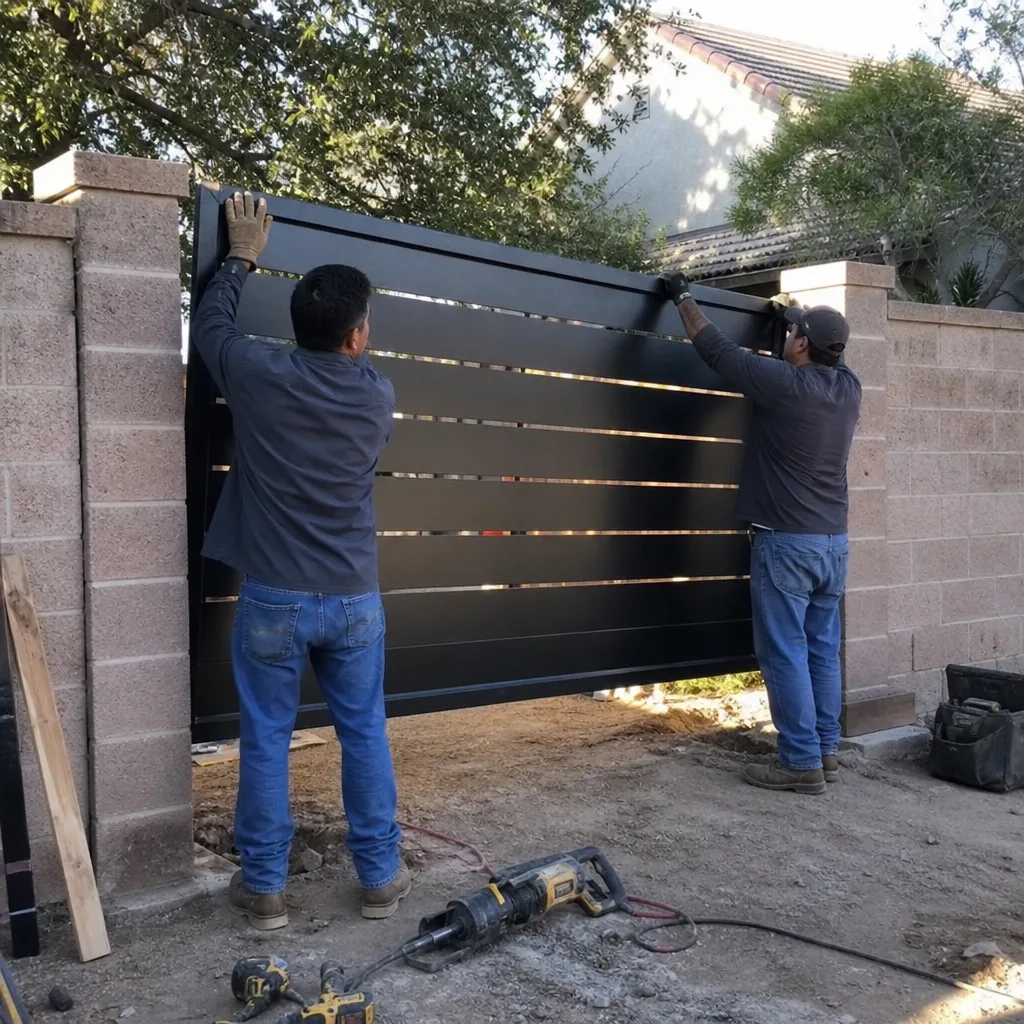
No, a direct motor replacement with a comparable unit typically does not require a City of Phoenix permit. If the replacement requires new electrical service, a new circuit, or panel work, the electrical portion may need a separate permit. Call (602) 483-6270 for a free estimate and we’ll assess your specific setup.
Search the City of Phoenix permit lookup by your property address. If the gate was installed after 1990 and required a permit, it should appear. For older installations or if records are unclear, a physical inspection by a licensed contractor can identify code-compliant construction details that suggest permitted work. We include this assessment in our free estimates.
You can, but the unpermitted work will likely become a closing condition that the buyer, title company, or lender requires resolved. This often means rush permitting, inspection, and possible reconstruction under current code. Resolving it before listing is almost always cheaper and less stressful.
The HOA can require removal and replacement with an approved design, regardless of permit status or installation cost. Some associations levy daily fines until compliance. Always secure written HOA architectural approval before permit application or construction begins.
Standard residential building permit review takes 3-5 business days; electrical permits typically 2-3 days. Inspection scheduling adds 24-48 hours per phase. Expedited review is available at 2x base fee for 24-48 hour turnaround. Total timeline from application to closed permit is typically 2-3 weeks for straightforward projects.
We prepare technical documentation, submit applications, and coordinate inspections for permit-required work as part of our standard installation scope. Homeowners pay city fees directly. For repair work that unexpectedly requires permitting, we explain the situation, provide the technical support, and let you choose whether to self-manage or have us handle it. The price for that assistance is quoted in writing before any commitment, per Haven Standard Clause 1.
The Bottom Line
The line between permit-free gate repair and permit-required replacement in Phoenix runs through the footing, the electrical service, and the structural dimensions, not through the homeowner’s intent. A motor swap is usually free and clear. A post replacement in caliche usually isn’t. The cost of guessing wrong shows up years later, in title searches and closing delays, when the original contractor is long gone and the documentation is thin. Document what you have, verify what was done, and get the next job in writing with photos before anyone picks up a tool. For warning signs that your gate needs attention, see our Phoenix homeowner’s reference. That’s the practice we brought from commercial access control to every residential gate we touch in Phoenix, and it’s the simplest protection against the most expensive surprise a homeowner can face.
Written by Adrian Vance, Owner at Vance Gate Repair Phoenix, serving Phoenix since 2014. Browse our more guides & resources for Phoenix homeowners.