
Last updated September 22, 2026
Free on-site gate assessment - hinges, posts, and your LiftMaster or Nice gate operator checked before anything is quoted
The assessment is free and the quote is the invoice.


 Before
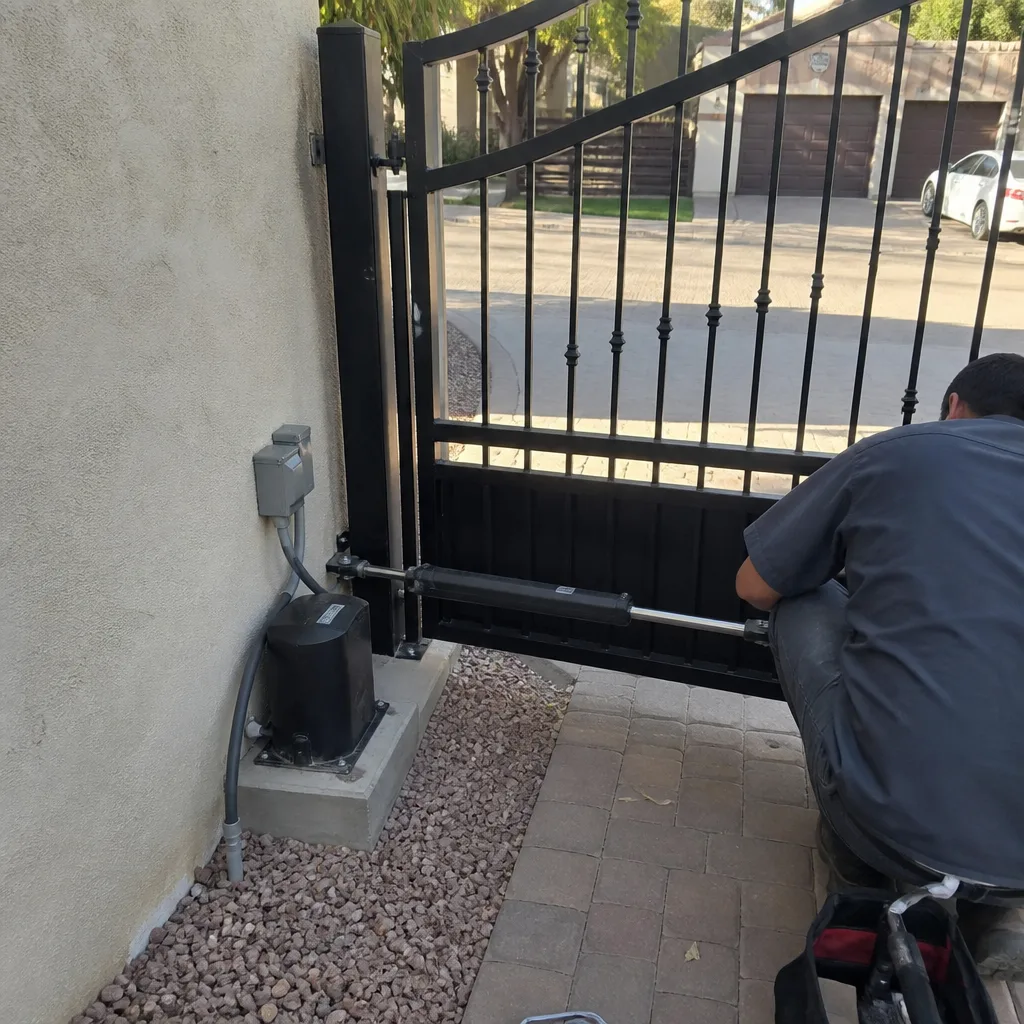 After
After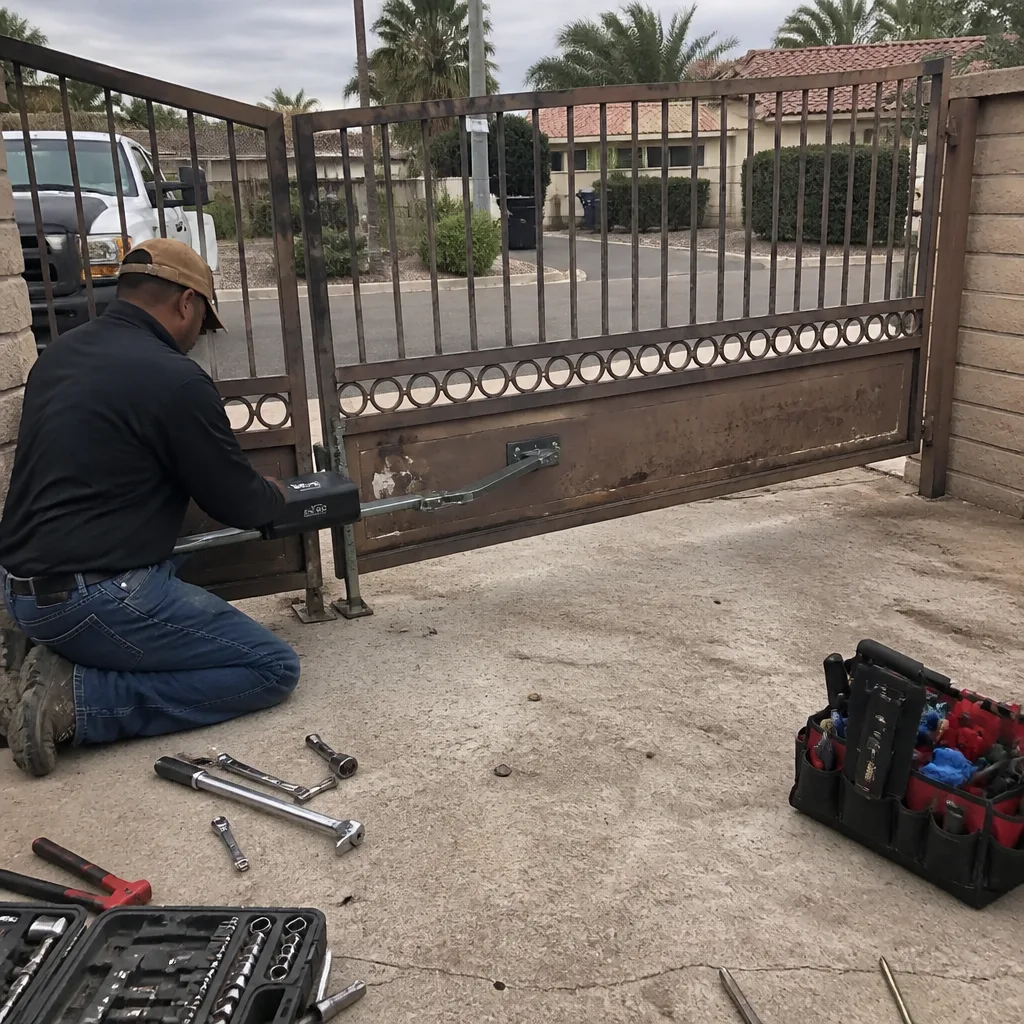 Before
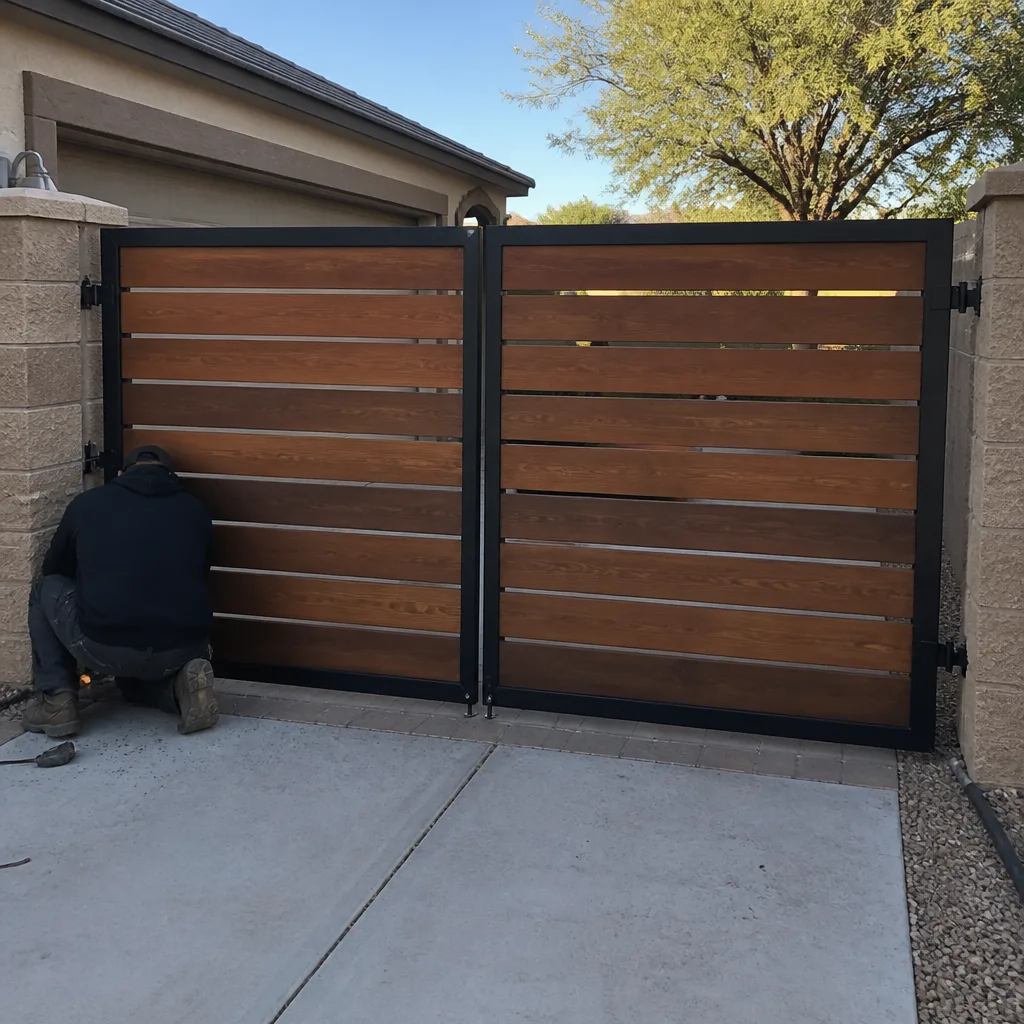 After
After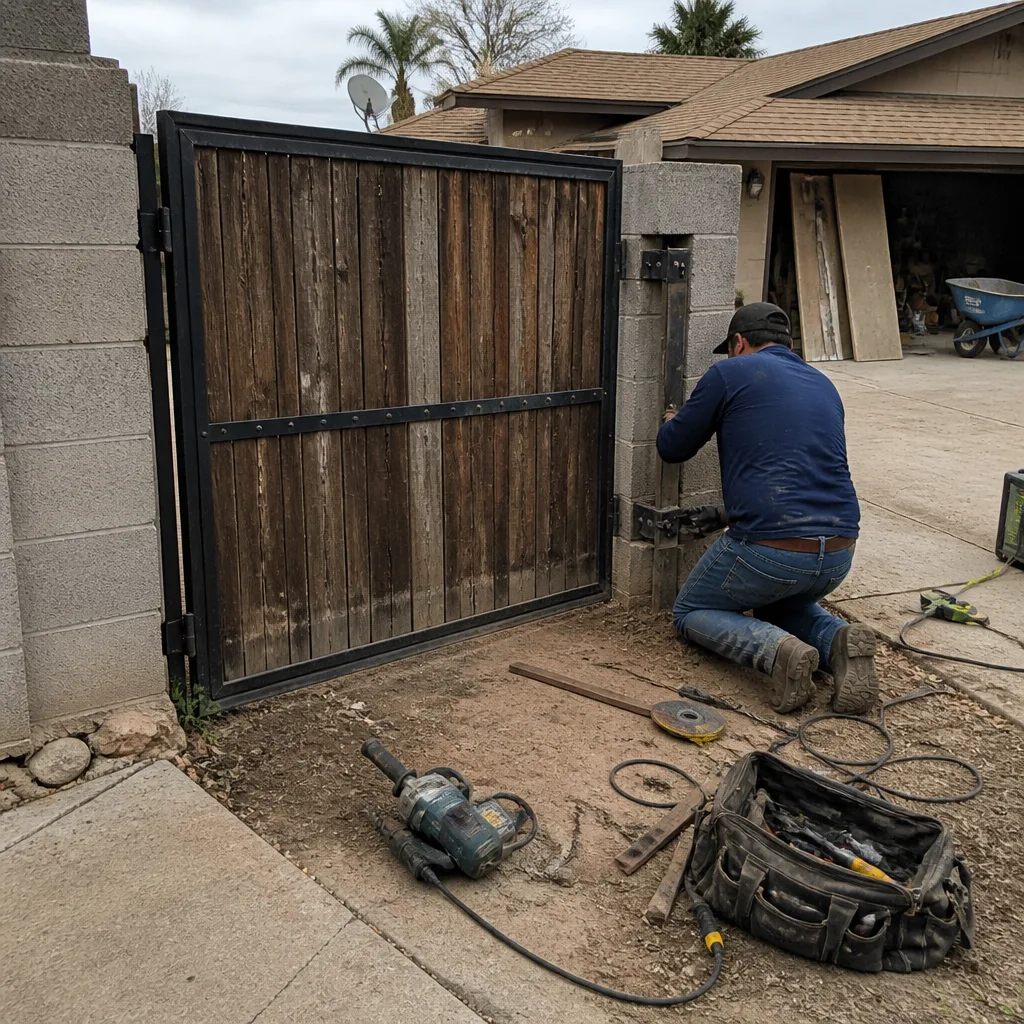 Before
 After
AfterGate Repair Warning Signs: A Phoenix Homeowner’s Reference Guide
A gate that reverses unexpectedly isn’t necessarily a safety malfunction. If it always reverses at the same point in travel, that’s a limit-switch reading issue, not a photo-eye fault. The distinction matters because they’re different repairs at different prices, and in Phoenix, where summer heat masks some symptoms while amplifying others, misreading the evidence costs homeowners money. We’ve seen a $60 limit-switch adjustment turn into an unnecessary $400 motor replacement because the symptom was read wrong. This guide maps specific observable behaviors to the specific components they implicate, with Phoenix-specific context that changes what those behaviors mean - and if you need hands-on help, our Gate Repair services are available across the Valley.
Quick Answer
Most gate warning signs fall into five categories: mechanical wear (grinding, sagging, binding), electrical faults (intermittent response, partial travel), safety-system errors (unexpected reversal, failure to close), structural issues (post movement, hinge fatigue), and environmental stress (thermal shutdown, flood damage after monsoons). In Phoenix, heat-related symptoms often indicate thermal protection activation rather than component failure, and monsoon moisture intrusion creates distinct electrical patterns that differ from desert-dry wear. Documenting the exact conditions under which a symptom appears saves diagnostic time and prevents unnecessary parts replacement; for more guides & resources on identifying patterns, see our blog.
Table of Contents
- Symptom-to-Component Mapping: What Each Warning Sign Actually Means
- How Phoenix Conditions Change the Meaning of Common Symptoms
- Safe Use Versus Immediate Shutdown: A Risk Classification
- How to Document Warning Signs Before Calling a Technician
- Structural Issues Versus Electrical Issues: Avoiding Misclassified Repairs
- Maintenance That Prevents Warning Signs From Developing
- Common Mistakes to Avoid
- When to Call a Professional
- Frequently Asked Questions
 Before
 After
AfterSymptom-to-Component Mapping: What Each Warning Sign Actually Means
Warning signs are diagnostic evidence. The same sound or behavior points to different parts depending on when it happens, where it happens in the travel cycle, and what the weather was doing. Here’s what we’ve found across 22,000+ gates since 2014.
Grinding or scraping during travel
Grinding at the motor head usually means the gear set inside the operator is wearing. On a LiftMaster or FAAC swing-gate operator, the worm gear and output shaft develop play after roughly 8-12 years in Phoenix dust. Grinding at the gate wheels or track means the V-groove wheels on a sliding gate are running on a deformed track, or the wheel bearings have seized. The difference: motor-head grinding continues even if you disconnect the gate arm and run the operator alone. Track grinding stops when the gate is moved by hand.
Hesitation or stutter at a specific point
This is almost always the limit switch or the magnetic sensor that tells the operator where the gate is in its travel. On Linear and Viking operators, the limit cam can slip a few degrees in high heat, causing the gate to pause at what the controller thinks is the deceleration point. If the hesitation happens at the same physical location every time, it’s a limit setting. If it happens randomly, look for a loose wire in the low-voltage control circuit.
Gate reverses before fully closing
First, note the reversal point. Reversal at the same spot every time suggests the close limit is set too far, so the operator hits mechanical resistance and interprets it as an obstruction. Reversal at random points, or immediately upon starting to close, points to photo-eye misalignment or a reflected-beam fault. In Phoenix, photo-eyes can drift in monsoon humidity or collect dust that scatters the infrared beam. A photo-eye that’s clean and aligned but still causing random reversal may have a failing emitter or receiver circuit - covered in detail in How to Hire a Gate Repair Contractor in Phoenix: A Step-by-Step Guide.
Gate opens but won’t close, or closes but won’t open
Directional failure usually implicates the control board or the relay that switches motor polarity. On BFT and Elite systems, we’ve seen relay contacts weld closed after surge events during summer storms. If the gate moves in one direction only, and the manual release allows free movement both ways, the problem is electrical, not mechanical. If the gate binds when moved by hand in the failed direction, look for a physical obstruction or hinge seizure.
Remote works intermittently or only at close range
Before blaming the remote battery, check whether the issue is range or reliability. Range reduction on a previously adequate remote often means the receiver antenna on the operator has been damaged, disconnected, or buried under debris. Intermittent operation at any distance suggests interference or a failing receiver board. In Phoenix, we’ve traced intermittent remotes to new LED street lighting on the same frequency band, and to pool equipment that shares a circuit with the gate operator.
Gate moves slower than it used to
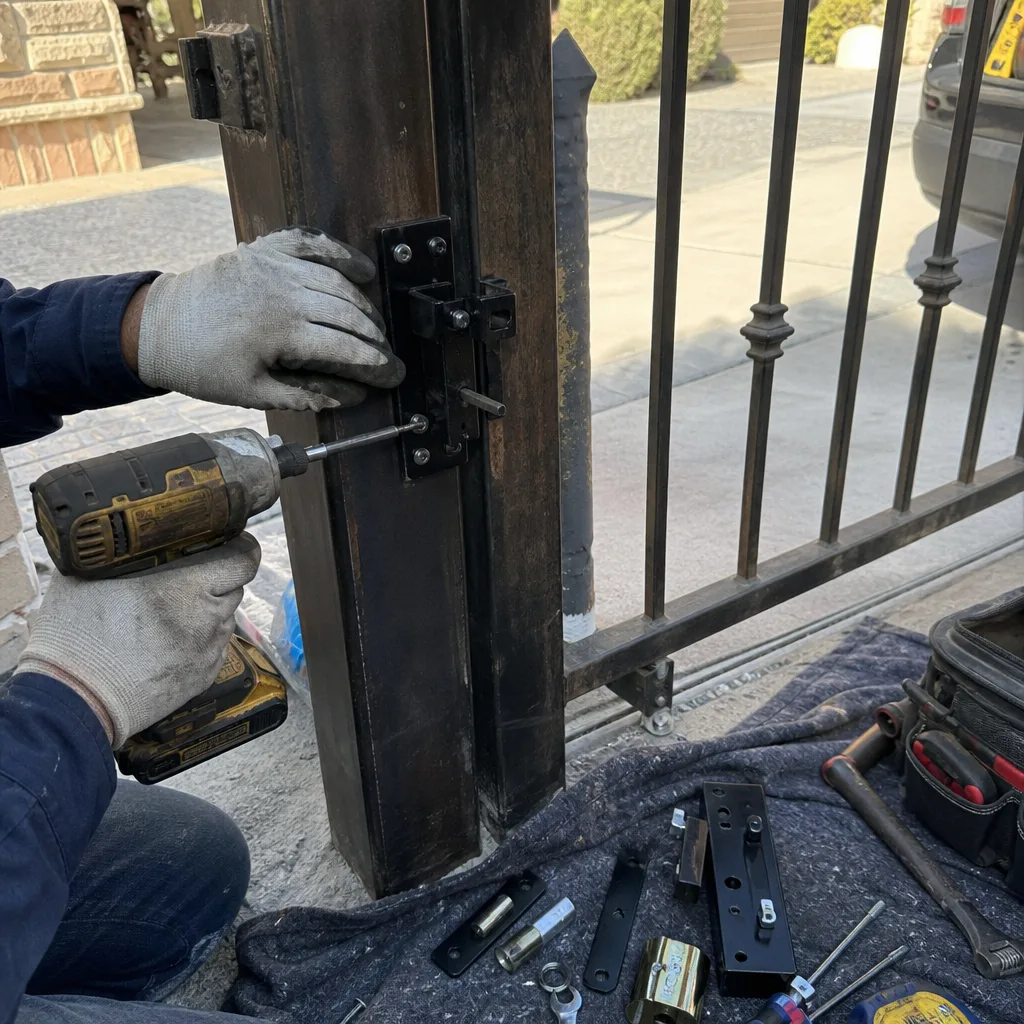
Slow travel in both directions points to motor weakness or low voltage at the operator. Slow travel in one direction only suggests a mechanical bind or a failing relay that doesn’t deliver full power in that direction. In Phoenix summer heat, a motor that runs slow in both directions may be activating thermal protection, not failing. The motor is protecting itself by reducing duty cycle. This is a $0 fix (shade the operator, improve ventilation) versus a $900 motor replacement.
| Observable Behavior | Component Implicated | Phoenix-Specific Consideration |
|---|---|---|
| Grinding at motor head | Worm gear / output shaft | Dust accelerates wear; inspect gear housing seal annually |
| Grinding at wheels/track | V-groove wheels or track deformation | Thermal expansion can bind sliding gates midday |
| Hesitation at same point | Limit switch or magnetic sensor | Heat causes cam slip on Linear/Viking; recalibrate seasonally |
| Random reversal | Photo-eye misalignment or failure | Monsoon humidity + dust = beam scatter; clean monthly |
| One-direction failure | Control board relay or mechanical bind | Summer surge damage common; inspect after storms |
| Reduced remote range | Receiver antenna or interference | New LED street lighting, pool equipment on shared circuit |
| Slow both directions | Thermal protection or low voltage | Shade operator before replacing motor; check voltage drop |
| Slow one direction | Mechanical bind or single relay failure | Check hinge pin galling from dust infiltration |
How Phoenix Conditions Change the Meaning of Common Symptoms
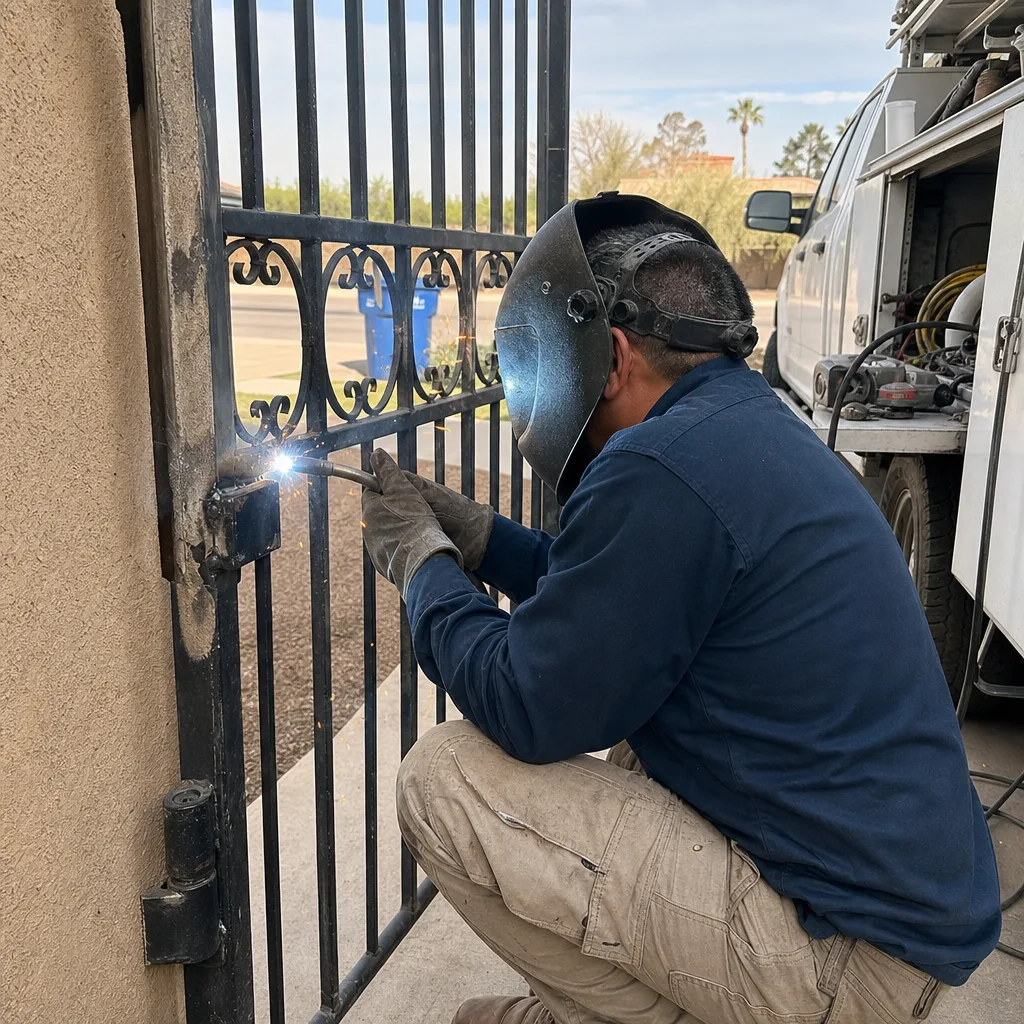
Desert climate doesn’t just wear gates faster. It changes what symptoms mean. A symptom that indicates component failure in Portland may indicate normal thermal behavior in Phoenix.
Summer heat and thermal protection
Gate operators have thermal switches that shut down the motor at internal temperatures around 150°F. In Phoenix, an operator in direct afternoon sun can reach that threshold without any electrical fault. The symptom: gate runs once or twice, then stops responding for 20-40 minutes. Homeowners often diagnose this as “the motor is dying.” We’ve replaced zero motors for this symptom. The fix is shade, ventilation, or relocating the operator to a covered position. Before calling for gate motor service in Phoenix, run the gate at 7 AM. If it performs normally, you’re looking at thermal protection, not motor failure.
Monsoon moisture and electrical patterns
Phoenix’s July-September monsoons create a specific failure pattern: intermittent operation that clears up after two dry days. Moisture enters conduit fittings, junction boxes, and underground splices. The symptom is a gate that works erratically during or after storms, then seems fine. The component is rarely the motor or control board. It’s usually a corroded wire nut in a buried junction, or water in a photo-eye housing that hasn’t been resealed after previous service. We document these with moisture meters and photos of the corrosion pattern, because the fix is a $12 junction box replacement, not a $600 control board.
Dust and mechanical wear
Phoenix’s fine caliche dust infiltrates everything. It doesn’t just make noise. It causes hinge pins to gall, track wheels to seize, and limit cams to wear prematurely. A gate that binds in summer but frees up after rain isn’t magically healed. The dust has temporarily packed into a lubricant-like paste. The underlying wear continues. The correct response is disassembly, cleaning, and proper lubrication with a dry-film lubricant that won’t attract more dust, as outlined in Seasonal Gate Repair Care for Phoenix: Year-Round Homeowner’s Guide. Standard grease makes the problem worse within two months.
Hard water and concrete degradation
Phoenix’s water hardness accelerates concrete spalling at gate post foundations. A post that leans 1/4 inch in year three may lean 2 inches by year five as irrigation runoff repeatedly wets and salts the concrete. The warning sign is a gate that drags at one point in its travel, with the drag point shifting as the post moves. This is structural, not electrical, and no amount of limit-switch adjustment fixes it. The component is the post foundation, and the repair is structural remediation or post replacement.
UV degradation of plastics and seals
Photo-eye housings, wire insulation, and gear housing seals degrade faster in Phoenix UV than in any market we work. A photo-eye that worked for ten years in Seattle may fail in four here. The warning sign is brittle plastic cracking, wire insulation that powders when touched, or gear grease that has dried to a crust. These are age-accelerated failures, not random defects, and they’re predictable with annual inspection.
Safe Use Versus Immediate Shutdown: A Risk Classification
Not every warning sign demands stopping use. Some allow continued operation with monitoring. Others create genuine hazard. The difference matters for scheduling and for whether you need emergency service.
Conditions allowing continued use with monitoring
- Slow travel with normal force. If the gate still reverses on obstruction and completes its cycle, slow travel is typically thermal or lubrication-related. Monitor for worsening, but same-day service isn’t urgent.
- Intermittent remote response. If the gate always responds from the keypad or wired button, the safety systems are intact. The remote issue is convenience, not safety. Schedule within a week.
- Audible wear without binding. Grinding that doesn’t affect travel or safety function indicates wear in progress, not imminent failure. Document and schedule maintenance.
- Cosmetic damage to housing. Cracked operator cover or faded control box doesn’t affect function unless water is entering. Inspect internals and schedule cover replacement.
Conditions requiring immediate shutdown
- Gate fails to reverse on obstruction test. Place a solid object in the gate path. If the gate doesn’t reverse, disable the operator immediately. This is a crushing hazard, and continued use creates liability exposure.
- Visible sparking or burning smell. Electrical fire risk. Disconnect power at the breaker, not just the operator switch, and call for service.
- Post movement with gate still attached. A leaning or loose post can fail catastrophically, dropping the gate. Block access and call immediately.
- Gate detaches from operator arm. The gate is now an uncontrolled mass. Do not attempt manual operation if the gate is heavy or on a slope.
- Underground wiring exposed. Exposed low-voltage wiring in wet conditions or near irrigation creates electrocution risk. De-energize and call.
In our experience across Phoenix, the most dangerous situation is a gate that has lost safety function but still appears to work normally. Homeowners adapt to the behavior, assuming the gate “just doesn’t sense small objects.” That’s not a quirk. That’s a failed safety system, and it requires immediate shutdown.
How to Document Warning Signs Before Calling a Technician
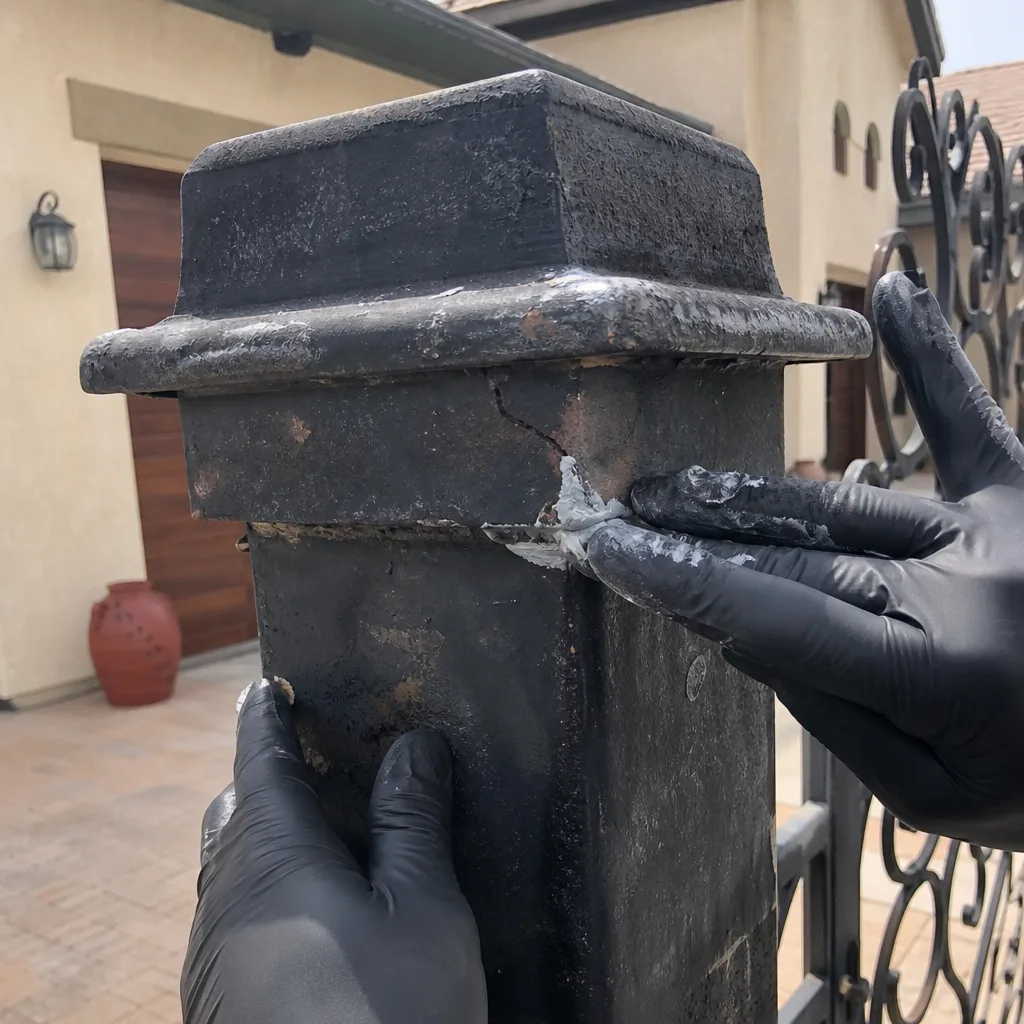
The diagnostic conversation starts with evidence. A phone description of “it makes a noise” costs us both time. Here’s what to capture, and why it matters.
Step 1: Record the exact conditions
Note time of day, temperature, and recent weather. “3 PM, 112°F, no rain for two weeks” tells us to check thermal protection first. “7 AM, 85°F, after last night’s storm” points to moisture intrusion. The conditions are as diagnostic as the symptom.
Step 2: Video the complete cycle
Record from a fixed position showing the full gate travel, with audio. We need to hear when grinding starts, see where hesitation occurs, and observe whether reversal happens at the same point. A 30-second video replaces ten minutes of phone description.
Step 3: Photograph the operator and control panel
Clear photos of the operator brand and model label, the control board LED indicators, and any error codes displayed allow us to bring correct parts on the first visit. For LiftMaster, FAAC, and BFT systems, the model label is usually inside the housing cover. For Linear and Viking, check the underside of the control box.
Step 4: Test and document safety function
Perform the obstruction test with a solid object (not a person or pet). Note whether the gate reverses, stops, or continues. Photograph the test setup. If the gate fails this test, note it prominently; this moves your call to urgent status.
Step 5: Gather prior service records
If another company has worked on the gate, their invoice or estimate is diagnostic gold. We offer free second opinions on any written estimate from another company - bring the paperwork and we’ll review what was proposed against what we find. Under the Haven Standard, we document what was previously set or replaced, so no one pays twice to rediscover the same problem.
When you call gate repair in Phoenix with this documentation ready, the technician arrives with context. That translates to faster diagnosis, fewer return visits, and no exploratory part-swapping at your expense.
Structural Issues Versus Electrical Issues: Avoiding Misclassified Repairs
The most expensive mistake in gate repair is treating a structural problem as electrical, or vice versa. We’ve seen $1,200 control board replacements fail because the real issue was a post that had settled 3 inches, binding the gate at a point the controller interpreted as an obstruction.
Structural warning signs
- Gate drags at the same point in travel, and the drag point shifts seasonally or after rain
- Visible post lean, concrete cracking, or soil erosion around the foundation
- Hinge gap changes when the gate is opened versus closed (indicates post twist)
- Track-mounted sliding gate with rail deflection visible to the eye
- Gate weight appears to have increased (harder to move manually than remembered)
Structural issues don’t respond to electrical repair. Adjusting limits on a gate with a settling post simply moves the bind point. The correct repair is post stabilization or replacement, followed by limit recalibration.
Electrical warning signs
- Symptoms that vary with time of day or temperature, not gate position
- Complete failure of one function (open or close) with free manual movement
- Error codes on the control board that correspond to specific electrical faults
- Remote or keypad failure while wired controls work normally
- Symptoms that clear after power cycle and return after sustained operation
Electrical issues don’t respond to structural repair. Rebuilding a post foundation on a gate with a failed relay wastes the structural work and leaves the electrical fault.
The diagnostic test that separates them
Disconnect the operator and move the gate by hand. If it binds or drags, the problem is structural or mechanical. If it moves freely in both directions but fails under power, the problem is electrical. This test takes 30 seconds and prevents misclassified repairs that cost homeowners thousands.
For new gate installation in Phoenix, we specify post depth and concrete mix for local soil conditions precisely because structural failure is harder to correct than electrical failure, and because Phoenix’s expansive clay soils and caliche layers create unique foundation challenges.
Maintenance That Prevents Warning Signs From Developing
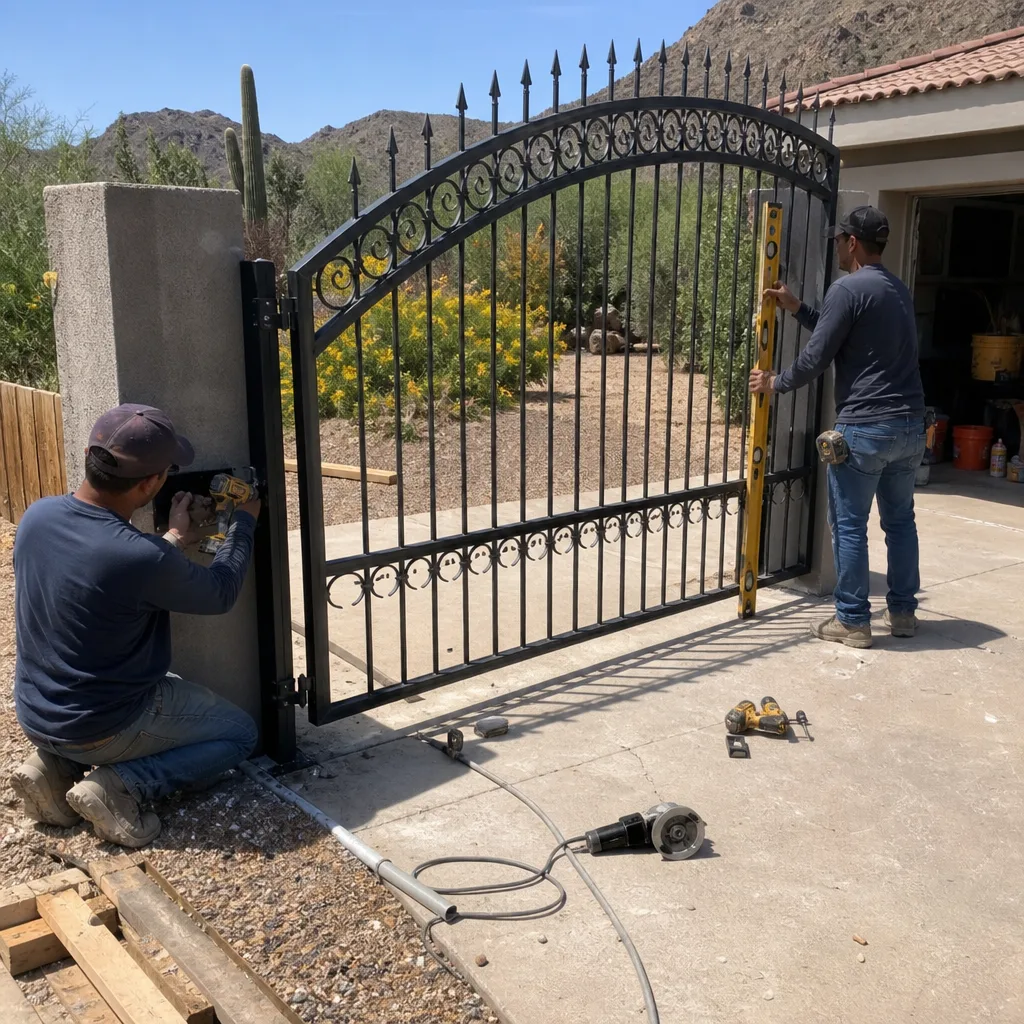
Most warning signs are preceded by months of gradual change that went unobserved. A maintenance habit doesn’t prevent all failures, but it catches them before they cascade.
Monthly: visual inspection
Walk the gate line. Look for new concrete cracks, post movement, hinge gap changes, and debris in the track or wheels. Check photo-eye lenses for dust or spider webs. In Phoenix, dust accumulation is weekly, not monthly, during dry periods.
Quarterly: function test
Run the full cycle ten times. Time it. Note any change from your baseline. Test safety reversal with a solid object. Test remote range from your typical use points. Any degradation is a warning sign in embryo.
Annually: professional inspection
We inspect under the Haven Standard: written findings, photographed condition of every component, and a written scope with price for anything that needs attention. The inspection includes gear backlash measurement, voltage drop testing under load, limit switch accuracy check, and structural assessment of posts and foundations. You get the photo record and the written report, same as every other visit.
For gates in Phoenix’s harshest exposure - west-facing operators, irrigation spray zones, or properties near active construction - we recommend biannual inspection. The cost of inspection is consistently lower than the cost of reactive repair, and the documentation protects warranty coverage on automation components.
Common Mistakes to Avoid
- Assuming slow travel means motor failure. In Phoenix, thermal protection is the leading cause of slow operation from May through September. Shade the operator and retest before authorizing motor replacement.
- Applying standard grease to track or hinges. Standard grease attracts dust and forms an abrasive paste. Use dry-film lubricant or silicone spray formulated for dusty environments.
- Ignoring monsoon-related symptoms that “clear up.” Moisture intrusion that resolves in dry weather has already started corrosion. The failure will return, permanently, usually in the next storm cycle.
- Adjusting limits to compensate for binding. This forces the operator to work against mechanical resistance, accelerating gear wear and eventually burning out the motor. Fix the bind first.
- Replacing the remote before testing the receiver. A new remote won’t fix a failing receiver or antenna. Test with a second known-good remote, or test the original remote on a different gate, before buying replacements.
- Assuming all brands use the same diagnostic logic. A flashing LED on a LiftMaster means something different from the same pattern on a FAAC or BFT. Consult the specific manual or a technician certified on that brand.
- Delaying service after a safety-system failure. A gate that doesn’t reverse is a liability exposure. The homeowner, not the equipment, bears responsibility for injury. Document the failure and disable the operator immediately.
When to Call a Professional
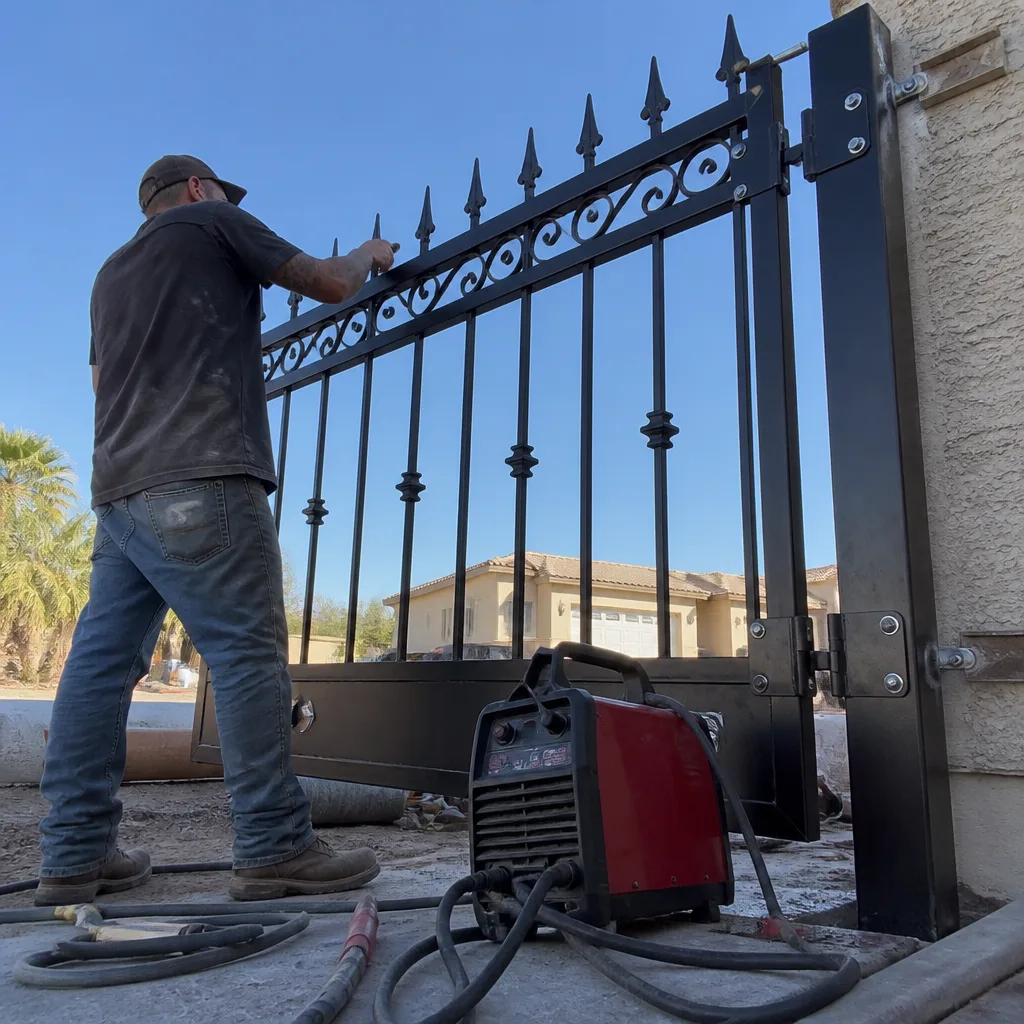
Call when a warning sign persists beyond one cycle, when safety function is compromised, or when you cannot classify the symptom with confidence. Same-day service is appropriate for safety failures, post movement, or electrical hazards. Scheduled service is appropriate for performance degradation with intact safety function.
Vance Gate Repair Phoenix offers free estimates in Phoenix - call (602) 483-6270. A live person answers 24 hours a day, seven days a week. We’ll review your documentation, classify the urgency, and dispatch a background-checked, uniformed technician with name and photo provided before arrival. Every repair is governed by the Haven Standard: written price before work starts, documented photo record on every visit, and the 365-Day Done Right Promise covering all completed work.
Frequently Asked Questions
Most residential gate repairs in Phoenix range from $180 for a limit-switch adjustment or photo-eye realignment to $650 for control board replacement, with swing-gate motor replacements typically running $850-$1,400 depending on brand and whether the arm bracket is intact. We deliver a written price before any work starts under Haven Standard Clause 1, and we offer free second opinions on any written estimate from another company. Call (602) 483-6270 for an exact quote - estimates are free.
Yes, thermal protection in gate operators activates at internal temperatures around 150°F, which an operator in direct Phoenix afternoon sun can reach without any electrical fault. The gate typically runs once or twice, then shuts down for 20-40 minutes. This is normal protective behavior, not component failure. Shade the operator or improve ventilation before considering motor replacement.
This pattern strongly suggests thermal protection activation or voltage drop under high ambient temperature. As the day heats up, electrical resistance increases and motor load increases if lubricants thin out. Test at 7 AM versus 3 PM. If the symptom is strictly time-of-day dependent, it’s environmental, not a failing part.
Disconnect the operator and move the gate by hand. If it binds or drags, the problem is structural or mechanical. If it moves freely but fails under power, the problem is electrical. This 30-second test prevents the most expensive misclassification in gate repair.
Disable the operator immediately by disconnecting power at the breaker. Do not continue using the gate. A failed safety reversal system creates crushing hazard and liability exposure. This is an urgent call, not a scheduled maintenance item.
We service nine major automation brands: LiftMaster, FAAC, BFT, Linear, Viking, Ghost Controls, DoorKing, Elite, and Mighty Mule. We don’t steer customers toward replacement when repair is viable, and we stock parts for all nine brands to complete repairs in a single visit when possible.
The Bottom Line
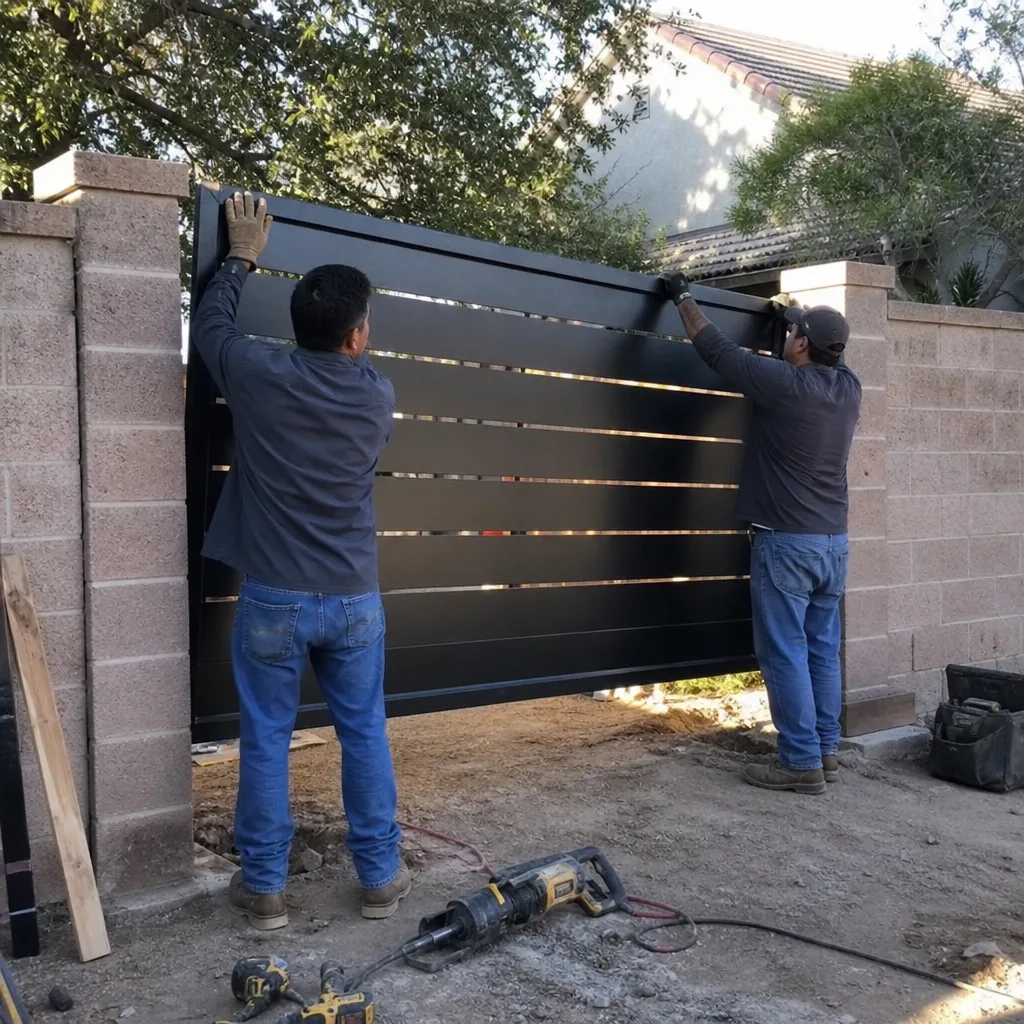
Gate warning signs are diagnostic evidence, not vague symptoms. The same behavior points to different components depending on when it occurs, where in the travel cycle, and what Phoenix conditions preceded it. Documenting the exact conditions, testing structural versus electrical causes, and understanding heat-specific behavior prevents unnecessary parts replacement and gets the right repair at the right price. Under the Haven Standard, every visit leaves you with a written record of what was found, what was done, and what was photographed - so the next technician, whether it’s us or someone years from now, starts with evidence instead of guesses.
Written by Adrian Vance, Owner at Vance Gate Repair Phoenix, serving Phoenix since 2014.