
Last updated September 22, 2026
Free on-site gate assessment - hinges, posts, and your LiftMaster or Nice gate operator checked before anything is quoted
The assessment is free and the quote is the invoice.


 Before
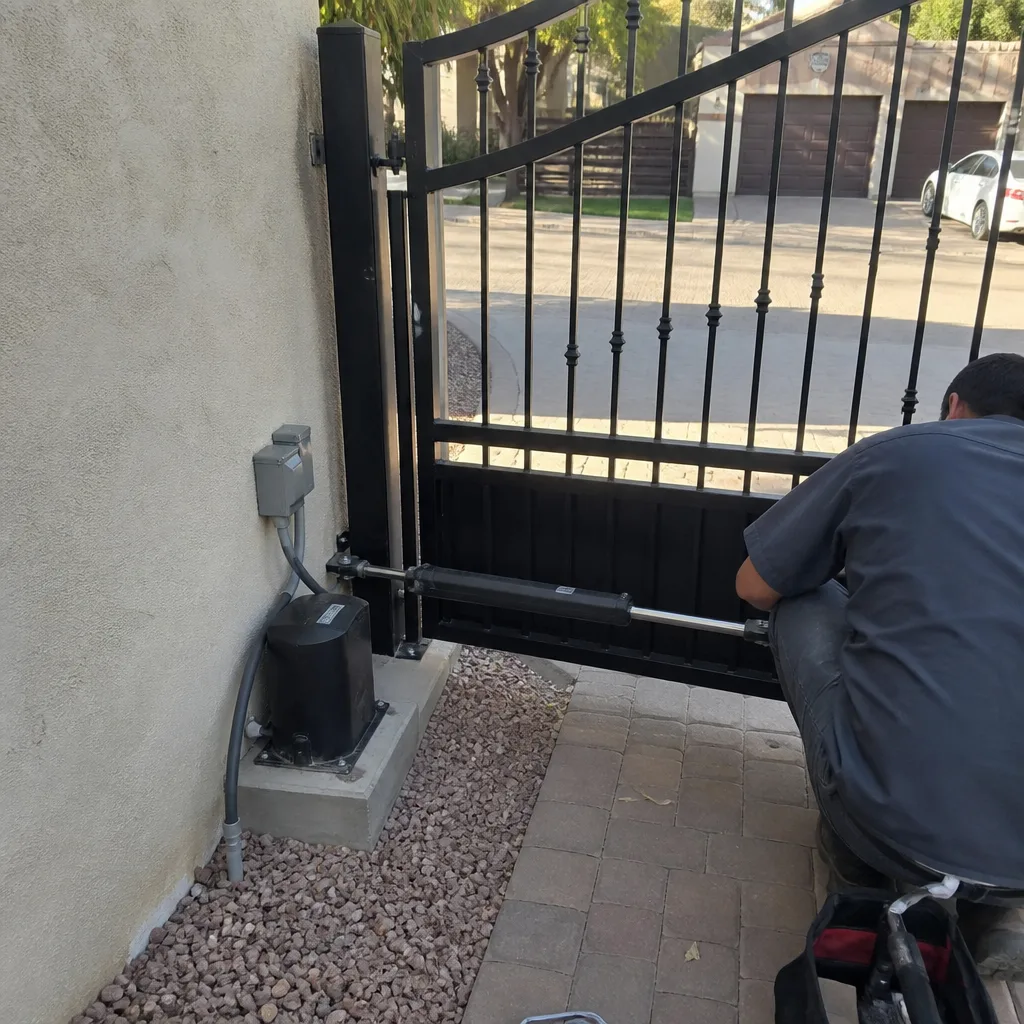 After
After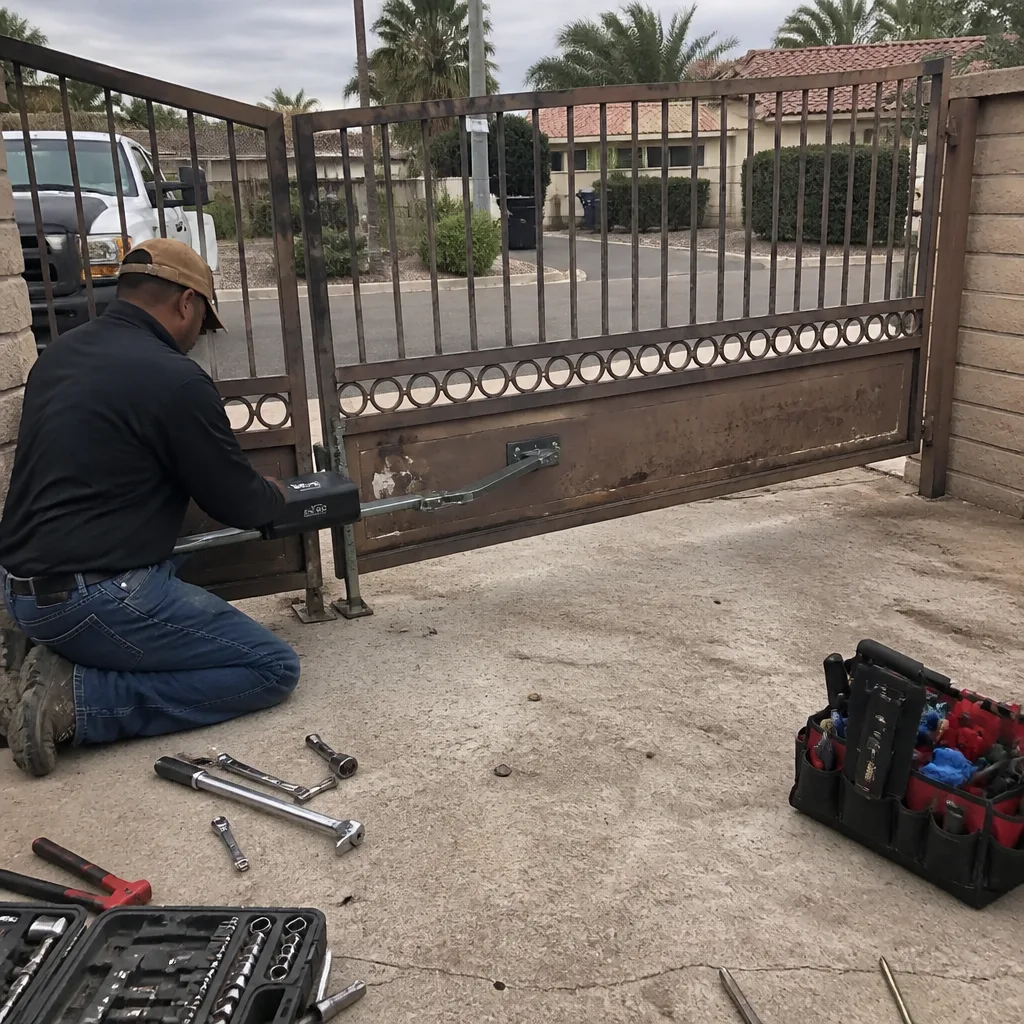 Before
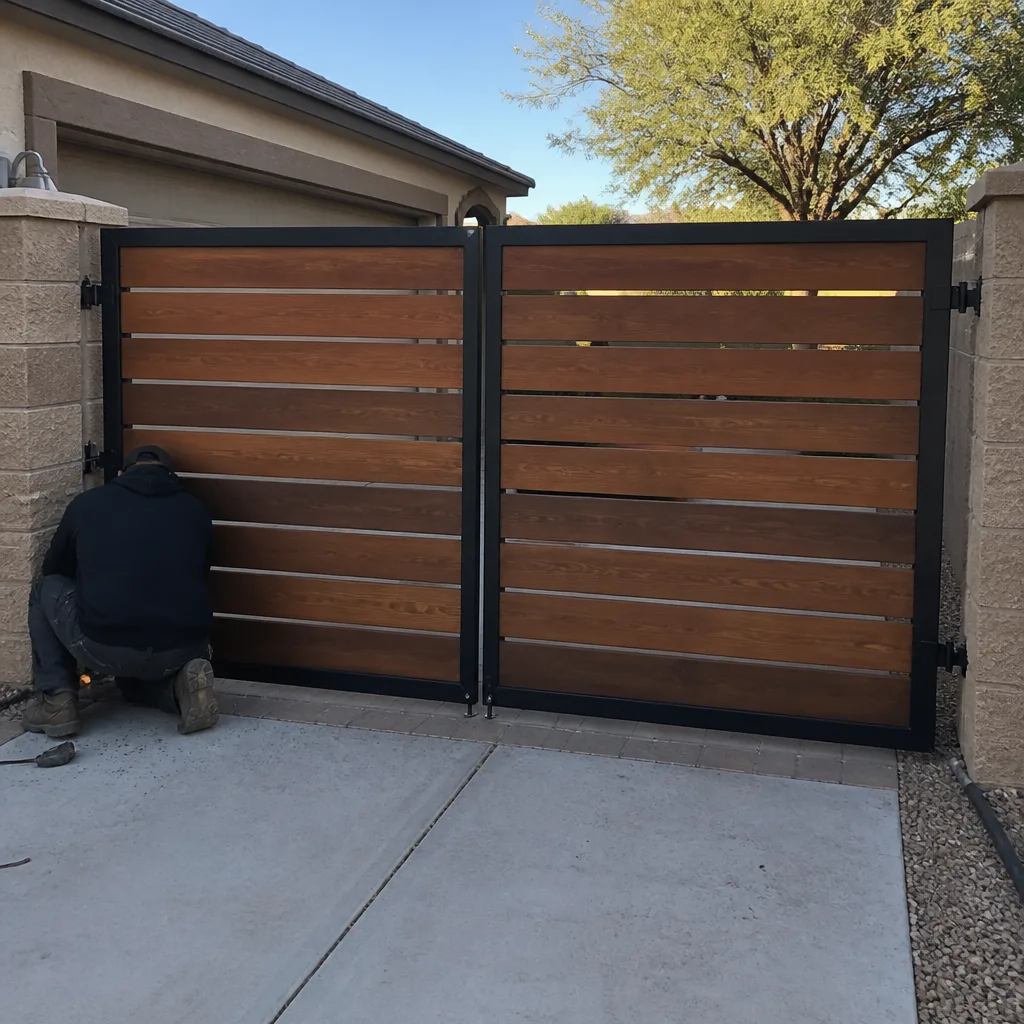 After
After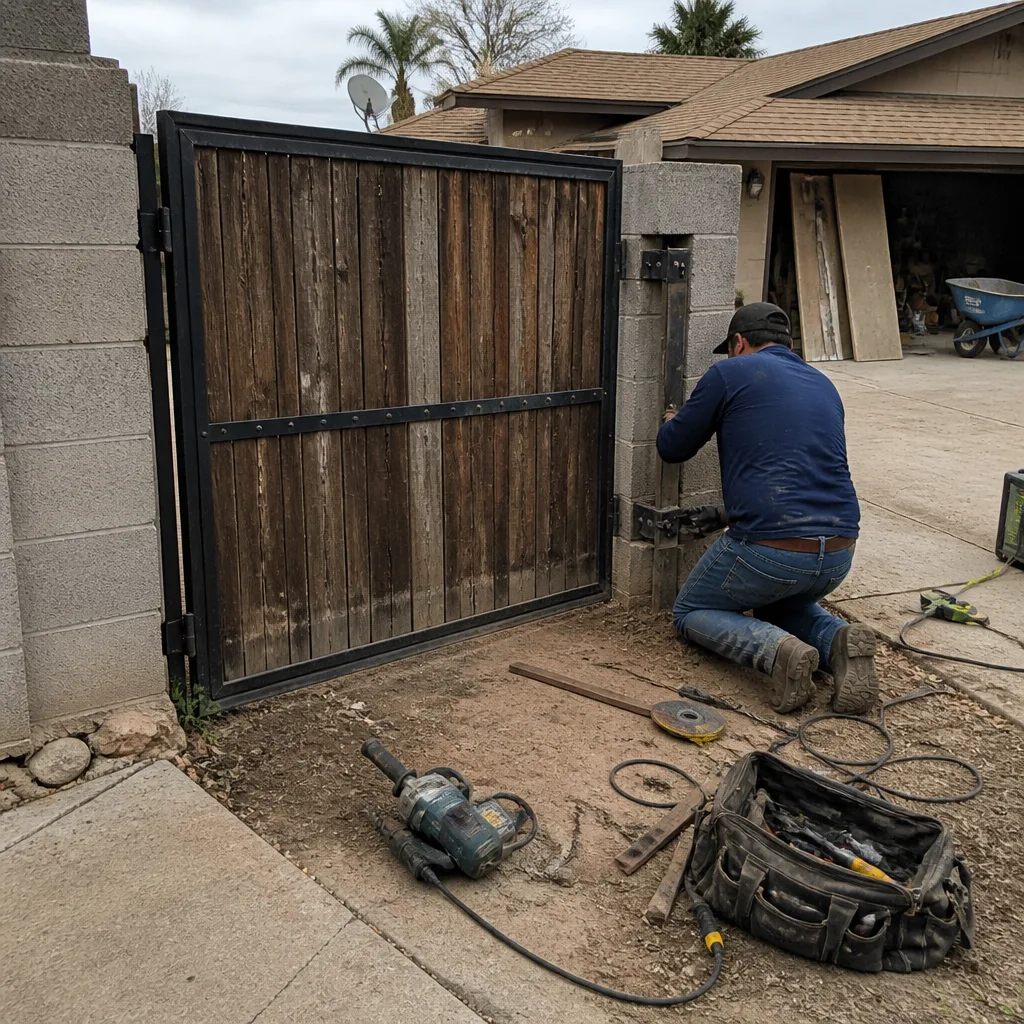 Before
 After
AfterHow to Hire a Gate Repair Contractor in Phoenix: A Step-by-Step Guide
Ask any Phoenix gate contractor for a wiring diagram of what they find before they touch anything. If they look confused, that tells you more about their process than any review on Google. We’ve been repairing and installing gates across Phoenix since 2014, and we’ve inherited more repeated service calls than we can count - not because the first contractor did bad work, but because they left no written record of what they found or changed. The next technician starts from zero, charges you again to rediscover the same problem, and the cycle repeats. This Complete Guide to Gate Repair in Phoenix gives you a concrete vetting framework built around what a contractor leaves behind, not what they say at the door.
Quick Answer
To hire a gate repair contractor in Phoenix, request three things in writing before any work begins: a detailed scope of work, an itemized price, and a clear definition of what “done” looks like. Verify they document every visit with photos and written records, and confirm they have direct experience with Phoenix-specific conditions like caliche soil, monsoon electrical surges, and UV degradation on gate components. A contractor who cannot explain their documentation process is a contractor who expects to be called back for the same problem.
Table of Contents
- Why Documentation Matters More Than the Warranty
- Step-by-Step: How to Vet a Gate Repair Contractor
- What to Request in Writing Before Work Begins
- Phoenix-Specific Conditions Your Contractor Must Understand
- Red Flags Specific to Phoenix Gate Contractors
- How to Verify the Job Was Done Right
- What Gate Repair Costs in Phoenix
- Common Mistakes to Avoid
- When to Call a Professional
- Frequently Asked Questions
 Before
 After
AfterWhy Documentation Matters More Than the Warranty
Most homeowners ask about warranties. Few ask about documentation. That’s backward.
A warranty is a promise about future work. Documentation is evidence of what was actually done. In our experience across Phoenix - from Arcadia to Desert Ridge to Ahwatukee - the majority of repeat service calls trace back to missing records, not defective parts. A contractor replaces a gate motor, doesn’t photograph the wiring configuration, and six months later a different technician can’t tell whether the limit switch failed or was never set correctly in the first place. You pay for the diagnostic all over again.
Here’s what proper documentation looks like on a gate repair job:
- Pre-work photos of the gate in its failed state, including close-ups of the operator, control board, and any visible damage
- A written scope listing every component to be adjusted, repaired, or replaced, with part numbers
- Wiring diagrams or annotated photos showing connections before and after any changes
- Post-work photos of installed components, adjusted settings, and the gate in full operation
- A written record of limit-switch settings, force measurements, and safety-device test results
At Vance Gate Repair Phoenix, we call this The Haven Standard. Every visit, every job, every customer gets it. Clause 1: written price before work starts. Clause 4: photographic evidence of what was found and what was left behind. We’ve completed over 22,000 gate repairs and installations since 2014, and every single one has a documented record. When a customer in Paradise Valley calls us three years after we serviced their Viking operator, we pull the file and know exactly what we set and why.
Ask your prospective contractor: “What documentation do I receive when you leave?” If the answer is a handshake and a receipt, keep looking.
Step-by-Step: How to Vet a Gate Repair Contractor
Use this framework before you invite anyone to your property. Each step builds on the last.
Step 1: Verify They Service Your Specific Gate Type and Brand
Not every gate contractor in Phoenix works on every system. Some specialize in swing gates but won’t touch sliding gate track. Some install only one brand of operator and steer every customer toward replacement rather than repair. Ask directly:
- “Do you repair [your brand] operators, or only replace them?”
- “Have you worked on a [swing/sliding/vertical lift] gate with [specific problem]?”
- “Do you carry parts for Linear, Viking, Ghost Controls, or DoorKing, or do you need to order them?”
A contractor who services nine major brands - LiftMaster, FAAC, BFT, Linear, Viking, Ghost Controls, DoorKing, Elite, and Mighty Mule - can diagnose and repair what you have rather than selling you what they stock. We’ve found that Phoenix homes in older neighborhoods like Willo and Encanto often have discontinued operators that still have years of life with the right repair. A brand-agnostic technician saves you the cost of unnecessary replacement.
Step 2: Request Documentation Samples Before Scheduling
A legitimate contractor should be able to describe, if not show, what you receive after the job. Ask: “What does your typical job record look like?” Listen for specifics. “We take pictures” is vague. “We photograph the control board before we touch it, record the error codes, and give you a written log of every adjustment” is a process.
Step 3: Confirm Licensing and Insurance in Writing
Arizona requires contractors to be licensed through the Arizona Registrar of Contractors for work over $1,000. Ask for the license number and verify it at roc.az.gov. Confirm general liability insurance and workers’ compensation coverage. A gate weighs hundreds of pounds and operates under tension; if a technician is injured on your property without coverage, your homeowner’s policy may be the primary target.
Step 4: Demand a Written Scope and Price Before Work Starts
This is non-negotiable. The scope should list:
- Every component to be inspected, adjusted, or replaced
- Labor hours or flat-rate pricing for each task
- Part numbers and prices for any replacements
- A clear statement of what “complete” means for this job
Verbal estimates are where disputes begin. A contractor who won’t commit to writing before picking up a tool is a contractor who expects flexibility you didn’t agree to.
Step 5: Ask About Their Diagnostic Process
How do they determine what’s actually wrong? A competent contractor explains their diagnostic sequence. For a gate that won’t open, ours runs: test manual release, check power at the operator, test photo-eye alignment and voltage, inspect control board for error codes, cycle the motor under no-load conditions, then test under load. Each step produces a recorded finding. A contractor who jumps straight to “you need a new motor” without this sequence is guessing with your money.
Step 6: Verify Post-Job Documentation and Follow-Up
What do you receive when they leave? How long is the record kept? Can you request it in three years? At Vance Gate Repair Phoenix, every customer gets the photo log and written record before we leave the property. The file stays in our system indefinitely. When we say “documented,” we mean it survives longer than the technician’s memory.
What to Request in Writing Before Work Begins
The written pre-work agreement is your only protection against scope creep and invoice shock. Request these three documents, minimum:
1. The Scope of Work
This defines what the contractor will actually do. It should be specific enough that a different technician could read it and understand what was intended. Examples of good scope language:
- “Inspect and adjust photo-eye alignment on both sides of driveway; test obstruction response at 3-inch and 12-inch heights”
- “Replace control board with part number [specific]; program remote codes 1-4; record and photograph all dip-switch settings”
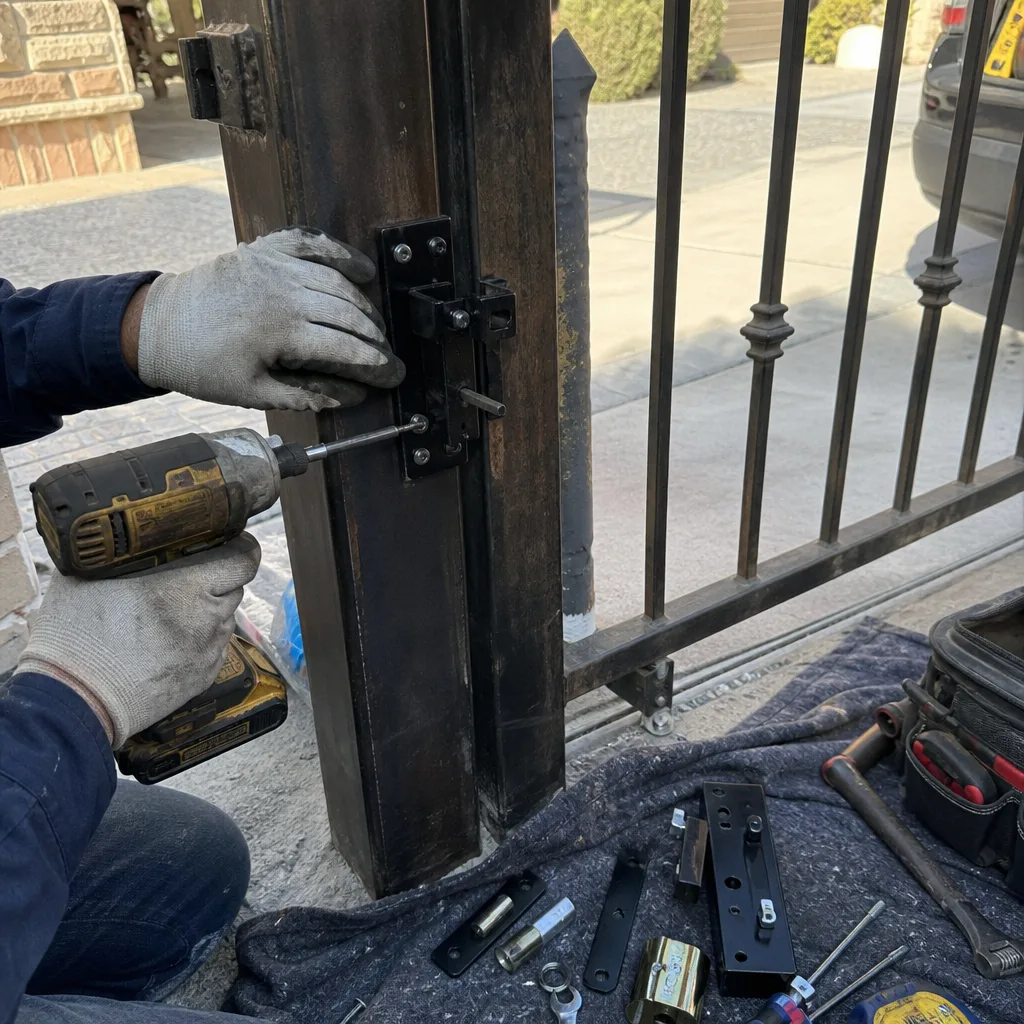
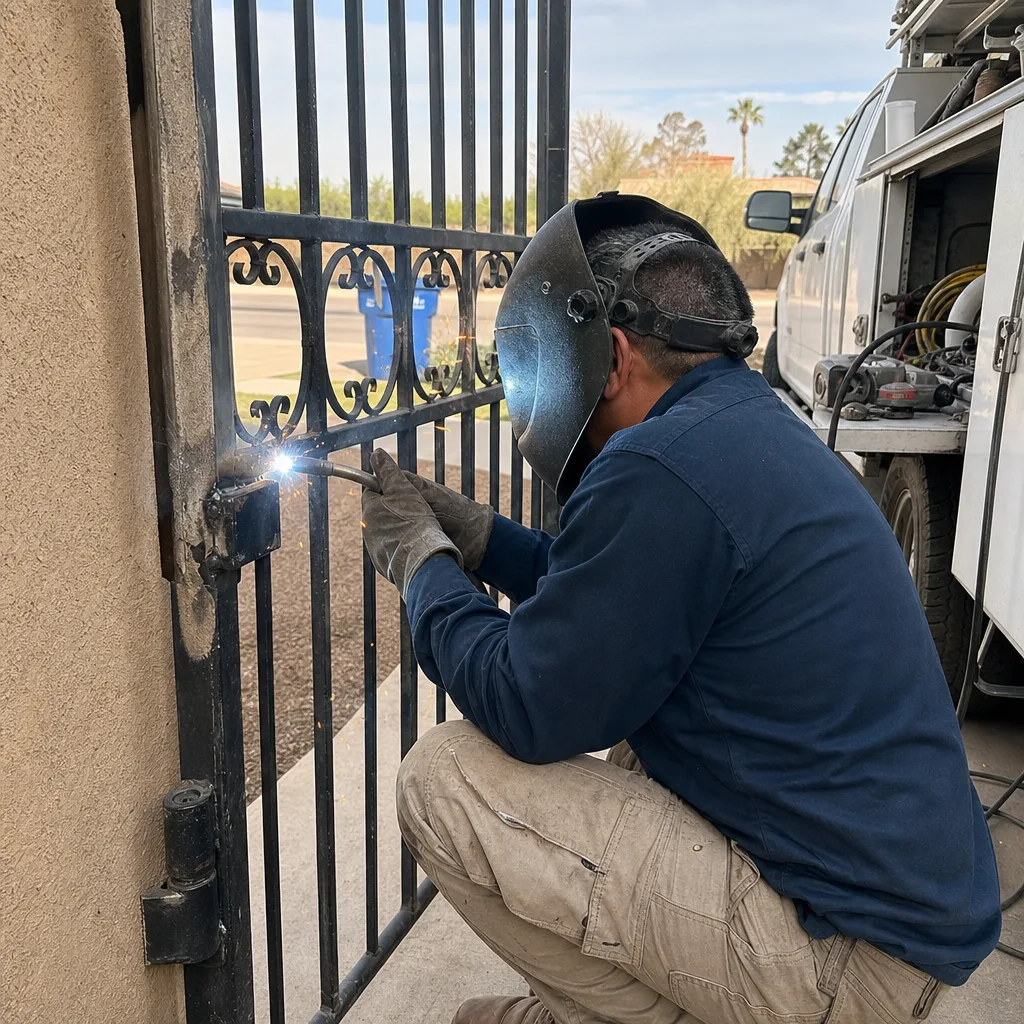
- “Grind and reweld lower hinge on masonry pillar; apply cold-galvanizing compound; photograph weld penetration”
Bad scope language: “fix gate,” “repair motor,” “service operator.” Vague scopes invite vague results.
2. The Itemized Price
Every line item should show labor and materials separately, with quantities and unit prices. The total should be the total - no “plus tax and permits” surprises. At Vance Gate Repair Phoenix, we operate under Haven Standard Clause 1: the flat price is written and handed over before any work starts. If we find additional problems during the job, we stop, explain, and get written approval for the change. No customer discovers a higher number on the invoice than they saw on the quote.
3. The Completion Criteria
What does “done” mean? For a gate repair, completion criteria might include:
- Gate opens and closes fully under automatic control
- Photo-eye stops and reverses gate when beam is interrupted
- Edge sensor stops and reverses gate on contact
- Manual release operates smoothly and resets correctly
- All remotes and keypads function at specified range
- Written test results and photo record provided to homeowner
Without defined completion criteria, you and the contractor may have different definitions of success. We’ve been called to jobs in Phoenix where the previous contractor considered “working” to mean “opens most of the time.” That’s not a repair. That’s a temporary improvement.
Phoenix-Specific Conditions Your Contractor Must Understand
Gate systems in Phoenix fail differently than gates in other climates. A contractor who treats your gate like it’s in Portland or Miami will miss the actual problem.
Caliche Soil and Foundation Issues
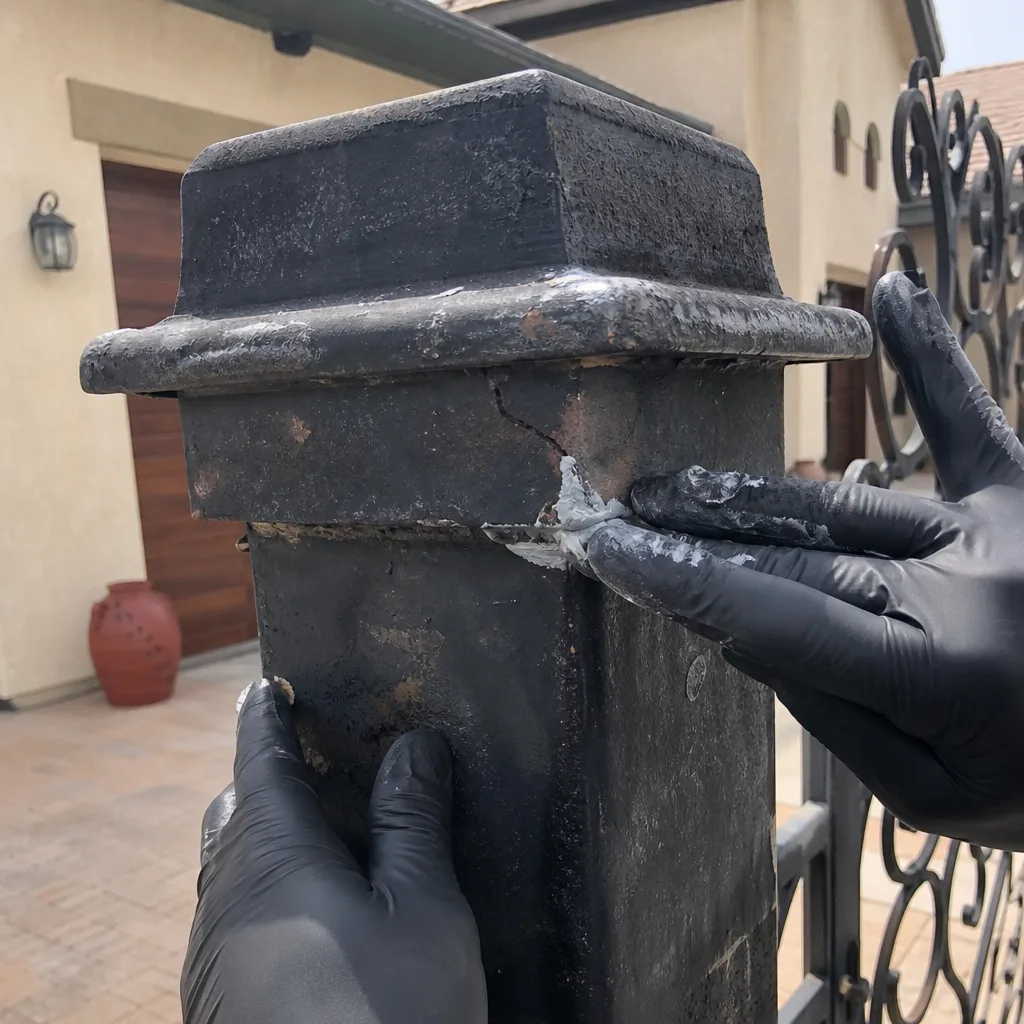
Phoenix sits on hard caliche deposits that shift differently than soft soils. Gate posts and pillars settle, tilt, or crack in patterns that stress hinges, operators, and track. A contractor should inspect post plumb and pier condition before blaming the operator. We’ve replaced expensive gate motors in Phoenix only to find the real problem was a two-inch post tilt that bound the gate arm. The motor wasn’t broken. It was fighting geometry.
Ask your contractor: “Do you check post plumb and pier condition as part of your diagnostic?” If they don’t, they’re not looking at the whole system.
Monsoon Electrical Surges
July through September in Phoenix brings lightning, dust storms, and power fluctuations that destroy gate control boards and transformers. A competent contractor asks about surge history and inspects for evidence: blown fuses, scorched board traces, failed transformers. They should also recommend - but not require - surge protection for the operator circuit. We’ve seen $800 control boards destroyed by a single monsoon event that a $90 surge protector would have absorbed - one reason we cover Seasonal Gate Repair Care for Phoenix in our year-round homeowner’s guide.
UV Degradation on Components
Phoenix sun destroys plastic housings, wire insulation, and photo-eye lenses faster than almost anywhere in the country. A contractor should recognize UV damage by sight: chalked plastic, brittle wire jackets, clouded lenses. Replacing a photo-eye with the same non-UV-rated model means you’ll call again in two years. We specify UV-rated wire and housings on every Phoenix job, and we note the material in our written record so the next technician knows what’s in place.
Thermal Cycling on Metal Gates
Desert temperature swings - 40°F at dawn, 110°F by afternoon - stress welded joints and expansion gaps. A contractor should inspect gate frame welds for fatigue cracking, especially on dark-colored steel that absorbs more heat. In our Phoenix work, we find thermal cracks most often on south-facing gates in Arcadia and the Biltmore area, where mature landscaping blocks morning shade.
Red Flags Specific to Phoenix Gate Contractors
These warning signs should disqualify a contractor immediately, regardless of reviews or price.
Verbal Estimates Only
Any contractor who won’t put price and scope in writing before work starts is operating outside any standard you can enforce. Phoenix has no shortage of gate companies that offer “free estimates” that turn into verbal quotes at the door, then invoices with added charges. The Haven Standard exists because this practice is common, not because it’s rare.
No Photo Documentation
If a contractor can’t show you a sample job record with photos, they don’t produce them. In 2024, every phone is a camera. There’s no operational reason to skip documentation except that it takes time and creates accountability. A contractor who won’t document doesn’t want a record of what they did.
Inability to Explain the Failure Cause
“It’s just worn out” is not a diagnosis. A competent contractor names the component, explains the failure mode, and shows you the evidence. “The limit switch cam is cracked at the set screw, so the motor doesn’t know where to stop” is a diagnosis. “The arm bracket bolt was loose, worked the hole oval, and now the operator is freewheeling” is a diagnosis. If they can’t explain it, they may not understand it.
Pressure to Replace Rather Than Repair
Some Phoenix contractors carry inventory for only one or two brands and steer every customer toward replacement. If your Linear, Viking, Ghost Controls, or DoorKing operator has a failed control board, a brand-agnostic technician can source and install the correct replacement board. A brand-captive technician tells you the whole operator is obsolete. We’ve saved Phoenix homeowners thousands by repairing operators that other companies declared unfixable.
No License Verification
Arizona contractor licenses are public record. A contractor who hesitates to provide their ROC number, or provides one that doesn’t match their business name, is operating illegally or borrowing someone else’s credentials. Verify at roc.az.gov before scheduling.
Callback-Only or Voicemail-Only Phone Service
Gate failures create security and access problems that don’t wait for business hours. A contractor who routes calls to voicemail during evenings or weekends is telling you when your emergency matters to them. At Vance Gate Repair Phoenix, a live person answers the phone 24 hours a day, seven days a week. No automated attendant, no callback queue. We didn’t set this up to be impressive; we set it up because gates fail at 10 PM on Saturday, and “leave a message” doesn’t get your driveway secure.
How to Verify the Job Was Done Right
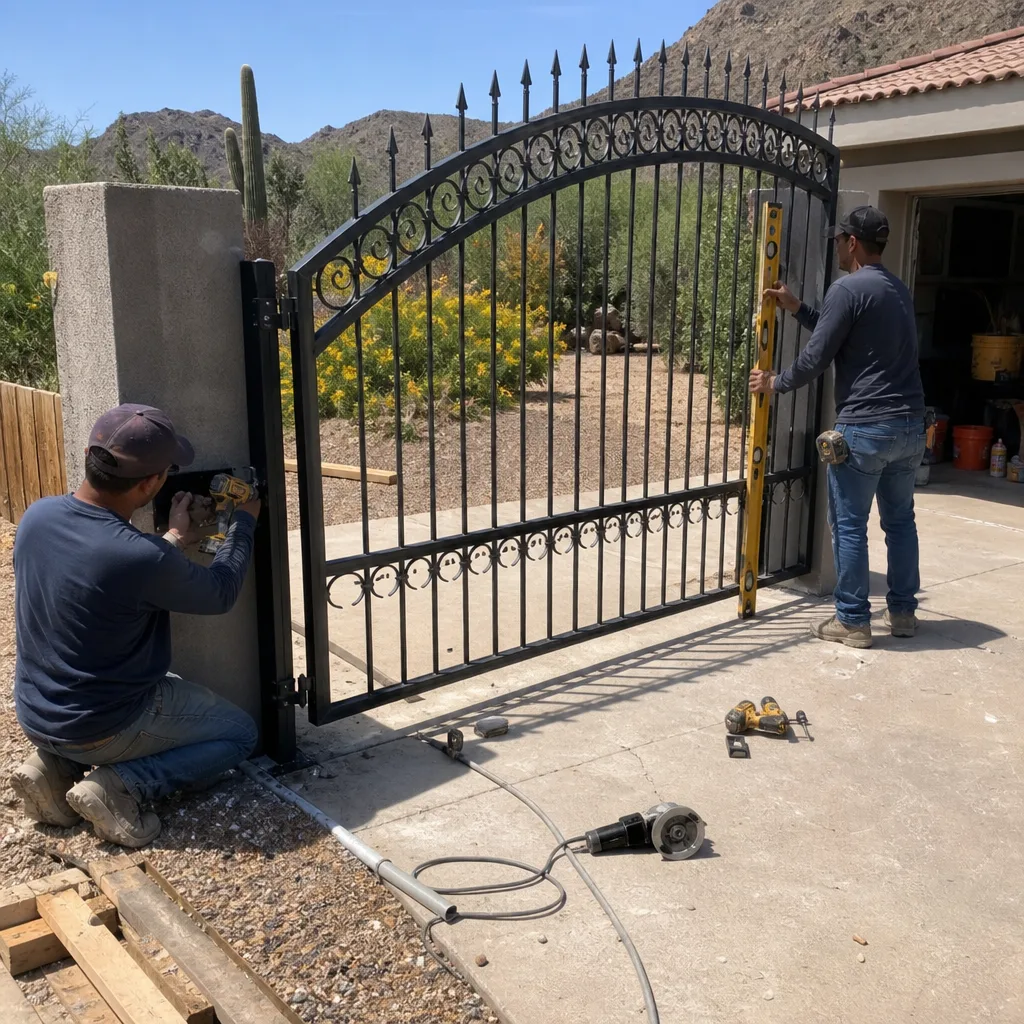
The work is complete when the contractor leaves, but verification happens over the following days. Here’s how to confirm the documented scope matches actual performance.
Test Every Safety Device Yourself
Walk through the photo-eye beam while the gate is closing. It should stop and reverse immediately. Press the edge sensor if your gate has one. Test the manual release - you should be able to disengage and re-engage it smoothly. If any safety device fails, the gate is not code-compliant and the job is not complete.
Compare the Invoice to the Written Scope
Every line item on the invoice should match the pre-approved scope. Part numbers should match. Quantities should match. If the contractor substituted a different part, they should have stopped and gotten your written approval. No exceptions.
Request and Review the Photo Record
Before the contractor leaves, ask to see the photos on their device or tablet. Confirm they show:
- The condition before work began
- Any components removed, with part numbers visible
- New components installed, with part numbers visible
- Settings and adjustments recorded (limit switch positions, dip switches, force settings)
- The gate in full open and full close positions
If the contractor can’t produce these immediately, they didn’t take them. Under Haven Standard Clause 4, we provide the photo log before we leave the property, not by email later.
Monitor for Recurring Problems
A proper repair eliminates the symptom permanently. If the gate exhibits the same failure pattern within weeks, the diagnosis was incomplete. Common examples: a gate that “fixes itself” intermittently usually has a loose connection or failing component that wasn’t replaced; a gate that slows down gradually after repair often has an undersized operator for the gate weight. The written record from the first job helps the second technician identify what was missed.
What Gate Repair Costs in Phoenix
Price transparency is part of the vetting process. These ranges reflect our experience across Phoenix since 2014, including jobs in Scottsdale, Tempe, Glendale, and Peoria where we service customers who found us through our Phoenix gate repair page. Your specific price depends on gate type, brand, access, and whether the problem is isolated or systemic.
| Service | Typical Range | What Affects Price |
|---|---|---|
| Photo-eye alignment / replacement | $85 - $180 | Single vs. dual beam; wired vs. wireless; UV-rated housing |
| Control board replacement | $280 - $650 | Brand and model; surge damage extent; programming complexity |
| Gate motor / operator repair | $180 - $420 | Arm vs. ram vs. underground; gear wear vs. electrical failure |
| Gate motor / operator replacement | $1,200 - $3,400 | Swing vs. sliding; single vs. dual gate; brand and features |
| Hinge repair / welding | $220 - $580 | Pillar material; access for welding; post realignment needed |
| Track repair / replacement (sliding gates) | $340 - $890 | Steel vs. aluminum track; length; foundation repair required |
| Access control keypad / intercom repair | $150 - $440 | Standalone vs. integrated; wired vs. wireless; brand |
| Full diagnostic with written report | $85 - $150 | Applied to repair if approved; waived for contracted maintenance |
These are price ranges, not quotes. Every job at Vance Gate Repair Phoenix gets a written, itemized price before work starts - no exceptions. We also offer free second opinions on any written estimate from another company. Bring their paperwork and we’ll review it at no cost.
For new gate systems, gate installation in Phoenix follows the same pricing discipline: free measure, written scope, written price, then scheduling. We don’t promise same-day installation because that work is measured, ordered, and built to specification. We do promise you’ll know exactly what you’re paying before we order materials.
Common Mistakes to Avoid
- Hiring based on lowest price alone. A $120 repair that fails in 30 days costs more than a $280 repair that lasts five years. The difference is usually documentation and diagnostic thoroughness, not markup.
- Accepting “it’s just old” as a diagnosis. Components fail for specific reasons: overload, misalignment, surge damage, water intrusion. A contractor who can’t name the failure mode is planning to replace parts until something works.
- Ignoring the documentation question. Warranty length means nothing if there’s no record of what was warranted. A one-year warranty on an undocumented repair is a promise to return, not a promise to fix.
- Not testing safety devices after the repair. Arizona doesn’t mandate private residential gate inspections, but liability falls on the property owner if a gate injures someone. Test the photo-eye and edge sensors yourself. Every time.
- Assuming all contractors know Phoenix conditions. Caliche, monsoon surges, and UV degradation are local knowledge. A contractor new to the market or visiting from another state may miss foundation issues or specify wrong materials.
- Paying before receiving documentation. The photo record and written scope are part of the deliverable. If you pay before reviewing them, you lose leverage to correct omissions.
- Not asking about maintenance after repair. A gate is a mechanical system that needs periodic inspection. A contractor who repairs and disappears isn’t helping you prevent the next failure. Ask what maintenance schedule they recommend for your specific gate and usage.
When to Call a Professional
Some gate problems are genuinely dangerous and should not be approached without training. Call a professional immediately if:
- The gate is stuck partially open and cannot be secured manually
- You smell electrical burning or see scorch marks on the operator
- The gate has fallen off hinges or track and cannot be safely supported
- High-tension springs or cables are visible and appear damaged on a vertical lift or overhead gate
- The manual release does not function and you need emergency vehicle access
These scenarios involve heavy moving components, electrical hazards, or security risks that outweigh any cost of professional service. Vance Gate Repair Phoenix offers free estimates in Phoenix - call (602) 483-6270 and a live person will answer, any hour. We’ll review your situation, schedule a diagnostic if needed, and provide a written price before any work begins.
Frequently Asked Questions
Most common gate repairs in Phoenix range from $85 for photo-eye alignment to $650 for control board replacement, with operator replacements running $1,200 to $3,400 depending on brand and gate configuration. The exact price depends on your gate type, the specific failure, and whether foundation or track issues are involved. Call (602) 483-6270 for a free written estimate - we quote the full price before any work starts.
You can perform basic troubleshooting like checking power to the outlet, clearing debris from the track, and verifying remote batteries. Do not attempt to repair high-tension springs, adjust force settings on the operator, or work on the control board wiring unless you have specific training. Gates weigh hundreds of pounds and operate under stored energy; improper repair can cause serious injury or property damage. For anything beyond basic checks, hire a trained professional.
Verify any contractor’s license at roc.az.gov, the Arizona Registrar of Contractors website. Enter the license number they provide and confirm the business name matches. For gate repair work over $1,000, Arizona requires a licensed contractor. Always verify before scheduling; unlicensed work voids many homeowner protections.
You should receive a written scope of work performed, an itemized invoice matching the pre-approved price, and a photographic record of the gate condition before and after repair, including any adjusted settings or installed components. At Vance Gate Repair Phoenix, we provide this documentation on every visit under Haven Standard Clause 4 - before we leave your property.
Repeated failures usually indicate incomplete diagnosis, incorrect parts, or an underlying problem that wasn’t addressed. Common examples in Phoenix: a post settling in caliche that stresses hinges, a control board damaged by monsoon surges that keeps failing until surge protection is added, or an operator undersized for the gate weight. The written record from the first repair helps identify whether the root cause was missed. We offer free second opinions on any written estimate or repair record from another company.
We repair and service nine major automation brands - LiftMaster, FAAC, BFT, Linear, Viking, Ghost Controls, DoorKing, Elite, and Mighty Mule - and we carry parts for most common failures. We repair when repair is the right solution and replace only when the operator is genuinely beyond economical repair or doesn’t meet your needs. A contractor who only installs new equipment is a contractor who profits from replacement, not from solving your problem.
The Bottom Line
Hiring a gate repair contractor in Phoenix is a documentation decision, not just a price decision. The contractor who leaves a written scope, a written price, and a photographic record gives you something no warranty can replace: accountability. You can verify the work, you can reference it in three years, and you never pay twice to rediscover the same problem.
Use the vetting framework in this guide. Ask about documentation before you ask about price. Verify Phoenix-specific knowledge. Test safety devices after the repair. And never accept a verbal estimate when a written one is possible.
At Vance Gate Repair Phoenix, we built our entire operation around these principles. The Haven Standard isn’t marketing language - it’s how we complete every job, from the first diagnostic to the final photo. If you’re evaluating contractors and want a free written estimate, or if you have a repair record from another company and want a free second opinion, call (602) 483-6270. A live person answers 24 hours a day.
Written by Adrian Vance, Owner at Vance Gate Repair Phoenix, serving Phoenix since 2014.